
When you're managing a construction site, getting the signage for disabled toilets spot-on is far more than just a box-ticking exercise. It’s fundamental to creating a site that’s safe, dignified, and legally compliant here in the UK. Let's get straight to it: clear, correct signs are the first step to making your site genuinely accessible and welcoming for every worker and visitor.
Nailing Your Accessible Toilet Signage
If you’re overseeing a construction project, you know that sorting out portable toilet hire is one of those crucial details. But it’s not just about having the units on the ground; it’s about making sure they are truly accessible and, just as importantly, clearly marked for those who need them. This is where getting the signage right becomes essential for meeting your obligations under the Equality Act 2010.
You've got enough to worry about without deciphering complex regulations. That's where we come in. At Sarah's Hire, we don't just drop off units; we provide a complete solution that ensures your site is compliant from day one. When you hire our accessible toilets, you're not just getting top-notch facilities, you’re tapping into our experience to ensure your site is fully compliant and inclusive, making your job that little bit easier.
Thinking through your signage strategy offers some major benefits:
- Steer Clear of Legal Headaches: Getting your signs right is a key part of fulfilling your duties under the Equality Act 2010.
- Make Life Easier for Your Team: Clear, intuitive signage removes guesswork and stress for workers, subcontractors, and visitors.
- Demonstrate Your Commitment: Proper accessibility shows everyone—from the client to your crew—that you run a professional, inclusive site.
Why Getting Your Signage Right is So Important
Let's be blunt: just sticking a standard wheelchair symbol on a door and hoping for the best isn't good enough anymore. It’s a risky move. UK regulations have moved on, and so have people's expectations. Poor signage for disabled toilets can cause real problems for people trying to use them and can land you in legal trouble under the Equality Act 2010.

This is particularly critical when it comes to hidden conditions. It’s shocking to learn that over 60% of discrimination incidents reported by people with Crohn's or Colitis when using accessible toilets involve verbal abuse. This statistic really drives home how vital inclusive signage is. You can read more about the challenges faced by those with non-visible disabilities on the Crohn's & Colitis UK website.
Ultimately, thoughtful and compliant signage isn't just about ticking boxes to avoid fines. It's about fundamental respect and making sure every single person on your site feels safe, seen, and welcome.
Designing Signs Everyone Can Understand
A good sign should give clear directions, not create a puzzle. When it comes to signage for disabled toilets, your main goal is to make it instantly understandable for everyone, even from across a busy site. All the design elements need to work together to make the experience inclusive and genuinely helpful.
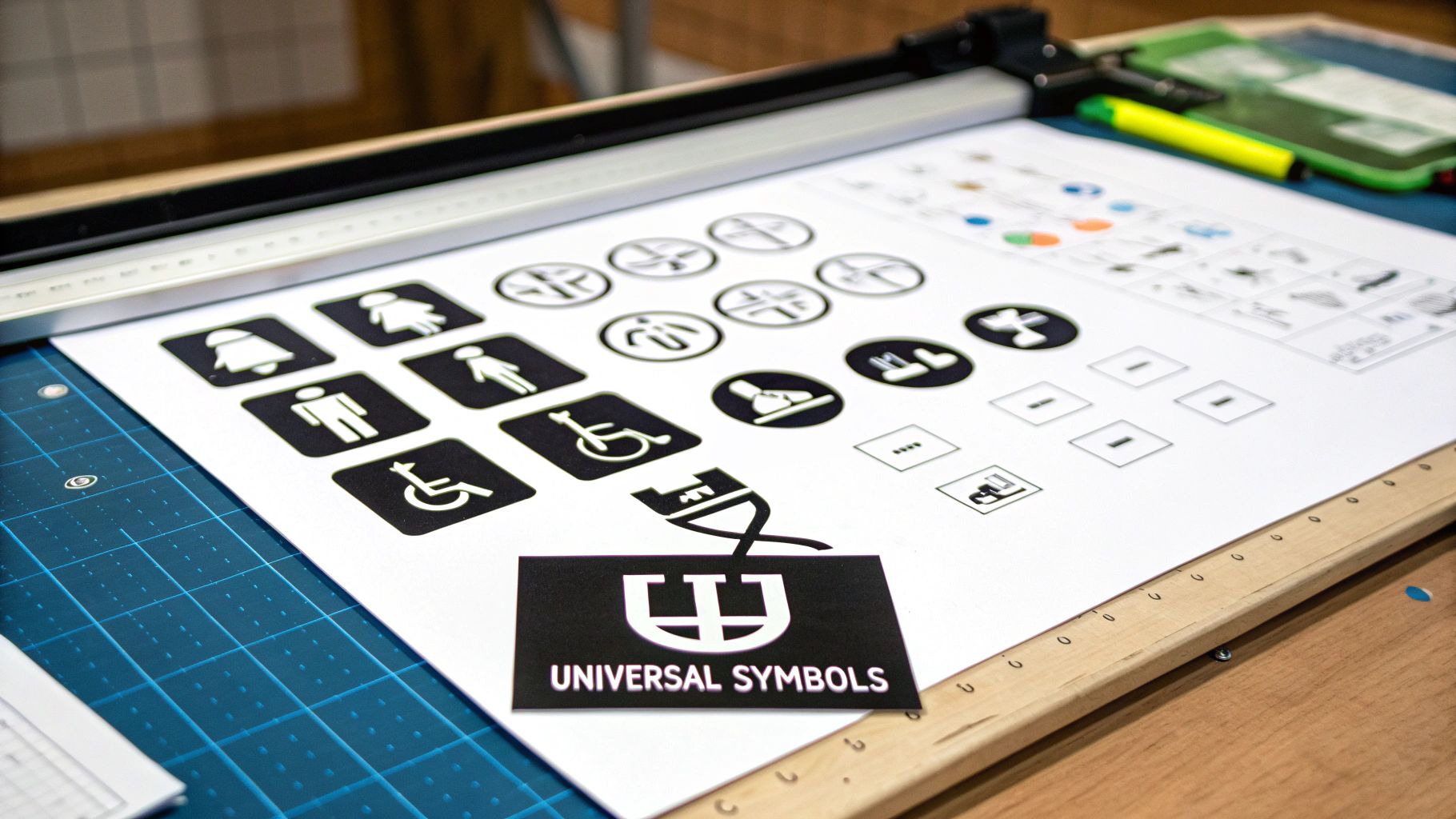
Let's break down the key components you absolutely have to get right for your site.
The Essentials of Clear Signage
- Symbols are Your Universal Language: The International Symbol of Access (the classic wheelchair symbol) is a must-have. But to be truly inclusive, think about adding other symbols that represent non-visible disabilities. It’s a small touch that makes a big difference.
- Colour Contrast is Critical: This is a non-negotiable for anyone with a visual impairment. High-contrast pairings like a bold blue and crisp white, or a striking black and yellow, are essential for readability in all weather and light conditions.
- Wording Matters: The current best practice is to use the term ‘Accessible Toilet’. Why? Because it’s a more welcoming and accurate description that focuses on the facility’s inclusive design, not on the person using it.
- Keep it Simple: This isn't the place for fancy, elaborate fonts. Stick to clean, simple typefaces that are large enough to be read easily from several feet away. The clearer, the better.
Placing Your Signs for Maximum Impact
You can have the most brilliantly designed sign in the world, but if it’s tucked away behind a stack of materials or fixed at the wrong height, it’s basically useless. Getting the placement right is every bit as important as the design itself, particularly on a sprawling, chaotic construction site where clear directions are absolutely essential.
Think of it as creating a seamless journey for someone, guiding them from the site entrance right to the toilet door.
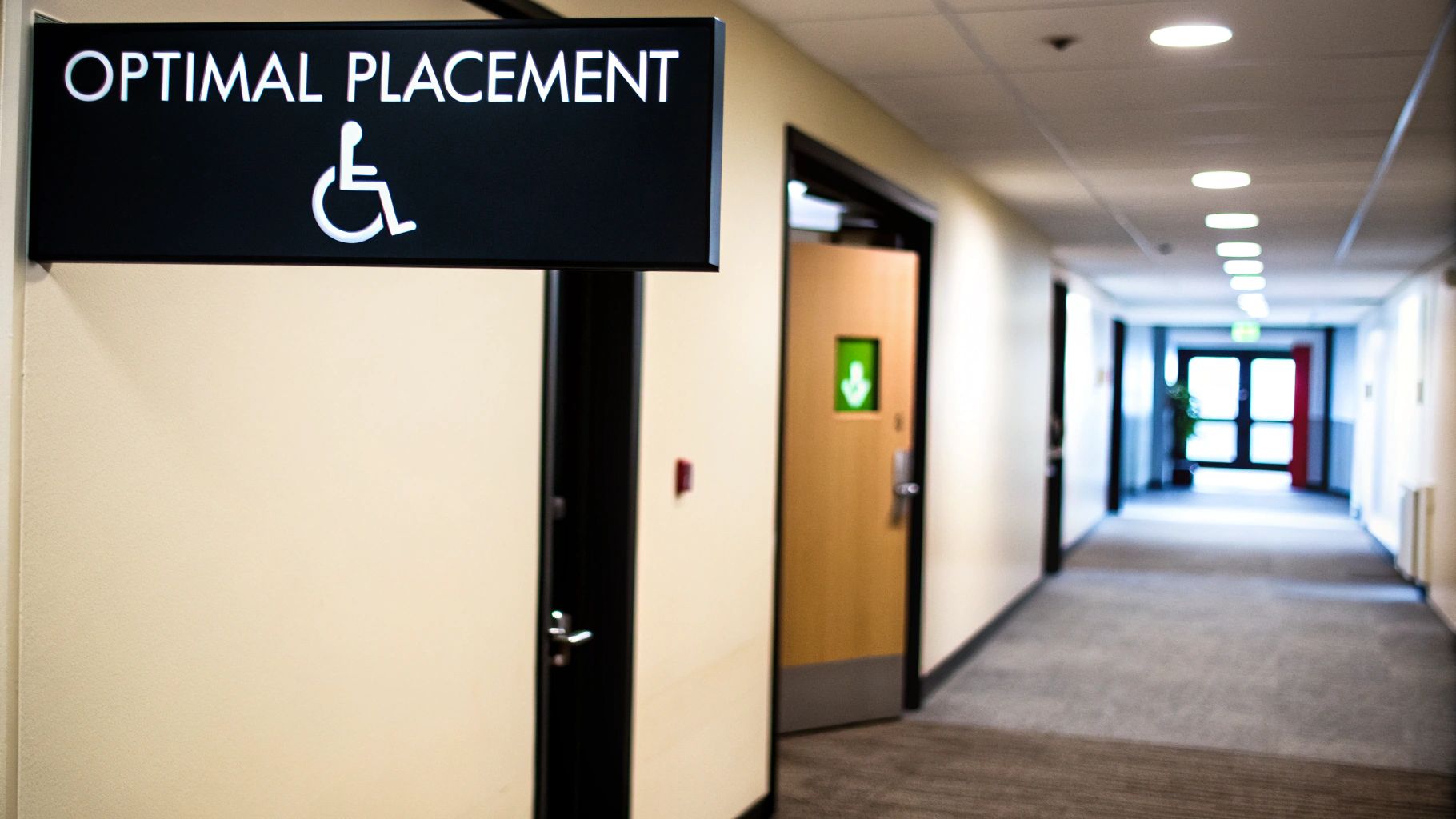
This means you need good directional wayfinding signs to get people to the right area, and then a clear, properly placed sign on the toilet door itself. For door signs, the height is crucial. It has to be positioned so it’s easily visible for wheelchair users, not just those standing.
It’s shocking, but a recent UK audit found that not a single accessible toilet they reviewed met all the required design standards, and that includes getting the signage placement right. If you’re interested, you can read the full research on this persistent gap and see just how common these mistakes are.
We saw this first-hand on a large London housing project we supplied. The site manager, David, told us, "Initially, our directional signs were an afterthought. After a chat with Sarah's Hire, we implemented a simple, clear system. The feedback was immediate – everyone, especially delivery drivers and visitors, found it much easier to navigate the site." For an idea of the kinds of units that work well in these environments, take a look at our guide to long-term construction site toilet hire.

Moving Beyond Basic UK Compliance
https://www.youtube.com/embed/gm_-vHbABxQ
Ticking the box for basic legal compliance is one thing. But creating a site that is genuinely welcoming and accessible for everyone? That's where you can really make a difference. The Equality Act 2010 sets out the minimum you have to do, but let's be honest—simply putting up a sign doesn't always translate into a good real-world experience.
When the sign promises accessibility but the facility falls short, it's not just an inconvenience; it can be a source of real frustration and exclusion for your team.
It’s a bigger problem than you might think. A startling UK study revealed that none of the accessible toilets audited actually met all the recommended standards, even when they had the right sign on the door. This points to a huge gap between what's promised and what's delivered. This isn't just about avoiding legal trouble. It's about showing people you've thought about their needs and genuinely care.
Compliance Checklist: Minimum vs Best Practice
So, how do you bridge that gap on your site? It starts with understanding the difference between just meeting the rules and actively creating an inclusive environment. I've put together this quick comparison to highlight what the law requires versus what truly makes a difference in practice.
| Feature | Minimum UK Requirement | Best Practice Recommendation |
|---|---|---|
| Symbol | International Symbol of Access (ISA). | Use the ISA but add clear text like "Accessible Toilet" underneath. |
| Placement | On the door or adjacent wall. | Consistent placement at 1400mm-1700mm from the floor, on the wall next to the handle side of the door. |
| Tactile Elements | Not strictly required for temporary units. | For long-term projects or site offices, consider adding braille and raised lettering on permanent signs. |
| Contrast | "Adequate" visual contrast. | High contrast is key. Think bold white text on a dark blue background, or vice versa. Avoid stylish but low-contrast colour schemes. |
| Information | Basic symbol indicating an accessible toilet. | Add a QR code linking to facility details (e.g., cleaning schedule) or a fault reporting system. It shows you're on top of maintenance. |
This table isn't just a checklist; it's a mindset shift. Moving from the left column to the right is how you go from compliant to truly considerate.
One of the most effective ways to enhance your signage is by incorporating simple tech. For instance, adding a QR code can open up a world of possibilities. You can find some surprising and innovative uses for QR codes that go far beyond just linking to a website.
Why Choose Sarah's Hire?
When you're running a busy construction site, you need suppliers who get the job done right, first time. At Sarah’s Hire, we don't just deliver toilets; we provide a complete, worry-free service that takes compliance off your plate.
- We Know the Rules: Navigating UK regulations is our job. We ensure your entire setup, including all the necessary signage for disabled toilets, is fully compliant from the moment we arrive. No guesswork, no hassle for you.
- Built for the Job: Our units are tough, modern, and meticulously serviced. They're built to withstand the demands of a construction site, ensuring everyone has access to a safe and dignified facility. You can see the standard of our construction site toilet hire options for yourself.
We're proud to serve construction projects across the South East. Our key areas of operation include:
- Essex
- Suffolk
- Cambridgeshire
- Hertfordshire
- Kent
- London
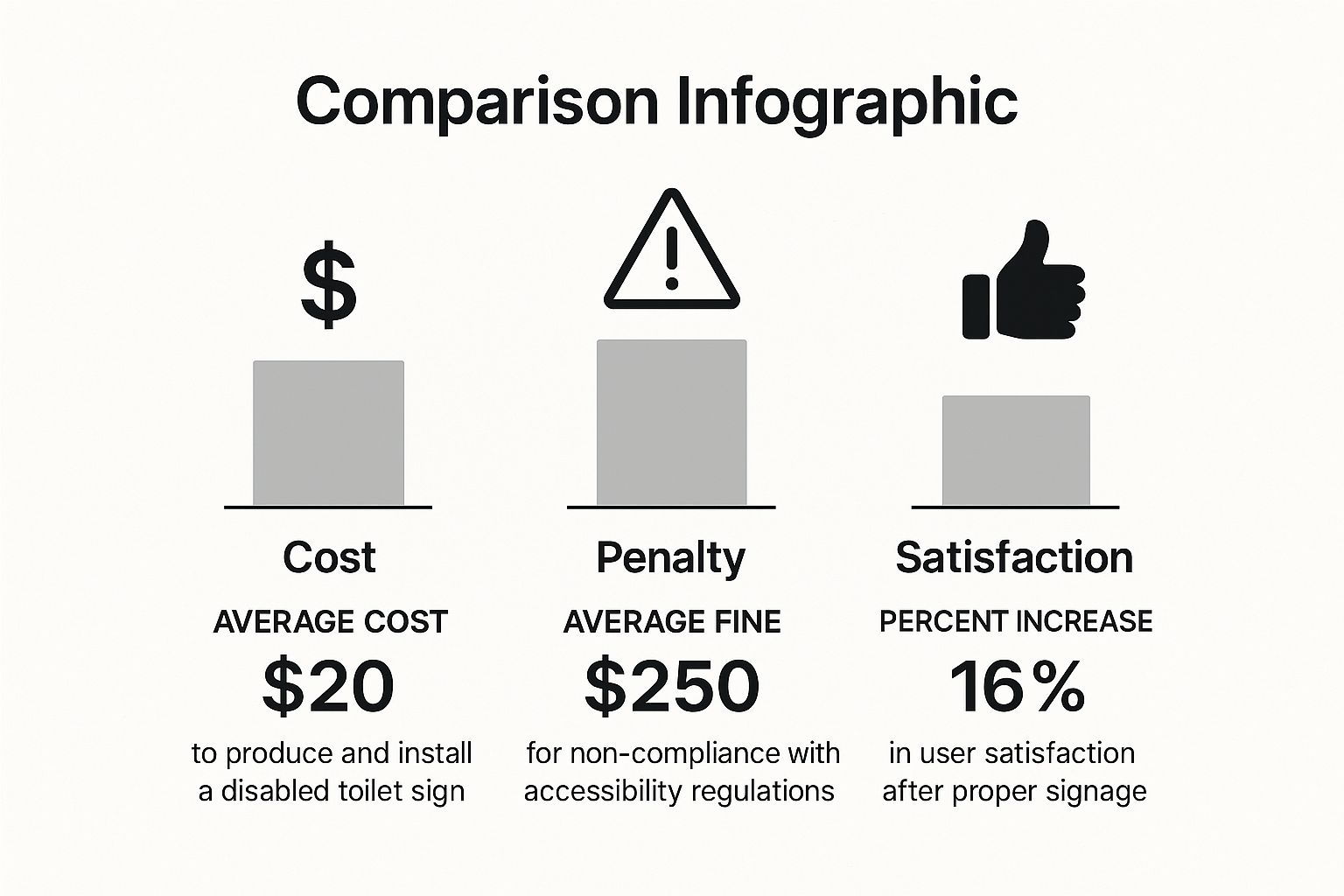
As the numbers show, investing in proper, compliant toilet hire isn't just about following the law—it's a smart decision that protects your project, your budget, and your reputation.
Your Questions Answered
We get asked a lot about the finer points of signage for accessible toilets on construction sites. Here are some of the most common queries, answered with straightforward, practical advice.
What’s the Right Wording to Use on the Signs?
This is a great question. While you might still see 'Disabled Toilet', the best practice and more inclusive term is ‘Accessible Toilet’. It’s a subtle but important shift. 'Accessible' focuses on the design of the facility itself, making it clear it’s built to accommodate a wide range of needs. We also strongly recommend adding a small, thoughtful note like, ‘Not every disability is visible’. This small touch can make a huge difference in fostering a more understanding environment on your site.
Do I Need Different Signs for a Short-Term Job vs. a Long-Term Project?
Yes, your approach should adapt. While compliance is non-negotiable for both, the practicalities are different. For a short-term site, your main focus should be on clear, robust, and weatherproof directional signage. For a long-term project with more permanent site offices, the rules are often stricter, and you may need to incorporate features like braille and tactile lettering directly onto the door signs to meet building regulations for those structures.
How Does Sarah’s Hire Help Me with All This?
Simple: we take the guesswork out of it for you. When you hire accessible toilet units from us, they come with the correct, compliant signage already fitted. That’s one major job ticked off your list. Beyond that, our experienced team has seen it all. We can give you practical advice on where to place the units and how to map out your directional signs to make sure your site is as easy to navigate as possible for everyone.
Ready to make your site fully compliant and accessible without the stress? You're in the right place. Contact Sarah’s Hire today for a straightforward quote on your next project.
Call us on 01981 500 753 or email info@sarahshire.com to get sorted.