

If your home isn’t connected to the mains sewer, you know that managing a septic tank is part of country living. But the one question we hear all the time is, ‘how often should I get my septic tank emptied?’ Get the timing wrong, and you could be looking at nasty smells, blocked drains, or even serious damage to your soakaway system. At Sarah’s Hire, we provide reliable, no-fuss septic tank emptying services to prevent these headaches, keeping your system running smoothly so you can get on with your life.
Your Guide to Septic Tank Emptying
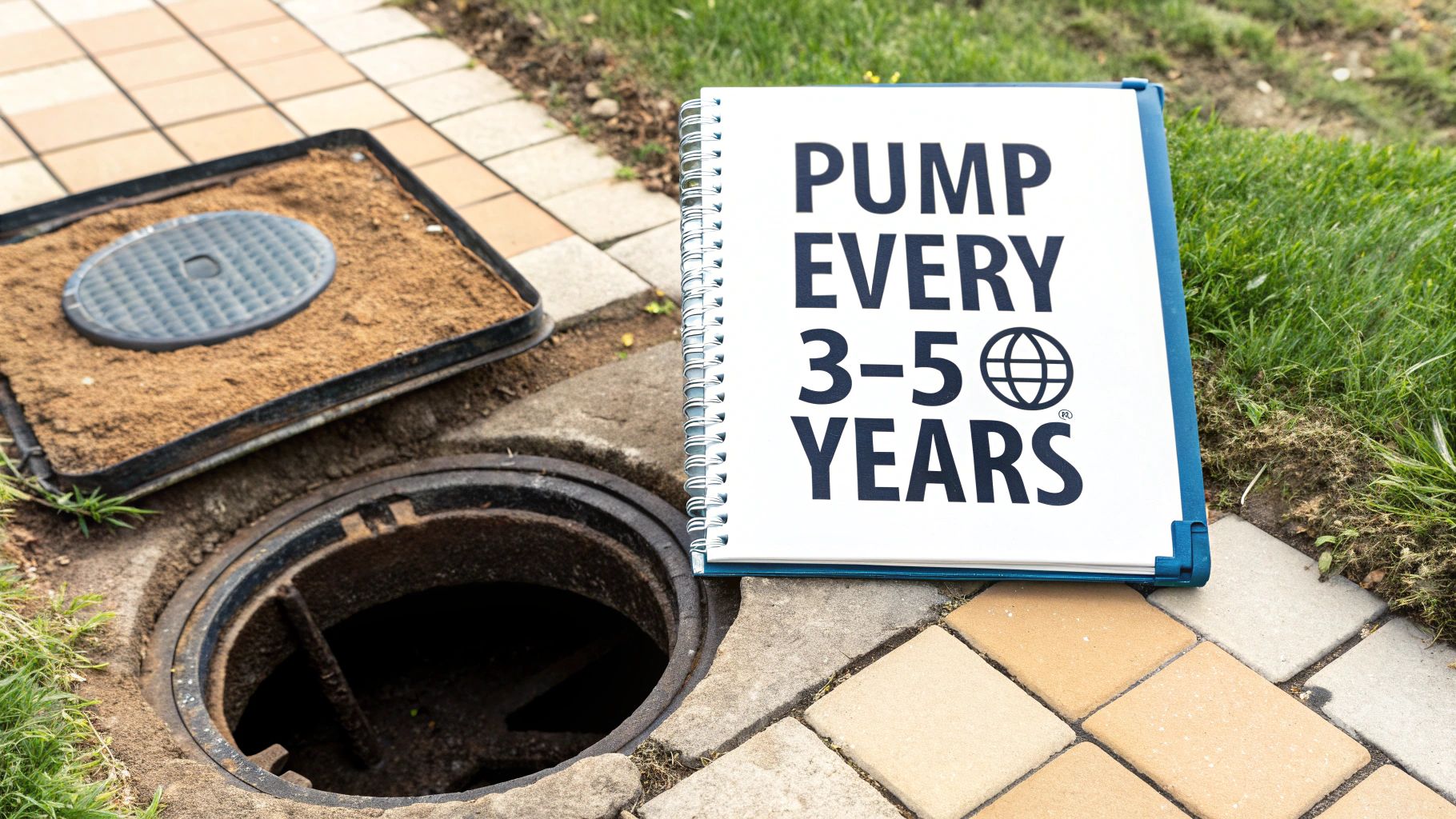
The short answer is that most septic tanks in the UK need emptying every 3 to 5 years. But that’s just a rule of thumb. Your perfect schedule really depends on the size of your tank, how many people live in your house, and your daily water usage.
This guide will walk you through everything you need to know to set up a maintenance plan that works for you. We’ll help you keep your system running smoothly and give you proper peace of mind.
How Your Septic Tank Works
A septic tank isn't just a big underground box; it's a clever little ecosystem. All the wastewater from your home flows into it, and inside, the solids sink to the bottom to form a layer of sludge. Lighter materials like grease and oil float to the top, creating a layer of scum.
The cleaner liquid in the middle then flows out to a soakaway (or drain field), where it’s safely filtered back into the soil.
Getting the tank emptied is so important because it removes the sludge and scum that the natural bacteria can’t break down. If these layers get too thick, they can start to block the outlet pipes, causing grim backups in your house or, worse, forcing solid waste into your soakaway. That’s a messy and expensive problem to fix.
Household Size and Emptying Frequency
The number of people living in your home is one of the biggest factors. More people means more wastewater, which means the tank fills up much faster.
A big family of five or more might need their tank emptied every 2 to 3 years. On the other hand, if you live on your own, you might only need to book a pump-out once every 5 to 10 years. It really does vary that much.
To give you a clearer idea, here’s a simple table based on a standard-sized tank.
Recommended Emptying Frequency by Household Size
| Number of People in Household | Recommended Emptying Frequency (Years) |
|---|---|
| 1-2 | 5-7 |
| 3-4 | 3-5 |
| 5-6 | 2-3 |
| 7+ | 1-2 |
Remember, this is just a starting point. If you work from home, have lots of visitors, or use appliances like washing machines and dishwashers heavily, you'll need to adjust your schedule.
Keeping on top of your septic tank schedule is also vital for the health of your drain field. A clogged tank can quickly ruin a soakaway. For more on this, have a look at this helpful guide to drain field maintenance. You might also be interested in our guide to portable toilet hire for building sites, another key service we provide for off-mains properties.

What Determines Your Emptying Schedule
Thinking of your septic tank as a 'set it and forget it' system is a fast track to some very unpleasant problems. Several key factors directly influence how quickly it fills up with solid waste, and understanding them is the key to creating the right emptying schedule.
So, let's break down what really matters when figuring out how often you should be calling in the professionals.
Core Influencing Factors
The frequency of your service visits isn't just a random guess; it's a calculation based on how you live and the system you have installed.
-
The Number of People at Home: This is the single biggest factor, without a doubt. A bustling family of five is going to generate far more wastewater than a couple, causing solids to build up much, much faster. More people always means more frequent emptying.
-
The Size of Your Septic Tank: It sounds obvious, but smaller tanks simply have less room and will need pumping out more often than larger ones. If your family has grown since the tank was first put in, you might find it's now a bit undersized for your needs.
This infographic helps visualise how your household's habits and size play a central role.

As you can see, your daily routines are at the heart of your tank's health.
Your Daily Habits Matter
What you and your family do each day has a direct, tangible impact on how quickly your tank fills. It's not just about the big things.
-
Daily Water Usage Habits: Do you run the washing machine and dishwasher every single day? High water usage doesn't just fill the tank faster. It can also churn up the solids that should be settling at the bottom, pushing them towards the soakaway before they've had a chance to break down properly.
-
What You Flush and Pour Away: Your septic tank is a living ecosystem, full of helpful bacteria doing an important job. Flushing things like wet wipes, cotton buds, or nappies will clog it up in no time. Pouring fats, oils, and harsh chemicals down the drain is just as bad, as it kills off the beneficial bacteria that break down the waste.
As a rule of thumb, septic tanks of 1,000 gallons or smaller might need emptying as often as once a year if they're under heavy use. For most standard domestic tanks, the interval is closer to every three years. You can learn more about these UK septic tank guidelines to see how being smart with your water can help extend these periods.
Warning Signs Your Septic Tank Is Full
Your septic tank is usually pretty good at telling you when it’s getting full and needs emptying. Ignoring the warnings can lead to messy, smelly, and expensive problems, so it’s always best to act fast when you spot the signs.
Keep an eye (and a nose) out for these tell-tale signs that you need to book a professional in.
Common Indicators of a Full Tank
The most frequent signs of a full septic tank are changes you can see, hear, or smell around your house and garden.
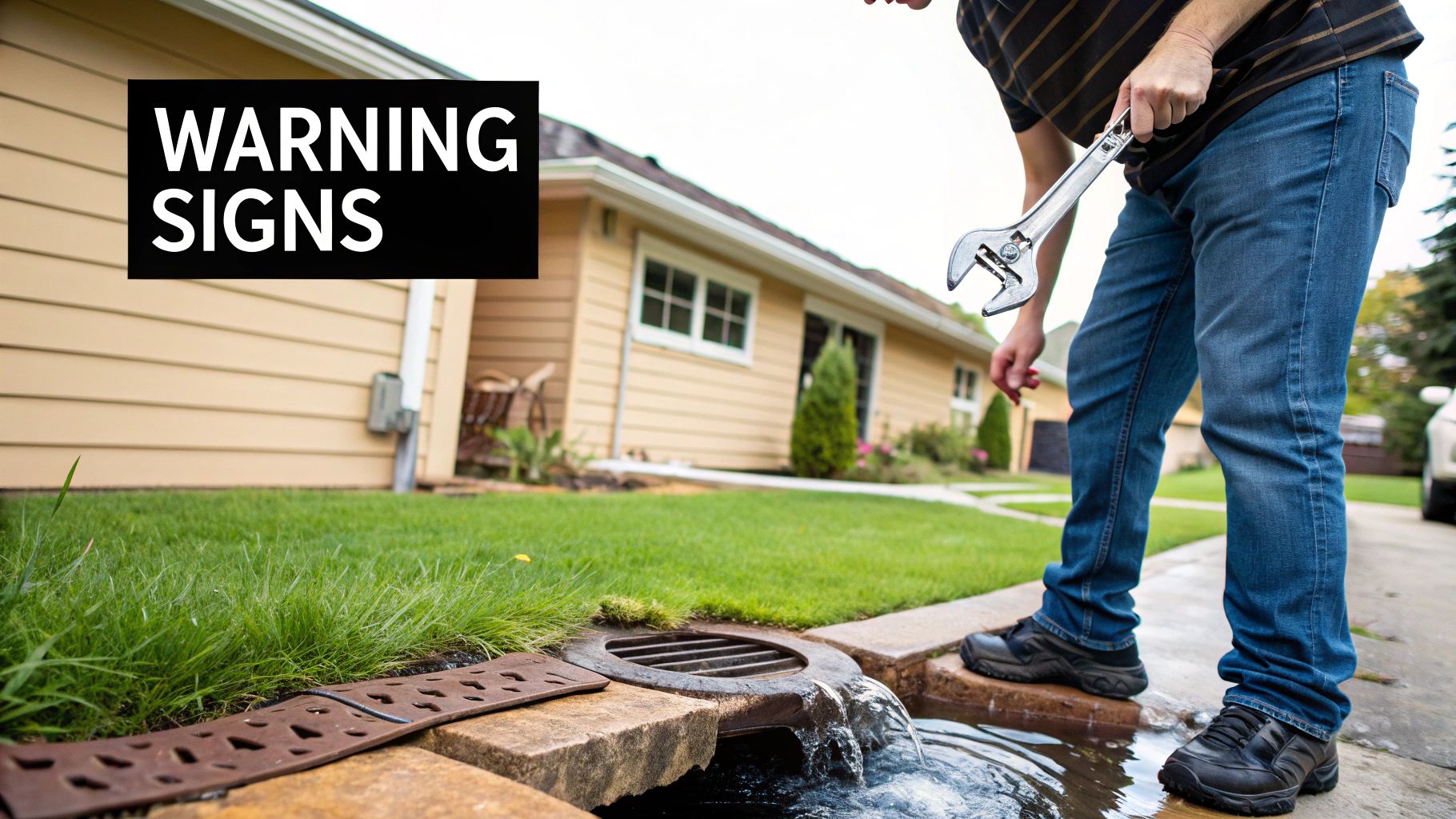
- Slow Drains and Gurgling Pipes: If your sinks, showers, and toilets are draining much slower than usual, it’s a classic sign the tank is full and the wastewater has nowhere to go. You might also hear strange gurgling sounds from the pipework as trapped air struggles to get out.
- Unpleasant Odours: A healthy, well-maintained septic system shouldn't smell. If you start to notice foul sewage odours around your tank, near the soakaway, or even creeping back into your home, that's a major red flag the system is overflowing.
- Lush Grass or Pooling Water: Spotted an unusually green, spongy patch of grass near your septic tank? This often means untreated wastewater is seeping out and over-fertilising the ground. Any standing water or soggy areas near your drain field is a serious indicator of a problem.
- Sewage Backups: The most urgent and unpleasant sign. If raw sewage is backing up into your toilets, showers, or sinks, your system is completely overwhelmed. It's crucial to call a professional like Sarah's Hire immediately for an emergency call-out to prevent further damage and health hazards.
If your drains are constantly slow or backing up, these are often critical signs of a full septic tank that might need an expert assessment and potentially professional drain cleaning services.
Why Regular Emptying Is Cheaper Than Repairs
Putting off emptying your septic tank to save a few quid is a classic false economy, and it’s one that can backfire in a big way. Let’s be clear: proactive maintenance is always cheaper than a messy, stressful emergency repair.
When a tank is left to its own devices, solid waste builds up and can end up blocking your soakaway system for good. This is the crucial network of underground pipes that lets treated water disperse safely back into the ground – without it, you’ve got a serious problem.
The Cost of Neglect vs Maintenance
Replacing a blocked soakaway is a major job. We’re talking about digging up your garden, serious disruption, and a bill that can easily run into thousands of pounds. A routine emptying service from Sarah's Hire, on the other hand, costs a tiny fraction of that.
Think of it like servicing your car. You spend a little on regular, planned maintenance to prevent a catastrophic – and very expensive – breakdown on the motorway. It’s the same principle, and this simple bit of upkeep protects your property and keeps you on the right side of environmental rules.
"We'd been putting it off for years, worried about the cost. A sewage backup into the shower was the final straw. Sarah’s Hire came out the same day and sorted it. I wish we’d just called them sooner – their regular service is a bargain compared to the stress and mess we went through." – David, a homeowner in Herefordshire.
Avoiding Emergency Call-Outs
Evidence from drainage companies all over the UK tells the same story: neglecting your tank leads to grim sewage backups, flooding, and severe damage to soakaway fields.
Financially, it’s a no-brainer. Preventive emptying is far less expensive than a panicked call for emergency repairs, which often come with call-out fees several hundred pounds higher than standard rates. Getting a handle on your septic tank maintenance frequency shows just how a small, regular investment can save you an absolute fortune down the line.
Why Choose Sarah's Hire for Your Septic Tank?
When it's time to get your septic tank emptied, you just want someone reliable and professional who gets the job done right. We get it. We specialise in off-mains drainage, so we understand exactly what homeowners need, day in and day out. Here’s why so many people trust us to handle their septic tank maintenance.
- Fast, Reliable Service: We know your time is precious. We turn up when we say we will and get the job done efficiently and cleanly, with minimal disruption to your day.
- Honest, Practical Advice: No confusing jargon or hidden fees. We give you straight-talking advice to help you manage your system and avoid future problems, saving you money in the long run.
- Licensed & Responsible: As a registered waste carrier, we guarantee that all waste is disposed of correctly and in an environmentally sound way, giving you complete peace of mind.
We provide septic tank emptying services across a wide area, including:
- Worcestershire
- Herefordshire
- Gloucestershire
- Shropshire
- The Cotswolds
From domestic septic tanks to providing facilities like our portable toilets for building sites, we treat every job with the same professional care.

Frequently Asked Questions
We get a lot of questions from homeowners about keeping their septic tanks happy and healthy. Here are some of the most common ones we hear. If yours isn’t on the list, just give our friendly team a call.
Does a cesspit need emptying as often as a septic tank?
Not at all – a cesspit needs emptying far more frequently. Think of a septic tank as a mini treatment plant, but a cesspit is just a sealed holding container with no outlet. Because it simply collects everything without processing it, it fills up much, much faster. For a typical home, a cesspit usually needs emptying every 4 to 8 weeks. You can read more about why cesspit emptying frequency is so high over at fsgroup.co.uk.
Can I use additives to empty my tank less often?
While some products claim they can magically break down sludge, they are never a substitute for a proper, professional pump-out. In fact, some of these additives can do more harm than good by stirring up settled solids and forcing them into your soakaway system. This is a recipe for expensive blockages and serious damage. The only guaranteed way to remove solids safely is to have the tank professionally emptied.
How do I know what size my septic tank is?
If you don't have the original paperwork for your system, don't worry. A professional can give you a good estimate based on the number of bedrooms in your house, or by taking a quick look at the tank itself. As a rough guide, a standard 3-bedroom house in the UK will typically have a septic tank that holds around 2,800 to 3,000 litres. Knowing your system's specifics is key, much like ensuring you have the right accessible toilet options on a site to cater for everyone's needs.

Get Your Septic Tank Sorted Today
Don’t wait for a nasty surprise. A quick, professional pump-out is the easiest way to protect your property and avoid expensive repairs. Our friendly team is ready to help you figure out the perfect schedule for your home.
Call us on 01234 567 890 or email us at info@sarahshire.com to book your service.