

Running a construction site or planning an event means you've got a lot to juggle, and getting the facilities right is a top priority. But here's a detail that's often missed: a standard accessible toilet doesn't always meet the needs of every disabled user. The biggest issue? The height of the seat. A standard-level toilet can make transferring from a wheelchair difficult, awkward, and even unsafe.
At Sarah's Hire, we solve this problem directly. We provide specialist higher toilets for disabled users that are designed for safe, easy transfers, ensuring everyone on your site has access to facilities that offer dignity and independence. We get you the right equipment, on time, with no fuss, so you can focus on your project.
Why Standard Accessible Toilets Often Aren't Enough
At a glance, a standard accessible toilet seems to tick the boxes. It’s got more space than a regular portable loo and a few grab rails. But for many people, especially those with mobility challenges, the devil is in the detail. And one of the most crucial details is the height of the toilet itself.
Imagine trying to get up from a very low-slung armchair compared to a dining chair. It takes a lot more effort, right? That’s the kind of struggle many wheelchair users face every day with standard-height toilets. This small difference in height can be the deciding factor between independence and needing help, or between staying safe and risking a fall.
The Critical Importance of Toilet Height
A standard toilet forces a user to lower themselves down quite a way, which can be tough and painful for anyone with joint problems, muscle weakness, or who is recovering from an operation. That’s why higher toilets for disabled users are designed to sit much closer to the height of a typical wheelchair seat, which is around 17-19 inches.
This simple alignment makes a world of difference. It takes the strain off a person’s arms, shoulders, and back when they transfer. By closing that vertical gap, a higher toilet isn't just about comfort—it's about safety and preserving dignity.
This image shows exactly how that extra height makes a genuine difference.
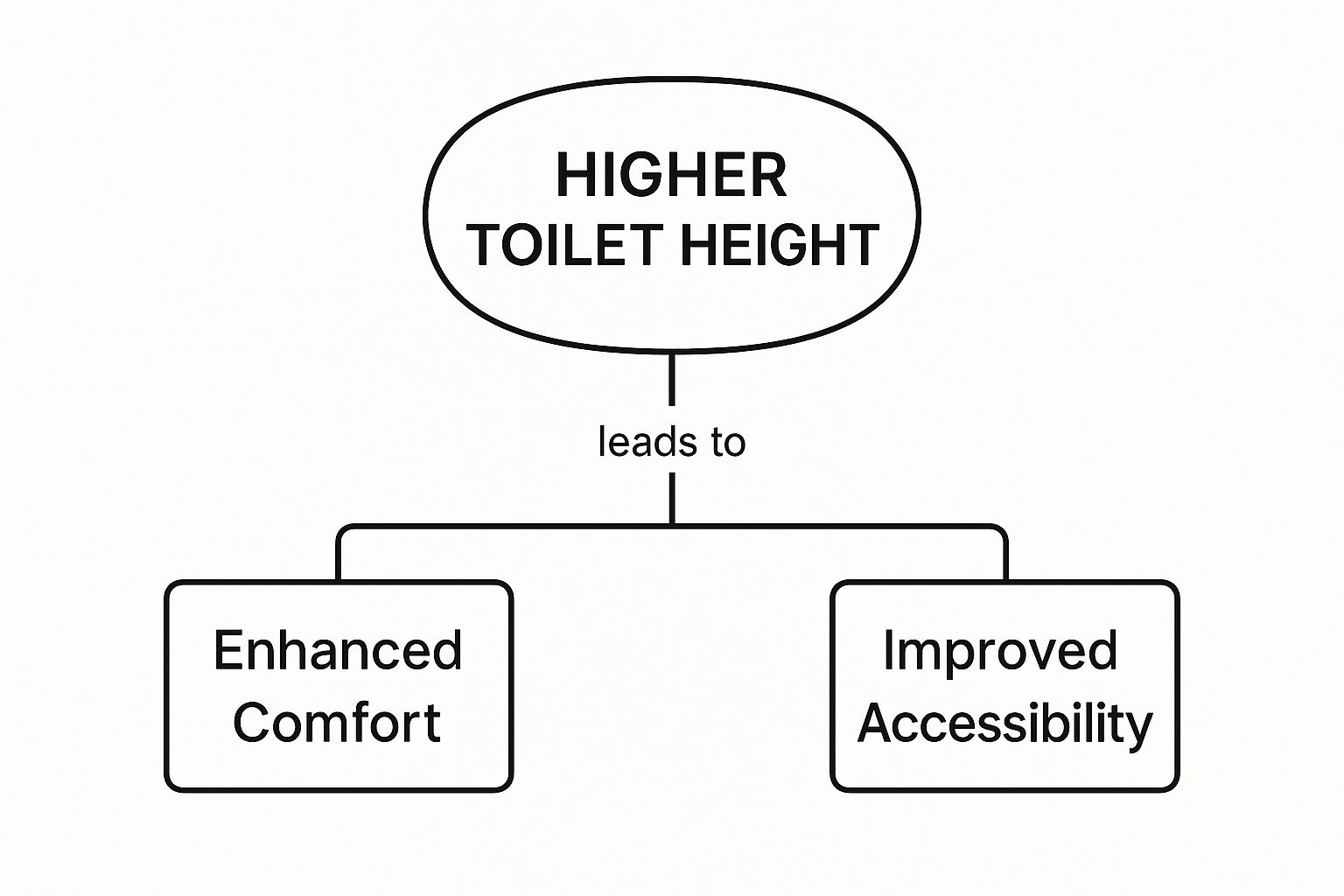
As you can see, a straightforward design tweak—raising the seat—is the key to creating a facility that’s truly usable and supportive for those who need it most.
To give you a clearer picture, let's break down the main differences.
Standard Accessible vs Higher Toilets At a Glance
See the key differences between a standard accessible toilet and a specialised higher toilet designed for users with mobility challenges.
| Feature | Standard Accessible Toilet | Sarah’s Hire Higher Toilet |
|---|---|---|
| Seat Height | Standard domestic height, around 15 inches. | Raised height, around 17-19 inches. |
| Transfer Ease | Requires significant effort and upper body strength. | Far easier and safer transfer from a wheelchair. |
| User Suitability | Meets basic regulations but is difficult for many. | Ideal for wheelchair users and people with limited mobility. |
| Safety | Can increase the risk of slips, strains, and falls. | Drastically reduces physical strain and enhances safety. |
| Independence | May require the user to have assistance. | Promotes dignity and independence. |
It's clear that while a standard unit meets the bare minimum, a higher toilet is designed with the user’s actual experience in mind.
Moving Beyond Basic Compliance
Just ticking the "accessible toilet" box on your checklist isn't enough to create a genuinely inclusive environment. Real accessibility means thinking about the practical, real-world experience of every single person on your site or at your event. For builders and event organisers, this means looking past the minimum rules and considering what people actually need.
"We had a big community fun day and needed to get the facilities spot on. Sarah's Hire advised us on the higher toilets for wheelchair users, and the feedback was brilliant. Guests told us they felt properly looked after. It made a real difference." – Mark, Event Organiser in Essex
This commitment to doing things properly has real benefits. It shows a level of care and professionalism that attendees and workers notice and appreciate. For a construction site, it means all team members can work comfortably. For a festival or wedding, it means every guest feels welcomed and properly looked after.
By choosing higher toilets for disabled users from Sarah’s Hire, you’re investing in a solution that goes beyond the basics, ensuring everyone has access to facilities that are not just compliant, but genuinely supportive.
The Real-World Difference a Few Inches Can Make
So, what does a bit of extra height on a toilet really mean in practice? For someone transferring from a wheelchair, those few inches are everything. A higher toilet seat dramatically reduces the physical effort needed, taking the strain off arms and shoulders and making the whole process safer and simpler.
It’s not just a matter of convenience; it’s about actively reducing the risk of falls and injuries on your site. Think about older workers or guests dealing with conditions like arthritis – for them, a higher seat transforms a painful, difficult task into something manageable. When you provide higher toilets for disabled users, you’re showing you genuinely care about their well-being.
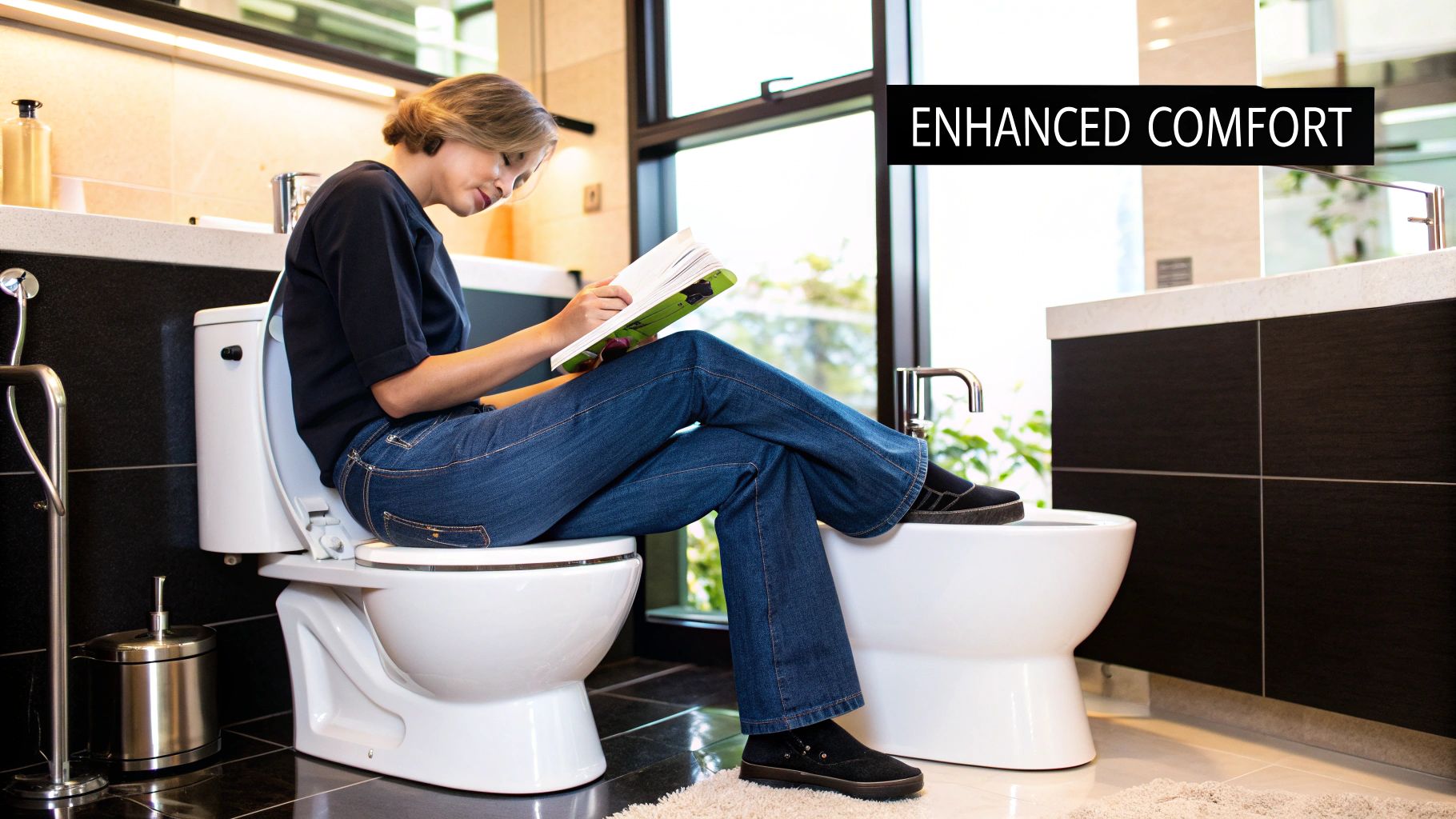
This single feature makes a massive impact, fostering independence and creating a more dignified experience for everyone.
Promoting Independence and Dignity
For many disabled people, being able to use the loo without help is a cornerstone of independence. A standard-height toilet can strip that away, forcing them to rely on a carer or struggle in a way that feels completely undignified.
A raised toilet, set at a similar height to a wheelchair, empowers users to manage their own needs safely and in private. This simple adjustment restores a sense of autonomy that is incredibly important. When you choose the right facilities, you’re not just providing a loo; you’re providing respect.
Enhancing Safety and Reducing Strain
Safety is non-negotiable, whether it's on a building site or at a festival. The transfer between a wheelchair and a toilet is a high-risk moment for falls, and a big height difference only dials up that danger.
Providing a higher toilet is a practical and effective way to minimise this risk. It creates a much more level transfer, which means:
- Less physical strain: Users don't have to awkwardly lift their entire body weight, which eases the pressure on joints and muscles.
- Improved stability: A smoother, more direct transfer is a more stable one, helping prevent slips or a loss of balance.
- Greater confidence: People feel safer and more secure, which is essential for their overall comfort and well-being.
This focus on safety also protects you. By proactively cutting down on accident risks, you’re creating a more secure environment for everyone involved. For a closer look at our standard units, you can check out our basic portable toilet hire options.

A Critical Need Across the UK
Despite some progress, finding genuinely accessible toilets is still a massive headache across the UK. A 2023 survey revealed some pretty stark figures: 76% of disabled people have been forced to avoid visiting places simply because of a lack of suitable loos. The same study found that 41% named poor access to toilets as a major barrier they face. It just goes to show how vital it is to get the facilities right. You can find more insights in the Euan's Guide Access Survey 2023.
When people can't find a toilet they can use, they can't stay. By providing genuinely usable higher toilets for disabled individuals, you ensure everyone can participate fully, whether it's for a full day's work or the whole weekend at a festival.
This isn’t just a nice-to-have feature. It’s an essential part of making your site or event truly open to all. You’re not just meeting a need—you’re removing a barrier that forces people to stay at home.
Understanding UK Accessibility Regulations
Let's be honest, staying on the right side of UK accessibility standards can feel like navigating a maze. But for you as a site manager or event planner, getting it wrong simply isn't an option. It all comes down to understanding your legal duties and how providing the right facilities, like higher toilets for disabled users, keeps you fully compliant.
The two main pillars you need to know are the Equality Act 2010 and the Building Regulations 2010 (specifically, Approved Document M). These aren't just guidelines; they're legal requirements designed to make sure everyone gets safe and dignified access to facilities.
Your Core Legal Responsibilities
At its heart, the Equality Act 2010 says you must make "reasonable adjustments" to stop disabled people from being at a major disadvantage. For an event or building site, this absolutely includes providing proper toilet facilities. Just offering a standard portable loo doesn’t cut it if it's impossible for someone with mobility issues to use.
Approved Document M then gets into the nitty-gritty, giving the technical specs for things like door widths, grab rail placement, and turning space for wheelchairs. Providing a higher toilet is a classic example of a "reasonable adjustment" that directly tackles a physical barrier many disabled people face.
Your job isn’t just to provide an accessible toilet, but to provide one that is genuinely usable. A toilet that’s too low for a wheelchair user to transfer onto safely fails that test.
Meeting these standards means you’re not just ticking a box; you’re creating a truly inclusive environment. While we're focused on UK rules, it’s often helpful to see how others do it. Looking at international standards, like those in the United States and their specific ADA faucet requirements, can offer a wider perspective on accessible design.
How Accessibility Standards Are Changing
Accessibility isn't a one-size-fits-all issue, and UK regulations have been evolving to reflect that. A huge step forward has been the legal requirement for Changing Places toilets in many new public buildings. These are a world away from a standard accessible loo.
Changing Places facilities are built for people with profound disabilities who need much more space and specialised equipment. For the over 250,000 people in the UK who simply cannot use standard accessible toilets, they are an absolute necessity. They include features like adult-sized changing benches and hoists, supporting people with conditions like muscular dystrophy or spinal injuries. It's great to see that, thanks to government funding, there are now over 1,800 registered Changing Places toilets in England—a massive step in the right direction.
This progress shows a clear trend: standards are always improving to meet people's real-world needs. As a site manager, staying ahead of the curve shows you're committed to doing things properly.
Your Compliance Checklist
It can feel like a lot to remember, so here’s a straightforward checklist to keep you on track. Get these points covered, and you’ll create a site that’s safe, compliant, and welcoming for everyone.
- Get the Numbers Right: You need at least one unisex accessible toilet. For bigger events or sites, you'll need more to keep queues down and ensure everyone is catered for.
- Check the Features: Your accessible toilets must have compliant features. Think properly positioned grab rails, non-slip flooring, and doors wide enough for easy wheelchair access.
- Focus on Height: Don't just settle for a basic accessible unit. Opting for higher toilets for disabled users is a key "reasonable adjustment" that makes a real difference to transfer safety.
- Keep Access Clear: The path to the toilet has to be free from clutter, well-lit, and easy for a wheelchair user to navigate. No obstacles!
- Keep it Clean and Stocked: A dirty or unstocked loo is as good as no loo at all. Regular cleaning and maintenance are part of your duty of care and a legal requirement for workplace welfare.
By following these guidelines and working with a knowledgeable supplier like Sarah’s Hire, you can be confident that your site isn’t just compliant, but genuinely inclusive too.
Essential Features of a Truly Accessible Toilet
When you're hiring a portable loo, it's easy to just tick the "accessible" box and think the job's done. But a truly accessible unit is so much more than a bigger box. Beyond the crucial raised height of higher toilets for disabled users, several other features are non-negotiable for making sure everyone on your site is safe, comfortable, and can use the facilities with dignity.
Think of it like this: the raised height is the foundation, but you still need solid walls, a roof, and windows to make a functional house. Let's walk through the practical checklist of what really matters.
Grab Rails: Sturdy and Correctly Placed
The first thing you should check is the grab rails. These aren't just for show; they are vital supports that people absolutely rely on to transfer safely from a wheelchair to the toilet and back again.
For this reason, they must be:
- Securely fixed: Give them a good shake. The rails should feel completely solid, with no wobble or give. They need to be able to support a person's full body weight, no questions asked.
- Correctly positioned: Regulations specify exactly where grab rails should be placed—usually on the wall behind the toilet and on the side wall. This isn't random; it provides stable support points throughout the entire transfer process.
- Easy to grip: The rails should have a diameter and texture that are easy to hold onto securely, even for someone with limited grip strength.
A properly designed unit, like the ones you can see in our accessible toilet gallery, will have these robust supports perfectly integrated from the start.

Non-Slip Flooring and a Wide Entrance
Slips and falls are a major risk in any toilet, but the danger is even greater in an accessible unit where users may have mobility challenges. That's why proper non-slip flooring is essential, not just a nice-to-have. The surface has to provide excellent grip, even when it’s wet.
Just as important is the entrance. The doorway needs to be wide enough for a wheelchair to pass through without any awkward shuffles or tight squeezes. An outward-swinging door is also standard practice for a very good reason—if someone were to fall inside, they wouldn't block the entrance, preventing others from getting in to help.
Thoughtful Interior Layout
Once inside, the layout is everything. A wheelchair user needs enough clear floor space to make at least a 180-degree turn. This turning circle is critical for allowing them to get into position and then exit comfortably without a fuss.
A cluttered or cramped interior completely defeats the purpose of an accessible toilet. Ample space isn't a luxury; it's a fundamental requirement for independence and safety.
It's the small details that make a big difference, too. Things like the placement of the toilet paper dispenser and the door lock matter. They must be within easy reach from a seated position. And it's not just about height—the lock itself needs to be easy to operate. If you want to dive deeper into what makes a good lock, a homeowner's guide to different bathroom door lock types can offer some useful insights. By checking these practical features, you can be sure the unit you hire truly delivers on its promise of accessibility.
Why Choose Sarah’s Hire?
When it comes to site facilities, choosing the right supplier makes all the difference. Getting accessibility wrong simply isn’t an option, so you need a team that understands exactly what’s required, both by law and by the people using the toilets. Here’s why event organisers and site managers across the UK trust us to get the job done right.
- Expert Advice, No Jargon: We know the regulations inside and out. We give you straight-talking, practical advice to ensure your site is fully compliant and genuinely user-friendly, without overcomplicating things.
- Reliability You Can Set Your Watch To: Your toilets will arrive on time, spotlessly clean, fully stocked, and ready for immediate use. We pride ourselves on a dependable service that lets you get on with your job.
- Designed for Real-World Use: Our higher toilets are modern, robust, and built with safety and dignity as the top priority. From non-slip floors to correctly placed grab rails, we sweat the details so you don't have to. Check out our quality portable toilet hire for building sites.

We keep a close eye on all accessibility developments. For instance, the government’s Changing Places scheme has made fantastic progress, allocating over £30.5 million to install more than 600 new, highly specialised facilities for severely disabled individuals across England. This just shows how important providing top-tier accessible solutions has become—a standard we strive to meet with all our hire services. You can read more about these accessibility improvements on GOV.UK.
We’re proud to serve locations across the country, ensuring your accessibility needs are met with professionalism and care. Our key service areas include:
- London
- Essex
- Hertfordshire
- Kent
- Surrey
- Sussex
Frequently Asked Questions
We get it—when you're sorting out facilities for an event or a building site, you just want clear, straightforward answers. So, here are the most common questions we're asked about hiring higher toilets for disabled users, answered straight-up so you know exactly where you stand.
How Many Accessible Toilets Do I Need?
There’s no single magic number here, as it all comes down to the size and length of your event or project. But UK guidance gives us a really solid place to start.
As a bare minimum, you should have at least one unisex accessible toilet. For bigger events or long-term construction projects, you'll naturally need more to make sure nobody's left waiting. The easiest way to get it right is to give us a call with your project details.
Our team has done this hundreds of times. We can give you a proper recommendation based on your numbers and make sure you're not just compliant, but that your guests or team are genuinely well looked after.
Are Your Toilets Suitable for All Wheelchair Users?
Our accessible units have been designed to meet the needs of most wheelchair users. We've focused on the features that really matter: a raised seat height to make transfers easier, wide doors for easy entry, and plenty of space to move around inside.
Of course, all the essentials are there too, like sturdy grab rails and proper non-slip flooring. But we know that "accessible" can mean different things to different people.
If you have a specific concern – maybe you need extra room for a carer or need to accommodate a larger motorised wheelchair – please just ask. We can give you the exact dimensions and specs to make sure our toilets are the right fit.
It's all about making sure you get a solution that genuinely works for everyone on your site.
What Does the Hire Price Include?
We keep things simple and transparent. Our hire service is all-inclusive, so the price you're quoted is the price you pay. No nasty surprises down the line.
Your hire price covers everything you need to be up and running:
- Delivery and setup: Our team delivers the units on schedule and positions them exactly where you need them for safe and easy access.
- All the essentials: Every toilet arrives fully stocked with loo roll and hand sanitiser, ready to go from the moment it lands.
- Hassle-free collection: When you're done, we’ll come and collect the unit quickly and cleanly.
For any long-term hires, we also include a regular cleaning and restocking service to keep everything hygienic. Our goal is to make the whole process completely hassle-free, leaving you to focus on your event or project, knowing the facilities are in good hands.
Get Your Accessibility Sorted Today
Making sure your site or event is fully accessible isn’t just a box-ticking exercise. It’s about creating a welcoming and safe environment for everyone. Providing proper higher toilets for disabled users is a huge part of getting that right, and it’s a detail that shows you care.
The team here at Sarah’s Hire takes the guesswork out of it for you. We’ll help you figure out exactly what you need to be compliant and, more importantly, to make sure every guest or worker is looked after properly.
Give our friendly team a call to talk through what you need and get a no-fuss quote. Let's get your facilities sorted.
Call us on 01245 475 700 or email info@sarahshire.com.