How Often to Empty Your Septic Tank: A Guide for Homeowners

If your home isn’t connected to the mains sewer, you know that managing a septic tank is part of country living. But the one question we hear all the time is, ‘how often should I get my septic tank emptied?’ Get the timing wrong, and you could be looking at nasty smells, blocked drains, or even serious damage to your soakaway system. At Sarah’s Hire, we provide reliable, no-fuss septic tank emptying services to prevent these headaches, keeping your system running smoothly so you can get on with your life.

Your Guide to Septic Tank Emptying

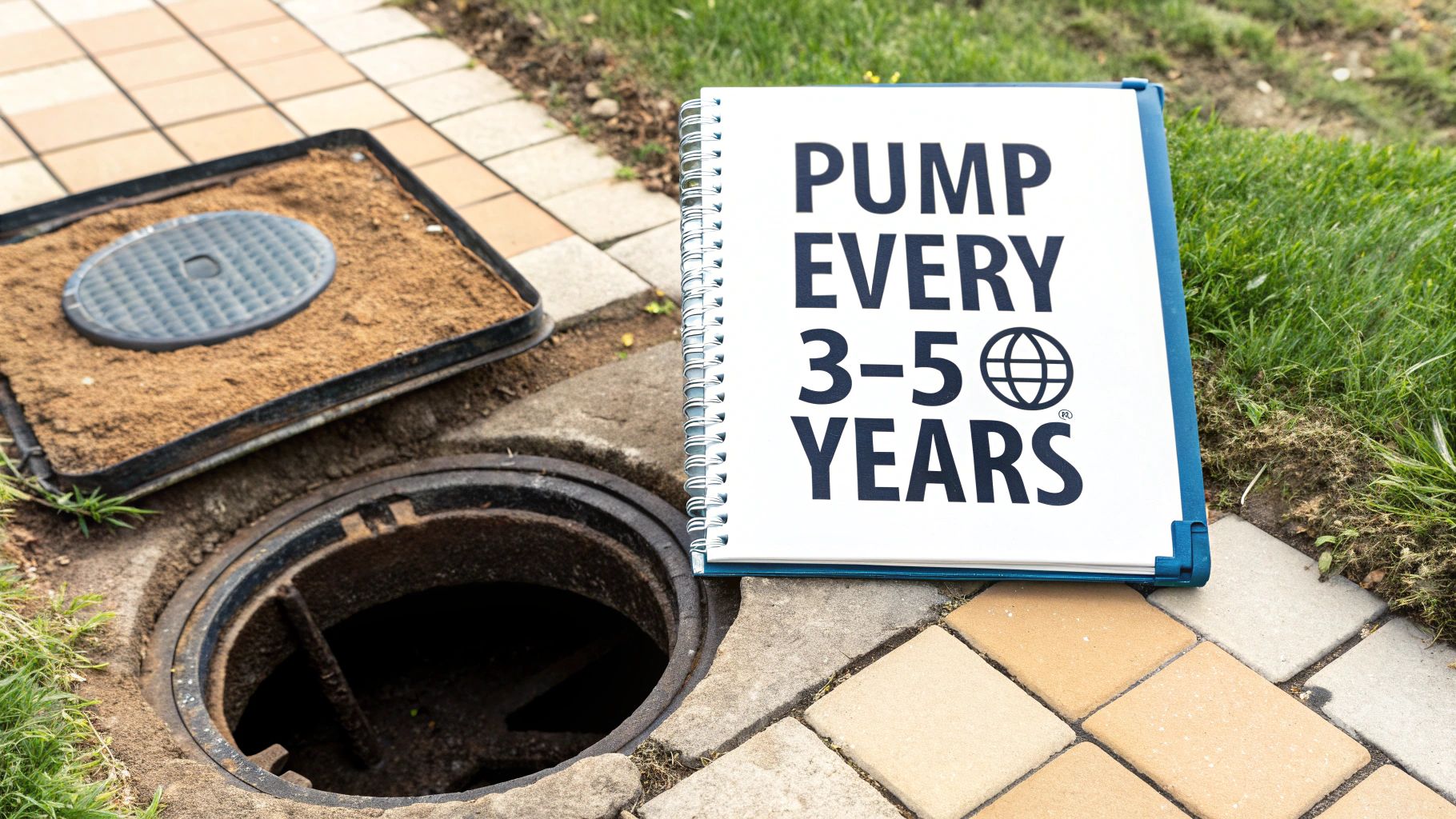
The short answer is that most septic tanks in the UK need emptying every 3 to 5 years. But that’s just a rule of thumb. Your perfect schedule really depends on the size of your tank, how many people live in your house, and your daily water usage.

This guide will walk you through everything you need to know to set up a maintenance plan that works for you. We’ll help you keep your system running smoothly and give you proper peace of mind.

How Your Septic Tank Works

A septic tank isn't just a big underground box; it's a clever little ecosystem. All the wastewater from your home flows into it, and inside, the solids sink to the bottom to form a layer of sludge. Lighter materials like grease and oil float to the top, creating a layer of scum.

The cleaner liquid in the middle then flows out to a soakaway (or drain field), where it’s safely filtered back into the soil.

Getting the tank emptied is so important because it removes the sludge and scum that the natural bacteria can’t break down. If these layers get too thick, they can start to block the outlet pipes, causing grim backups in your house or, worse, forcing solid waste into your soakaway. That’s a messy and expensive problem to fix.

Household Size and Emptying Frequency

The number of people living in your home is one of the biggest factors. More people means more wastewater, which means the tank fills up much faster.

A big family of five or more might need their tank emptied every 2 to 3 years. On the other hand, if you live on your own, you might only need to book a pump-out once every 5 to 10 years. It really does vary that much.

To give you a clearer idea, here’s a simple table based on a standard-sized tank.

Recommended Emptying Frequency by Household Size

Number of People in Household Recommended Emptying Frequency (Years)
1-2 5-7
3-4 3-5
5-6 2-3
7+ 1-2

Remember, this is just a starting point. If you work from home, have lots of visitors, or use appliances like washing machines and dishwashers heavily, you'll need to adjust your schedule.

Keeping on top of your septic tank schedule is also vital for the health of your drain field. A clogged tank can quickly ruin a soakaway. For more on this, have a look at this helpful guide to drain field maintenance. You might also be interested in our guide to portable toilet hire for building sites, another key service we provide for off-mains properties.

What Determines Your Emptying Schedule

Thinking of your septic tank as a 'set it and forget it' system is a fast track to some very unpleasant problems. Several key factors directly influence how quickly it fills up with solid waste, and understanding them is the key to creating the right emptying schedule.

So, let's break down what really matters when figuring out how often you should be calling in the professionals.

Core Influencing Factors

The frequency of your service visits isn't just a random guess; it's a calculation based on how you live and the system you have installed.

  • The Number of People at Home: This is the single biggest factor, without a doubt. A bustling family of five is going to generate far more wastewater than a couple, causing solids to build up much, much faster. More people always means more frequent emptying.

  • The Size of Your Septic Tank: It sounds obvious, but smaller tanks simply have less room and will need pumping out more often than larger ones. If your family has grown since the tank was first put in, you might find it's now a bit undersized for your needs.

This infographic helps visualise how your household's habits and size play a central role.
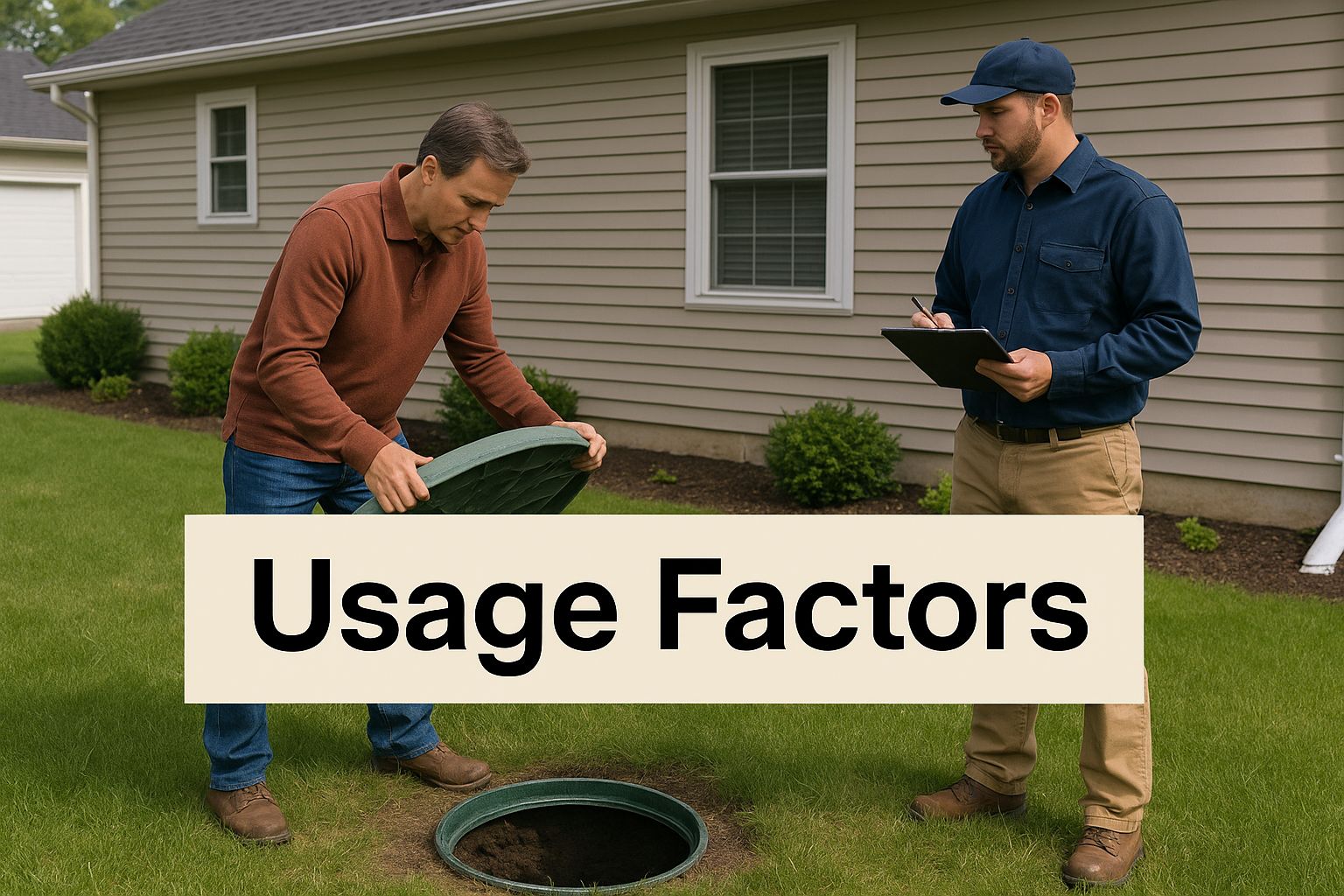
Infographic about how often to empty septic tank
How Often to Empty Your Septic Tank: A Guide for Homeowners 5 Hire Portable Building Site Toilets, Portable Event Toilets, Luxury Toilets, Welfare Units and Generators

As you can see, your daily routines are at the heart of your tank's health.

Your Daily Habits Matter

What you and your family do each day has a direct, tangible impact on how quickly your tank fills. It's not just about the big things.

  • Daily Water Usage Habits: Do you run the washing machine and dishwasher every single day? High water usage doesn't just fill the tank faster. It can also churn up the solids that should be settling at the bottom, pushing them towards the soakaway before they've had a chance to break down properly.

  • What You Flush and Pour Away: Your septic tank is a living ecosystem, full of helpful bacteria doing an important job. Flushing things like wet wipes, cotton buds, or nappies will clog it up in no time. Pouring fats, oils, and harsh chemicals down the drain is just as bad, as it kills off the beneficial bacteria that break down the waste.

As a rule of thumb, septic tanks of 1,000 gallons or smaller might need emptying as often as once a year if they're under heavy use. For most standard domestic tanks, the interval is closer to every three years. You can learn more about these UK septic tank guidelines to see how being smart with your water can help extend these periods.

Warning Signs Your Septic Tank Is Full

Your septic tank is usually pretty good at telling you when it’s getting full and needs emptying. Ignoring the warnings can lead to messy, smelly, and expensive problems, so it’s always best to act fast when you spot the signs.

Keep an eye (and a nose) out for these tell-tale signs that you need to book a professional in.
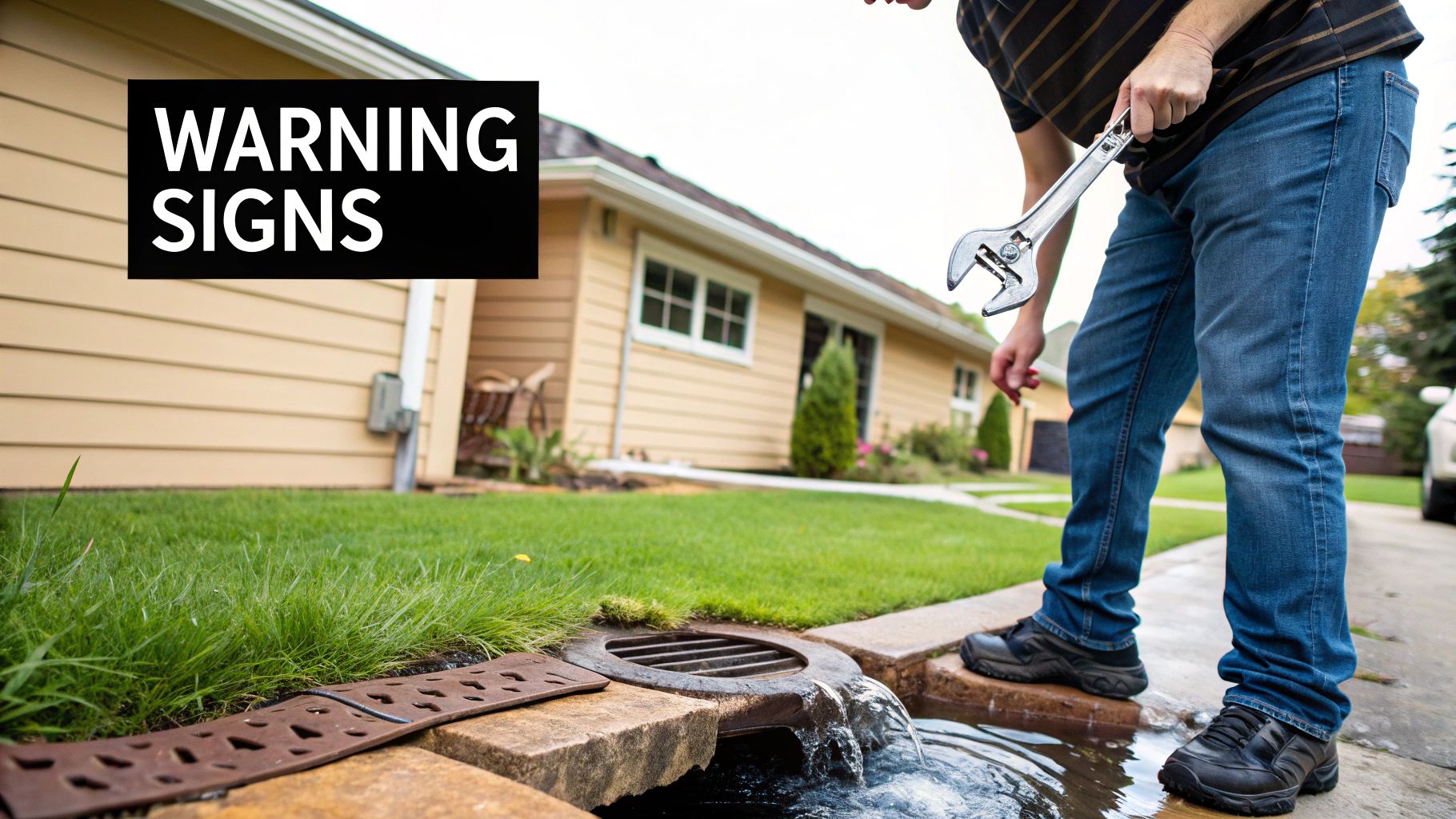
A lush green lawn with a visible septic tank lid, indicating potential overflow issues.
How Often to Empty Your Septic Tank: A Guide for Homeowners 6 Hire Portable Building Site Toilets, Portable Event Toilets, Luxury Toilets, Welfare Units and Generators

Common Indicators of a Full Tank

The most frequent signs of a full septic tank are changes you can see, hear, or smell around your house and garden.

  • Slow Drains and Gurgling Pipes: If your sinks, showers, and toilets are draining much slower than usual, it’s a classic sign the tank is full and the wastewater has nowhere to go. You might also hear strange gurgling sounds from the pipework as trapped air struggles to get out.
  • Unpleasant Odours: A healthy, well-maintained septic system shouldn't smell. If you start to notice foul sewage odours around your tank, near the soakaway, or even creeping back into your home, that's a major red flag the system is overflowing.
  • Lush Grass or Pooling Water: Spotted an unusually green, spongy patch of grass near your septic tank? This often means untreated wastewater is seeping out and over-fertilising the ground. Any standing water or soggy areas near your drain field is a serious indicator of a problem.
  • Sewage Backups: The most urgent and unpleasant sign. If raw sewage is backing up into your toilets, showers, or sinks, your system is completely overwhelmed. It's crucial to call a professional like Sarah's Hire immediately for an emergency call-out to prevent further damage and health hazards.

If your drains are constantly slow or backing up, these are often critical signs of a full septic tank that might need an expert assessment and potentially professional drain cleaning services.

Why Regular Emptying Is Cheaper Than Repairs
A comparison image showing an affordable septic tank emptying service versus a costly, disruptive garden excavation for soakaway repair.
How Often to Empty Your Septic Tank: A Guide for Homeowners 7 Hire Portable Building Site Toilets, Portable Event Toilets, Luxury Toilets, Welfare Units and Generators

Putting off emptying your septic tank to save a few quid is a classic false economy, and it’s one that can backfire in a big way. Let’s be clear: proactive maintenance is always cheaper than a messy, stressful emergency repair.

When a tank is left to its own devices, solid waste builds up and can end up blocking your soakaway system for good. This is the crucial network of underground pipes that lets treated water disperse safely back into the ground – without it, you’ve got a serious problem.

The Cost of Neglect vs Maintenance

Replacing a blocked soakaway is a major job. We’re talking about digging up your garden, serious disruption, and a bill that can easily run into thousands of pounds. A routine emptying service from Sarah's Hire, on the other hand, costs a tiny fraction of that.

Think of it like servicing your car. You spend a little on regular, planned maintenance to prevent a catastrophic – and very expensive – breakdown on the motorway. It’s the same principle, and this simple bit of upkeep protects your property and keeps you on the right side of environmental rules.

"We'd been putting it off for years, worried about the cost. A sewage backup into the shower was the final straw. Sarah’s Hire came out the same day and sorted it. I wish we’d just called them sooner – their regular service is a bargain compared to the stress and mess we went through." – David, a homeowner in Herefordshire.

Avoiding Emergency Call-Outs

Evidence from drainage companies all over the UK tells the same story: neglecting your tank leads to grim sewage backups, flooding, and severe damage to soakaway fields.

Financially, it’s a no-brainer. Preventive emptying is far less expensive than a panicked call for emergency repairs, which often come with call-out fees several hundred pounds higher than standard rates. Getting a handle on your septic tank maintenance frequency shows just how a small, regular investment can save you an absolute fortune down the line.

Why Choose Sarah's Hire for Your Septic Tank?

When it's time to get your septic tank emptied, you just want someone reliable and professional who gets the job done right. We get it. We specialise in off-mains drainage, so we understand exactly what homeowners need, day in and day out. Here’s why so many people trust us to handle their septic tank maintenance.

  • Fast, Reliable Service: We know your time is precious. We turn up when we say we will and get the job done efficiently and cleanly, with minimal disruption to your day.
  • Honest, Practical Advice: No confusing jargon or hidden fees. We give you straight-talking advice to help you manage your system and avoid future problems, saving you money in the long run.
  • Licensed & Responsible: As a registered waste carrier, we guarantee that all waste is disposed of correctly and in an environmentally sound way, giving you complete peace of mind.

We provide septic tank emptying services across a wide area, including:

  • Worcestershire
  • Herefordshire
  • Gloucestershire
  • Shropshire
  • The Cotswolds

From domestic septic tanks to providing facilities like our portable toilets for building sites, we treat every job with the same professional care.

Frequently Asked Questions

We get a lot of questions from homeowners about keeping their septic tanks happy and healthy. Here are some of the most common ones we hear. If yours isn’t on the list, just give our friendly team a call.

Does a cesspit need emptying as often as a septic tank?

Not at all – a cesspit needs emptying far more frequently. Think of a septic tank as a mini treatment plant, but a cesspit is just a sealed holding container with no outlet. Because it simply collects everything without processing it, it fills up much, much faster. For a typical home, a cesspit usually needs emptying every 4 to 8 weeks. You can read more about why cesspit emptying frequency is so high over at fsgroup.co.uk.

Can I use additives to empty my tank less often?

While some products claim they can magically break down sludge, they are never a substitute for a proper, professional pump-out. In fact, some of these additives can do more harm than good by stirring up settled solids and forcing them into your soakaway system. This is a recipe for expensive blockages and serious damage. The only guaranteed way to remove solids safely is to have the tank professionally emptied.

How do I know what size my septic tank is?

If you don't have the original paperwork for your system, don't worry. A professional can give you a good estimate based on the number of bedrooms in your house, or by taking a quick look at the tank itself. As a rough guide, a standard 3-bedroom house in the UK will typically have a septic tank that holds around 2,800 to 3,000 litres. Knowing your system's specifics is key, much like ensuring you have the right accessible toilet options on a site to cater for everyone's needs.

Get Your Septic Tank Sorted Today

Don’t wait for a nasty surprise. A quick, professional pump-out is the easiest way to protect your property and avoid expensive repairs. Our friendly team is ready to help you figure out the perfect schedule for your home.

Call us on 01234 567 890 or email us at info@sarahshire.com to book your service.

Portable Disabled Toilet Hire: Your Guide for Inclusive Sites & Events

When you're running a construction site or organising an event, getting the facilities right is a top priority. But a standard portable loo just won't cut it for everyone. Providing a high-quality portable disabled toilet isn't just about comfort and dignity—it's an absolute must-have for any guest or worker with mobility challenges, and a key part of your legal duty.

Planning facilities for a busy site or event can feel like a massive puzzle. You're juggling numbers, placement, and regular servicing, and the last thing you need is a supplier who lets you down. Get accessibility wrong, and you’re not just creating a bad experience for your guests or workers; you could also fall foul of UK regulations like the Equality Act 2010.

At Sarah's Hire, we get it. You need a simple, no-fuss solution that ticks every box—compliance, comfort, and reliability. That’s why we supply fully compliant portable disabled toilet units that make inclusivity straightforward. We handle the delivery, placement, and servicing, so you can focus on making your project or event a success.

What Makes a Portable Disabled Toilet Genuinely Accessible?

So, what really sets a standard portable loo apart from a proper portable disabled toilet? It comes down to a few thoughtful design features that make all the difference for space, safety, and ease of use. A genuinely accessible toilet isn't just a bigger box; it's designed from the ground up to give every user independence and dignity.

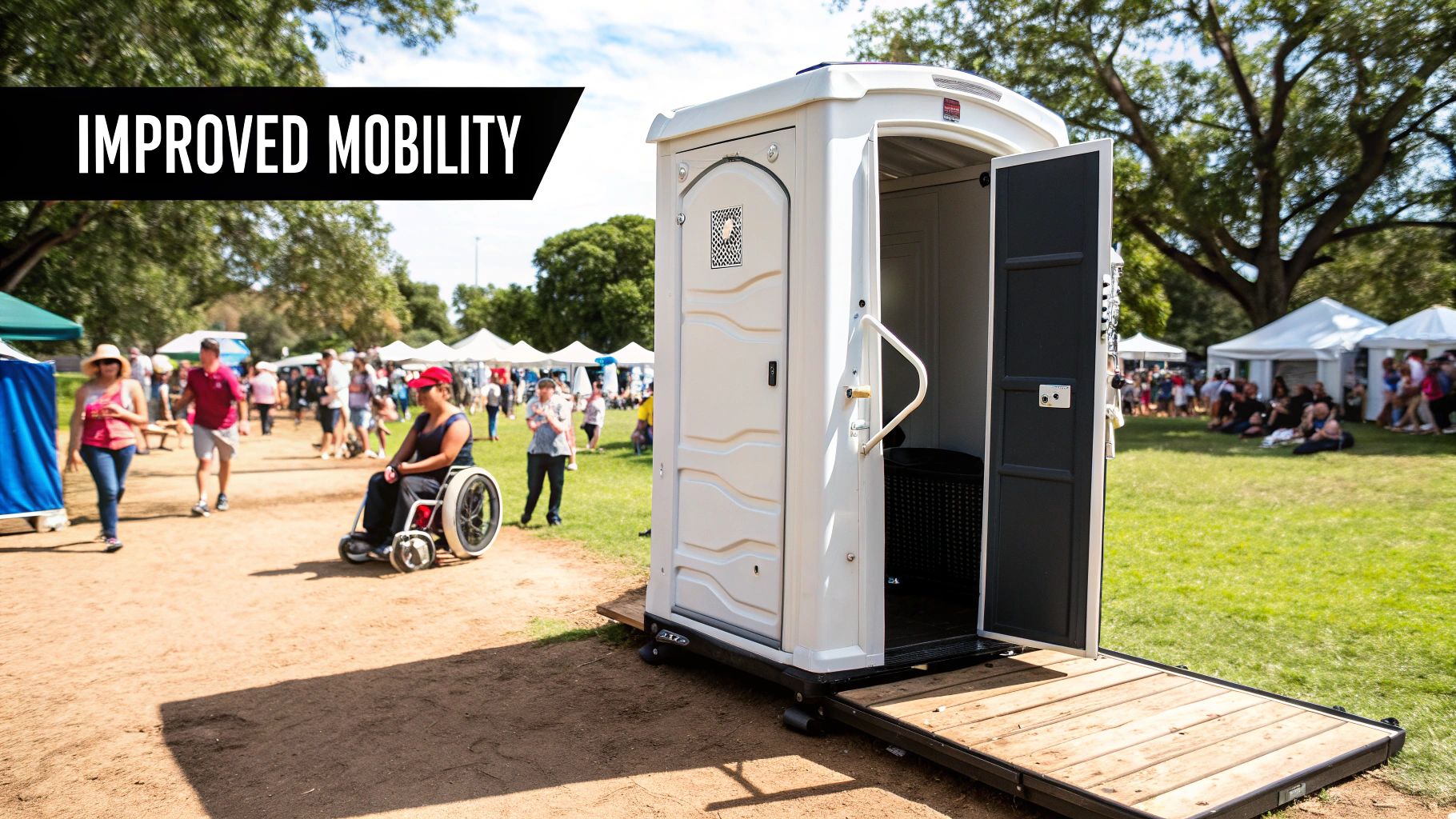
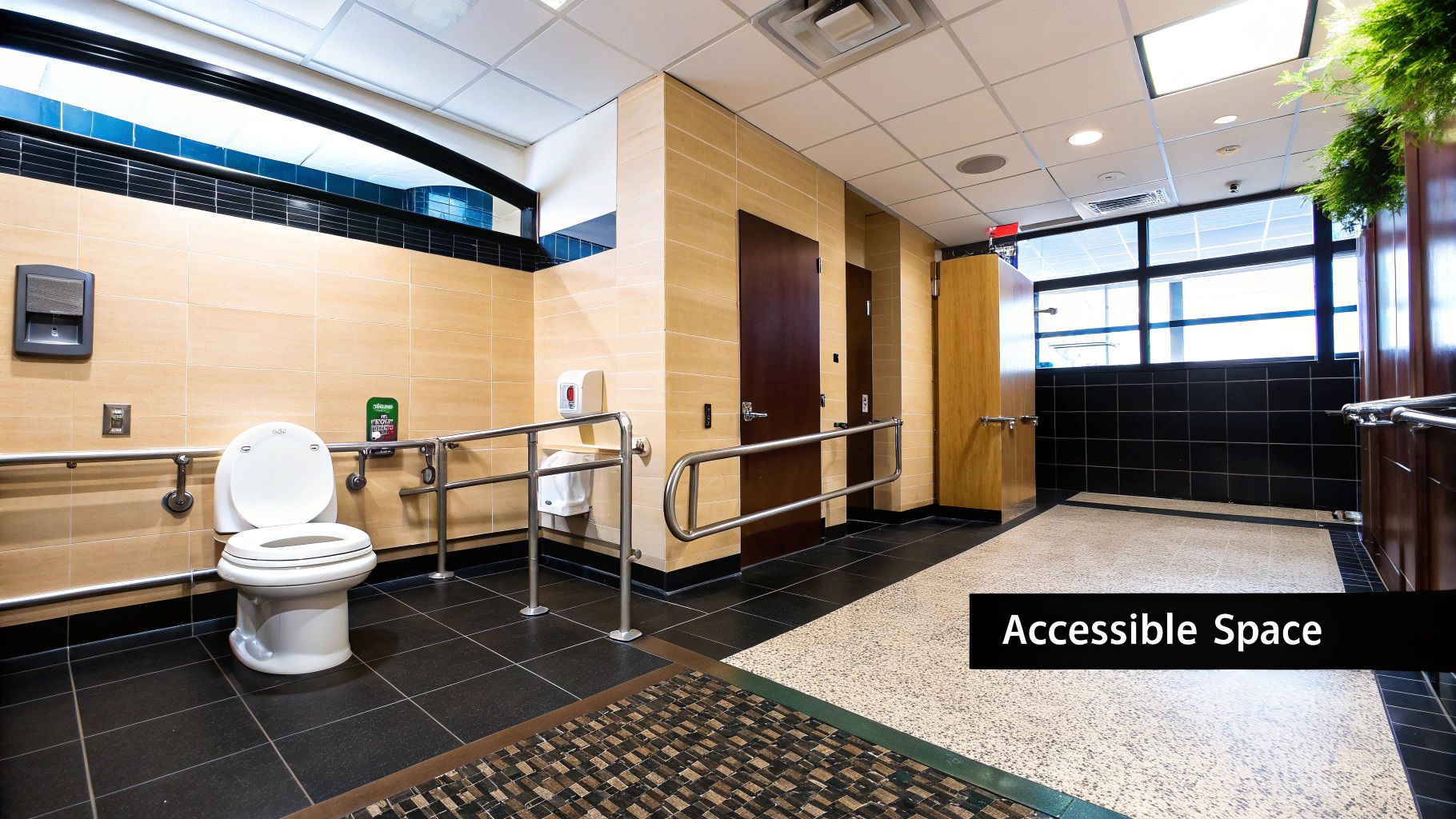
A clean and spacious portable disabled toilet unit, showing grab rails and a low-level toilet.
Portable Disabled Toilet Hire: Your Guide for Inclusive Sites & Events 13 Hire Portable Building Site Toilets, Portable Event Toilets, Luxury Toilets, Welfare Units and Generators

Knowing what to look for means you’re not just ticking a box for compliance – you’re providing a facility that actually works for the people who need it. Let's break down the essentials.

Ground-Level Entry and a Wide Door

First things first: how does someone get in? The most critical feature is a completely flat, ground-level floor. There can't be any steps or lips that could block a wheelchair, walker, or even a pushchair. This seamless entry is non-negotiable for true accessibility.

Alongside this, you need an extra-wide door. It might seem like a small detail, but it means a user doesn’t have to perform awkward manoeuvres just to get inside. It removes a barrier before they’ve even crossed the threshold.

Plenty of Space Inside

Once inside, space is everything. A compliant portable disabled toilet must have enough room for a wheelchair user to make a full 360-degree turn. This is essential for them to close the door privately, approach the toilet, and transfer safely from their chair.

This extra space isn't just for wheelchair users. It’s also a lifesaver for parents with small children or anyone who needs a carer to assist them. It's what makes the unit truly inclusive. The demand for these facilities is growing fast; the global market was valued at USD 1.2 billion in early 2024 and is expected to more than double by 2033 as accessibility becomes a bigger priority.

Key Safety and Support Features

Safety is the absolute priority inside an accessible unit. Make sure any toilet you hire has these non-negotiable features:

  • Interior Grab Rails: Sturdy, well-placed handrails are a must. They give crucial support for moving around, sitting down, and standing up, dramatically cutting the risk of slips and falls.
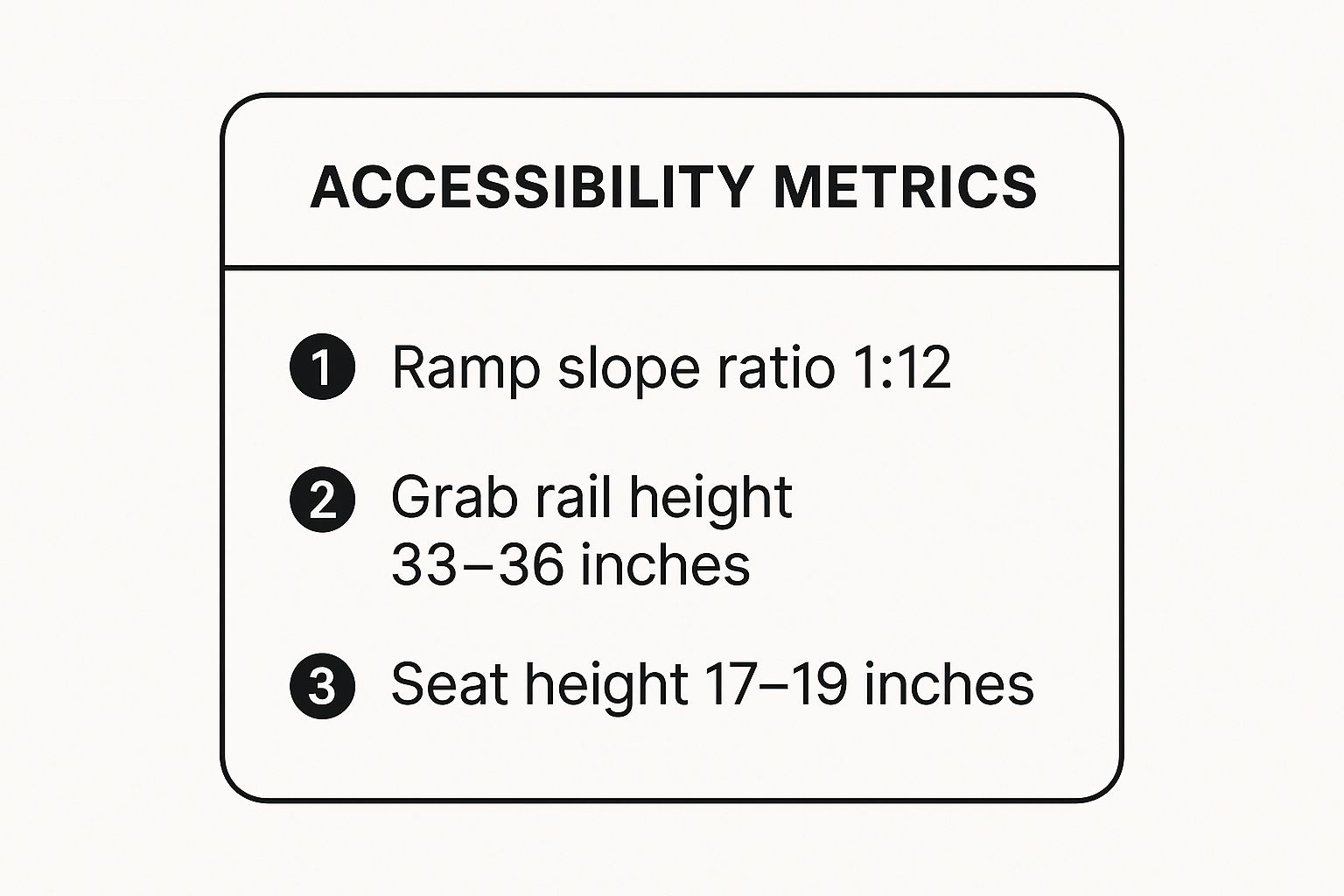
  • Lower-Height Toilet: The toilet itself is set at a specific height (usually 17-19 inches) to make transferring from a wheelchair as simple and safe as possible.
  • Anti-Slip Flooring: The floor should always have a textured, non-slip surface to provide a secure grip, even if it gets wet. It’s another simple but vital layer of safety.

When your hired unit has all these features, you know you’re providing a facility that's not only compliant but genuinely safe and comfortable for everyone. You can see these features in action on our high-quality disabled toilet units.

Meeting Legal and Practical Site Requirements

As a site or event manager, providing the right number of accessible toilets isn't just about being considerate—it's your legal duty under the Equality Act 2010. Getting this right is non-negotiable. It’s about making sure every single guest or worker feels valued and can use the facilities with dignity and safety.

But real compliance goes beyond just having a disabled toilet tucked away in a corner. It means thinking about the correct ratios, the practicalities of where you put it, and how easy it is to access. Getting these details right shows a genuine commitment to inclusivity, which is great for your reputation and ensures a better experience for everyone.

How Many Accessible Toilets Do You Need?

So, what's the magic number? While it can vary depending on the scale of your event or site, a solid rule of thumb is to look at the ratio of accessible units to standard ones. This isn't just a box-ticking exercise; it's fundamental to guest comfort and legal compliance.

A widely accepted industry guideline is to provide one accessible portable toilet for every 10 standard units. This simple ratio ensures there are enough larger units available for wheelchair users, parents with buggies, and others who need more space, reflecting a much-needed focus on disabled access rights.

Placement and On-Site Practicalities

Where you put your portable disabled toilet is just as important as having one in the first place. The unit needs to be in a convenient, well-lit, and easy-to-find spot. Most importantly, it must sit on firm, level ground so that the ground-level entry is truly flat and stable for safe wheelchair access.

Think about the main pathways and busy areas of your site. Placing accessible units near key facilities, entrances, or viewing areas makes them feel like a core part of the setup, not an afterthought. You can see how a well-placed construction site toilet hire fits seamlessly into a busy environment in our gallery.

Infographic about portable disabled toilet
Portable Disabled Toilet Hire: Your Guide for Inclusive Sites & Events 14 Hire Portable Building Site Toilets, Portable Event Toilets, Luxury Toilets, Welfare Units and Generators

These exact specifications—covering everything from ramp slope to grab rail height—are what turn a standard box into a genuinely functional and safe accessible toilet.

To make sure you've covered all the bases, we've put together a simple checklist.

Accessible Toilet Provision Checklist

Use this quick checklist to ensure you're meeting both your legal duties and the practical needs of your guests or staff.

Checklist Item Why It Matters Sarah's Hire Solution
Correct Ratio (1:10) Ensures enough units are available to avoid long waits and meet legal guidelines. We advise on the right number of units based on your total toilet hire.
Firm, Level Ground Essential for safe wheelchair access and stability of the unit. No bumps or slopes! Our delivery team is trained to identify the best, safest placement location on your site.
Clear, Unobstructed Path Users must be able to reach the toilet easily without navigating obstacles. We'll help you position the unit along main pathways, avoiding mud or tricky terrain.
Sufficient Internal Space Allows for a wheelchair to turn and for carers to assist if needed. Our disabled access units are spacious, meeting all standard size requirements.
Grab Rails & Low-Level WC Provides crucial support for users to transfer safely and use the facilities independently. All our accessible units come fitted with regulation-compliant grab rails and toilet height.

Following these points ensures you're not just compliant, but you're genuinely providing for the needs of everyone on your site.

Who Benefits from Accessible Toilet Hire?

It’s easy to think of a portable disabled toilet as just a box-ticking exercise, but the reality is so much bigger than that. Having the right facilities on-site is about creating a space where every single person feels genuinely welcome, safe, and thought of. From a muddy building site to a sunny village fete, accessible loos are a quiet but crucial part of any well-run operation.

A person in a wheelchair smiling, representing inclusivity at an event.
Portable Disabled Toilet Hire: Your Guide for Inclusive Sites & Events 15 Hire Portable Building Site Toilets, Portable Event Toilets, Luxury Toilets, Welfare Units and Generators

So, who are they for? The list is longer than you might think.

For You, the Construction Site Manager

As a site manager, you know that Health and Safety Executive (HSE) welfare rules are non-negotiable. But a standard portable loo doesn’t cover all bases for a modern, diverse workforce. By including a portable disabled toilet, you're prepared for any team member with a mobility issue, whether it's temporary or permanent.

Think about one of your best brickies who twists an ankle and ends up on crutches for a few weeks. An accessible unit means they can get back to work safely and comfortably, keeping your project on track. It's a simple, practical step that shows you value your crew and keeps you fully compliant.

For You, the Event Organiser

If you're putting on an event, you want everyone to have a brilliant time. Inclusivity isn't just a buzzword; it's what separates a good event from a great one. Whether it’s a music festival, a wedding, or a local charity run, accessible toilets are an absolute must.

Just picture it:

  • A local food festival: An elderly visitor can spend the whole day sampling treats without worrying about squeezing into a tiny, unsuitable loo.
  • A community fun run: A participant using a wheelchair and their family can focus on the race, knowing their basic needs are covered.
  • A countryside wedding: Guests of all ages and abilities can relax and celebrate together, right from the first toast to the last dance.

It's also worth remembering that these larger units are a lifesaver for parents with pushchairs or those needing to help small children. It’s a small detail that makes a huge difference to families.

"Sarah’s Hire made it simple. Their reliable service and high-quality units meant our event was truly open to everyone. We had fantastic feedback from attendees who appreciated the thoughtful facilities."
– Mark, Event Manager

Ultimately, providing proper accessible facilities sends a clear message: this event is for everyone. You’re not just avoiding complaints; you're building a reputation for being thoughtful and professional, encouraging more people to come back year after year.

Why Choose Sarah’s Hire?

When you need a portable disabled toilet, you need a service that’s dependable, professional, and gets straight to the point. You haven’t got time for late deliveries or units that aren’t up to scratch. At Sarah's Hire, we deliver exactly what you need, when you need it—no fuss.

  • On-Time, Every Time: We guarantee your units will arrive on schedule, spotlessly clean, and ready for immediate use. We handle all the logistics so you can get on with your job.
  • Expertise You Can Trust: We know the Equality Act 2010 inside out. Every unit we supply is fully compliant with UK standards, giving you total peace of mind.
  • Straight-Talking Support: From your first call to the final collection, our friendly team is here to offer clear, practical advice. We get to the point and deliver on our promises.

Our Service Areas: Where We Deliver

When you need a portable disabled toilet delivered quickly and without any fuss, Sarah's Hire has got you covered. We provide fast, reliable hire services across London and the South East, making sure your site is fully equipped and compliant, no matter where you are.

Map showing the service areas of Sarah's Hire.
Portable Disabled Toilet Hire: Your Guide for Inclusive Sites & Events 16 Hire Portable Building Site Toilets, Portable Event Toilets, Luxury Toilets, Welfare Units and Generators

Whether your project is tucked away in a busy city centre or out in a more rural spot, our team knows the area inside out. We'll get your facilities delivered right on schedule.

We're proud to support clients right across the following counties:

  • London
  • Essex
  • Hertfordshire
  • Kent
  • Surrey
  • Sussex
  • Cambridgeshire

The UK's portable toilet rental market is absolutely booming, thanks to major urban development projects and a calendar packed with events. In 2024, the global market was valued at an incredible USD 22.69 billion, and it’s only set to keep growing. This just goes to show how vital reliable suppliers are for keeping projects running smoothly. You can discover more insights about the portable toilet rental market growth and what's driving it. You can see the quality of our spotlessly clean portable loos before you even hire.

Frequently Asked Questions

We know you need clear, straightforward answers when sorting out your site facilities. Here are a few of the most common questions we get asked about hiring a portable disabled toilet.

How much space does a portable disabled toilet need?

Planning your site layout is key. You'll need a flat, stable, and clear patch of ground measuring at least 1.6m x 1.6m for the unit itself. Just as important, you also need to make sure our delivery vehicle has firm, clear access to place the unit safely and collect it at the end of the hire.

Do the toilets include hand sanitiser?

Yes, absolutely. Every one of our accessible units is delivered spotlessly clean and fully stocked with essentials. That includes plenty of toilet paper and effective hand sanitiser, ensuring the toilet is ready to use from the moment it arrives.

What is the minimum hire period?

We offer flexible hire periods to match what you need. Whether you need a portable disabled toilet for a single day for a community fair, a weekend for a festival, or for several months on a long-term construction project, we’ll sort an agreement that works for you. Just let us know your schedule.

How are the units maintained during a long hire?

For long-term hires, keeping units clean is our top priority. We schedule regular service visits, agreed with you beforehand, to maintain the highest standards. During each visit, our professional team will:

  • Empty the waste tank safely and responsibly.
  • Give the entire unit a deep clean and full sanitisation.
  • Restock all essentials, including toilet paper and hand sanitiser.

If you have other site management queries, you might find these additional Frequently Asked Questions useful.


Ready to make your site fully accessible and compliant? The Sarah's Hire team is here to provide a straightforward, reliable service.
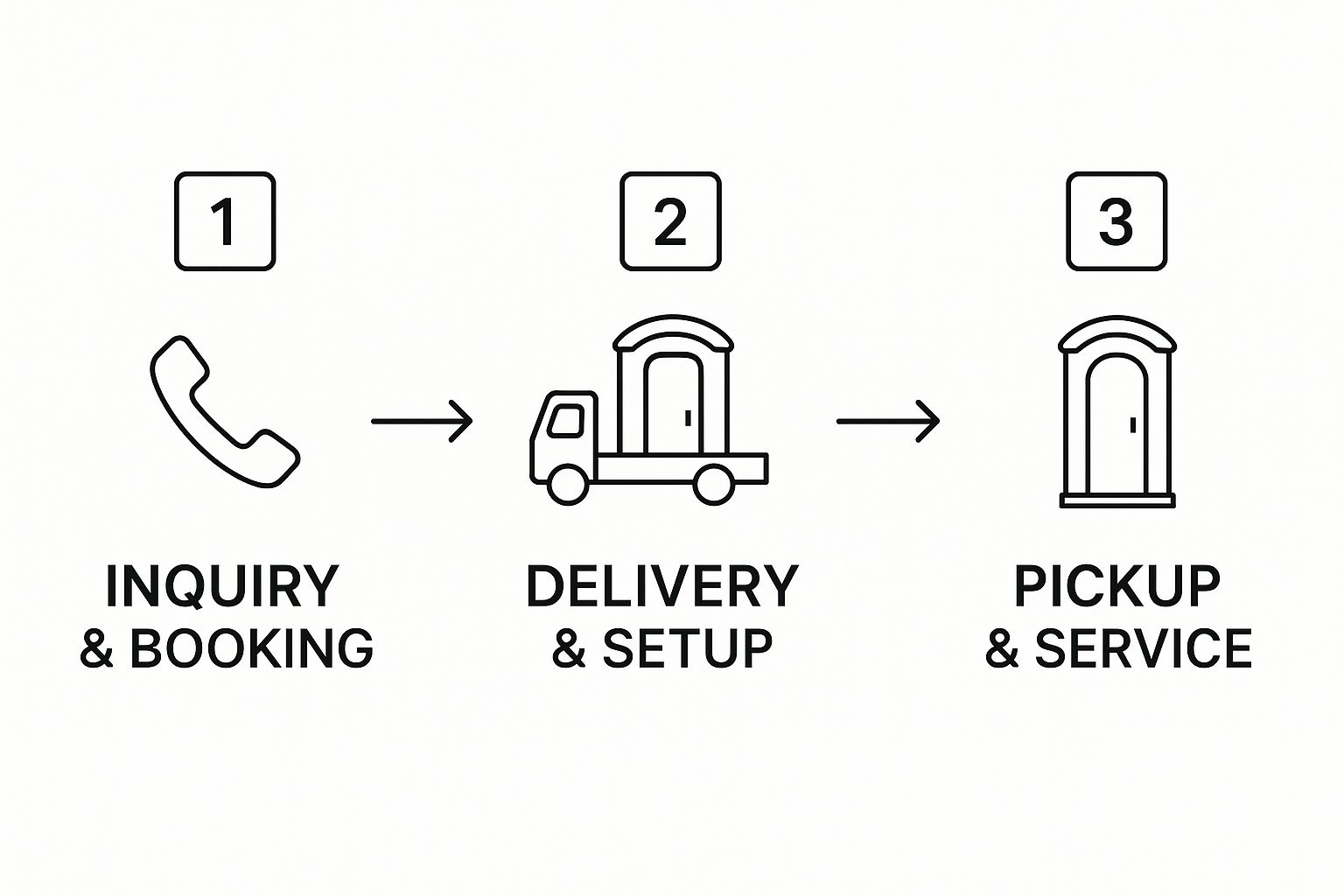
Call us on 01277 840 533 or email us at info@sarahshire.com to get your free, no-obligation quote today.

Your Complete Guide to Event Hire Toilets

When you're planning an event, you’ve got a hundred things to juggle, from booking the venue to finalising the guest list. But there's one detail that, if overlooked, can ruin the entire experience for your guests: the toilets. Nothing kills the atmosphere faster than long queues for grim, inadequate facilities. It’s a problem that can overshadow all your hard work.

That’s where we come in. At Sarah’s Hire, we provide professional event hire toilets to solve this problem simply and effectively. We deliver clean, reliable, and appropriate loos for any size of gathering, ensuring your guests are comfortable and your event is remembered for all the right reasons. We handle the logistics so you don't have to.

The Secret to a Successful Event Starts Here

Whether it’s a dream wedding, a buzzing festival, or a corporate function, it’s the details that leave a lasting impression. While you're focusing on creating an unforgettable atmosphere, the state of the loos can make or break the day for your attendees.

This guide is your practical, no-nonsense walkthrough for getting event toilet hire right. We’ll cover everything from working out how many units you need to picking the right style for your big day, so you can make confident decisions quickly.

Your Blueprint for Guest Comfort

Think of this as your roadmap to keeping guests happy and your event compliant. Get this decision right, and you can get back to what really matters—creating an amazing experience.

The demand for high-quality portable toilets is soaring. The global portable toilet rental market was valued at around USD 22.69 billion this year, with a significant chunk of that growth driven by the events industry. This shows just how vital decent facilities are for any modern gathering.

Of course, a successful event is about more than just toilets. You might even be measuring the ROI for events to gauge its success. But nailing the basics, like sanitation, is the foundation of a positive outcome.

"The team at Sarah's Hire were fantastic. They delivered the toilets for our village festival exactly when they said they would, and the units were immaculate. It took a massive weight off my shoulders knowing that was one less thing to worry about." – Jenny, Festival Organiser

How To Perfectly Calculate Your Toilet Needs

Getting the number of toilets right is a crucial balancing act. Too few, and you’ll have long, frustrating queues that put a dampener on the day. Too many, and you’re wasting your budget. Don't worry, though—there’s a simple way to get it spot on.

It all comes down to three key things:

  • Guest Numbers: How many people are you expecting?
  • Event Duration: How long will the event last?
  • Food and Drink: Will you be serving refreshments, especially alcohol?

Each one plays a big part in how often your facilities will be used.

The Core Factors In Your Calculation

The most obvious factor is your guest count—more people simply means you need more loos. But the event's duration is just as critical. A three-hour party has completely different requirements to an all-day festival, even with the same number of attendees.

The real game-changer, however, is the food and drink. Serving alcohol can increase toilet usage by as much as 30–40%. It’s a simple fact: when people are drinking, they need to go more often, and you absolutely must plan for this. This is often the most underestimated part of planning for event hire toilets.

This chart gives you a quick visual guide to how the numbers stack up.

As you can see, the required number of units scales up quickly as guest numbers grow, which shows just how important an accurate headcount is from the start.

To make things even easier, here’s a quick-reference table to help you estimate.

Recommended Toilets Per Guest for an 8-Hour Event

Use this quick reference guide to estimate the number of portable toilets needed based on attendee count for a standard full-day event.

Number of Guests Minimum Toilets Required (No Alcohol) Recommended Toilets (Alcohol Served)
Up to 50 Guests 2 Toilets 3 Toilets
Up to 100 Guests 3 Toilets 4 Toilets
Up to 250 Guests 4 Toilets 6 Toilets
Up to 500 Guests 8 Toilets 12 Toilets

This table provides a solid starting point, but always remember to factor in your specific event's flow and timing. If you're unsure, just give us a call – we'll talk you through it.

Planning for Peak Demand

Beyond the basic numbers, you need to think about peak times. At a concert, it’s the intermission. For a wedding, it’s usually after the main meal. If you don't account for these rushes, you can end up with queues, even if your overall toilet-to-guest ratio seems fine on paper.

A good rule of thumb is to add at least one or two extra units to your final count to handle these peak periods smoothly. It’s a small extra cost that provides a huge amount of reassurance on the day.

While event dynamics are unique, you can see a similar need for careful planning in our guide to construction site toilet hire, where shift changes create their own peak times. By thinking ahead about when demand will be highest, you make sure your facilities can handle the pressure without a hitch, keeping everyone happy.

Choosing the Right Type of Event Toilet

The portable toilets you choose send a clear message. Are you running a no-fuss festival or a high-end wedding? From basic, functional units to posh luxury trailers, getting this right makes your guests feel valued and comfortable. Get it wrong, and it’s one of the first things they’ll complain about.

Let’s walk through the options so you can find the perfect fit for your event.

Not all event hire toilets are created equal. The trick is to match the facilities to your event's style, your guests' expectations, and, of course, your budget.

Standard Chemical Toilets – The Workhorse

These are the practical, no-fuss solution for most large-scale public events like festivals, fun runs, and carnivals. They are completely self-contained, easy to position in large numbers, and incredibly cost-effective. They’re your go-to when you just need clean, reliable loos for lots of people.

  • Best for: Big crowds, festivals, and events where the budget is a key factor.
  • Features: Basic, durable, and always equipped with hand sanitiser dispensers.

If you want a slight upgrade, hot wash units are a great middle-ground. They have the same footprint as a standard toilet but include a hot water handwashing station – a small comfort that goes a long way, especially at corporate fun days or longer events.

Luxury Toilet Trailers – The Premium Experience

If you're hosting a wedding, a VIP corporate event, or an exclusive party, a luxury toilet trailer is non-negotiable. These units offer a completely different world of comfort.

They feel more like a proper indoor bathroom than a portable loo, providing a level of quality that shows you’ve considered every detail. It’s a small touch that makes a huge difference to how guests feel.

These trailers come fully loaded with high-end features designed to impress.

  • Flushing Toilets: Proper porcelain, flushing toilets. No blue chemicals in sight.
  • Vanity Areas: Large mirrors, countertops, and often premium soaps and lotions.
  • High-End Finishes: Good lighting, smart flooring, and sometimes even background music.

Ensuring Inclusivity for All Guests

A truly great event is one that every single guest can enjoy properly. That means planning for accessibility isn't an optional extra – it's essential.

Including specialist units shows you’re not just ticking boxes, but that you genuinely care for all your attendees. You must provide DDA-compliant accessible toilets for guests with mobility challenges. These units are much larger, with grab rails and low-level ramp access.

You can check out our accessible toilet options to see how they look. And for family-focused events, adding baby changing facilities is a thoughtful touch that makes life so much easier for parents with young children.

Understanding Logistics and Legal Requirements

Booking your event hire toilets is a great start, but getting the delivery and placement right is where the real magic happens. This is the stuff that separates a smoothly-run event from an amateur headache, and a little bit of planning goes a very long way.

Before we can even think about where the loos will go, we need to talk about getting them to you. Our delivery trucks need clear, safe access to the drop-off point. Think about those narrow country lanes, low-hanging tree branches, or tight gateways that could cause a real problem on the day.

The ground itself has to be firm and level, too. Trying to place toilets on soft, boggy ground or a steep slope is a recipe for disaster. We’ll work with you to scout out the perfect spots that are stable for the units and safe for our delivery team.

Nailing the Placement On-Site

Once we're on site, deciding where the toilets go is crucial for your guests' experience and for our servicing access. You want them to be easy to find and conveniently located, but probably not right next to where everyone's eating.

Think about the flow of your event. Placing units near high-traffic zones like the bar or food stalls is a smart move. Just make sure they remain accessible for our service vehicles if you've booked a multi-day hire with a clean scheduled in. Good placement is all about balancing guest convenience with our practical needs.

A classic mistake is tucking the toilets so far out of the way that they're almost hidden. This usually leads to long, frustrating walks for your guests and can create a real logistical headache for servicing. A well-placed, clean toilet is always better than a hidden, inconvenient one.

Staying Compliant with UK Regulations

As the event organiser, you are legally responsible for providing adequate welfare facilities for your guests. The Health and Safety Executive (HSE) has clear guidelines designed to protect public health. Getting this wrong isn't just bad form—it can lead to serious consequences.

Here’s a simple breakdown of what you need to cover:

  • Sufficient Numbers: You must provide enough toilets for your expected number of guests, just as we discussed earlier.
  • Handwashing Stations: Every block of toilets needs to have corresponding handwashing facilities. This means soap, water (or hand sanitiser), and a way for people to dry their hands.
  • Accessibility: It's essential to provide accessible toilet facilities for disabled guests. Make sure they are clearly signposted and easy to get to.
  • Waste Disposal: All waste must be handled and disposed of by a licensed waste carrier. When you work with a professional hire company like Sarah's Hire, we manage all of this for you, guaranteeing you're fully compliant.

Getting these details sorted ensures your event runs smoothly and safely for everyone involved.

Why Choose Sarah’s Hire?

Choosing a supplier isn’t just about ticking a box. It's about finding a partner you can depend on, someone who handles a crucial part of your event without you ever having to think about it. At Sarah’s Hire, we don’t just drop off units—we provide a seamless, reliable service that becomes an invisible but essential part of your success.

You’ve got enough on your plate. Our entire service is built around making your life easier. Here’s our simple, straightforward promise to you.

  • Punctual and Professional: We guarantee on-time delivery and collection, every time. Your schedule is our schedule, and our team will be there exactly when we say they will. No messing about.
  • Exceptional Hygiene Standards: Every unit, from a standard portaloo to a luxury trailer, arrives spotlessly clean and fully stocked. We maintain impeccable standards because your guests’ comfort is our top priority.
  • Clear, Honest Advice: We get straight to the point. Our team gives you practical, expert guidance to help you find the perfect event hire toilets for your needs, without confusing jargon or unnecessary upselling.

This commitment is what sets a dedicated, local provider apart. While industry giants have set benchmarks for scale across Europe, our focus is on delivering a personal, dependable service right here where it matters. The UK market has seen providers grow to offer nationwide coverage, reflecting the high standards organisers expect. If you want some context on the industry, you can discover key insights on European toilet hire demand.

We Cover Your Area

From local fetes and weddings to large-scale festivals, event planners across the South East trust us to get the job done right. We know the area, we know the venues, and we know what it takes to make an event run smoothly.

We regularly provide event toilet hire across:

  • London
  • Essex
  • Hertfordshire
  • Kent
  • Surrey
  • Sussex

You can see one of our clean and modern white portaloo units that are perfect for any occasion. We handle all the details so you can focus on what you do best—creating an unforgettable experience for your guests.

Frequently Asked Questions About Event Toilet Hire

Planning an event has enough moving parts without getting bogged down in the details. To help out, we’ve put together some quick, straightforward answers to the questions we hear most often from organisers like you.

Think of this as your cheat sheet for planning with confidence.

How far in advance should I book my event toilets?

Our best advice is to book your event hire toilets at least 4-6 weeks in advance. This is especially true if your event is on a summer weekend or a bank holiday, as that’s when demand really shoots up. Booking early guarantees you get the exact number and type of loos you need. That said, we know last-minute plans happen. If you're in a tight spot, give us a call and we’ll always do our best to help.

What’s included in the hire price?

We keep our pricing simple and transparent, so there are no nasty surprises. A standard quote from Sarah's Hire includes:

  • Delivery and Collection: We’ll bring the units to your site and pick them up afterwards, all at the agreed times.
  • Essential Consumables: Every toilet comes fully stocked with toilet roll, hand sanitiser, and everything else needed to be guest-ready.
  • Scheduled Servicing: For hires longer than a day, the price includes our team coming out to empty the tanks, give the units a thorough clean, and top up all the supplies.

The price you see on the quote is the price you’ll pay. Simple as that.

Where can the toilets be placed on site?

Getting the placement right is crucial for your guests and for us. All toilet units must be set up on firm, level ground to keep them stable and safe. The biggest factor, though, is vehicle access. Our delivery and service lorries need a clear, solid route to get to the drop-off spot for both the initial delivery and any servicing visits. Don't worry, we're here to help you figure this out. During our first chat or a site visit, we can work with you to find the perfect spots that are convenient for your guests and practical for our team.

Get Your Event Loos Sorted Today

Ready to tick one of the most important jobs off your event planning list? Don’t leave your guests' comfort to chance. Getting the loos right is a cornerstone of a successful day, and our friendly team is here to make it simple and stress-free for you.

We offer practical, straight-talking advice and a free, no-obligation quote that’s tailored to your exact needs. We’ll help you choose the right type and number of event hire toilets, making sure everything is a perfect match for your guest count, venue, and style.

Let us handle the logistics so you can focus on creating an amazing experience.


Contact the Sarah’s Hire team today to discuss your event.

Or find out more about our services at https://www.sarahhire.com.

Welfare Unit Hire Cost Per Week: A Builder’s Guide

As a site manager, you know that budgeting for a new project means getting a handle on every single cost, right down to the welfare unit hire cost per week. It’s non-negotiable; your team needs a clean, dry place to take a break, and the HSE demands it. But trying to budget without a clear figure can be a headache. That’s where we come in. At Sarah’s Hire, we give you straightforward pricing so you can get your project off the ground with the right facilities in place, without any nasty surprises.

For a small crew of 6-7 operatives, you might be looking at £275 to £325 per week for a 12-foot unit. For a larger site with a bigger team, a 24-foot unit could be anywhere from £490 to £510. Getting these numbers locked in early makes everything smoother.

Budgeting For Your On-Site Welfare Facilities

Trying to pin down an exact weekly cost for a welfare unit can feel like pricing up groundworks before you've even dug a test pit. You know the score – the final cost hinges on a few key things.

It’s just like ordering a digger. You wouldn’t expect to pay the same for a micro-digger as you would for a 10-tonne excavator. The size, capabilities, and how long you need it on site all play a part.

The same logic applies here. The size of your team, the length of the job, and the specific facilities you need all feed into the final weekly price. At Sarah’s Hire, we keep our pricing clear and upfront. No messing about, just a straightforward breakdown so you can get your team the quality, compliant facilities they deserve without blowing the budget.

Typical Weekly Hire Costs in the UK

So, what should you actually expect to pay? To give you a better idea, here’s a quick look at the typical weekly rates you’ll see in the industry.

  • 12-foot eco units (for 6–7 people): £275 to £325
  • 16-foot units (for 8–10 people): £330 to £345
  • 24-foot units (for 10–15 people): £490 to £510

These figures generally include the regular weekly service, which is a big plus for keeping things simple and your site hygienic.

For a quick reference, we've put the numbers into a simple table.

Estimated Weekly Hire Costs for Welfare Units

This table gives you a snapshot of what to expect for different sizes of welfare units, including the essential weekly servicing.

Unit Size Operative Capacity Estimated Weekly Cost (inc. Servicing)
12-foot 6-7 operatives £275 – £325
16-foot 8-10 operatives £330 – £345
24-foot 10-15 operatives £490 – £510

As you can see, planning ahead based on your team size makes it much easier to forecast your costs accurately.

Of course, a welfare unit is just one piece of the puzzle. When you're planning your site setup, you also need to think about things like modular water storage units and making sure you have enough toilets for the team. We can help with all of it, from the main welfare cabin right down to the construction site toilet hire you'll need on day one.

What Your Weekly Hire Fee Actually Covers

Welfare unit interior showing canteen and kitchen facilities
Welfare Unit Hire Cost Per Week: A Builder's Guide 22 Hire Portable Building Site Toilets, Portable Event Toilets, Luxury Toilets, Welfare Units and Generators

When you see a price for the welfare unit hire cost per week, you’re not just renting a steel box. You’re getting a self-contained hub designed to keep your team safe, comfortable, and productive, all while ticking every box for the Health and Safety Executive (HSE).

Think of it as your entire site support system, rolled into one robust, towable package. This is essential on new sites where you haven't got mains power or water hooked up yet. These units are completely self-sufficient, ready to go from the moment we drop them off.

The Core Facilities Included

So, what’s inside? Every standard welfare unit is kitted out to provide everything your crew needs for a proper break and to meet your legal duties as an employer. It’s a self-contained facility that ensures you meet HSE mandates for site sanitation, rest, and drying. Learn more about the importance of these on-site facilities.

Your weekly fee covers a whole range of essential features:

  • A Canteen and Rest Area: This is the main space, complete with bench seating and a table. It gives your crew a warm, dry place to eat their lunch and have a brew, away from the mud and noise of the site.
  • Kitchenette Facilities: You’ll find a kettle and microwave, along with a sink that provides hot running water for handwashing and making drinks. It’s a simple setup, but it makes a huge difference to team morale on a cold morning.
  • A Self-Contained Toilet: A clean, chemical toilet is housed in its own private cubicle. We also provide accessible units – you can see an example of our high-quality disabled access toilets here – to make sure your site is inclusive for everyone.
  • A Dedicated Drying Room: This is a separate, heated area specifically for hanging up wet gear. It's absolutely essential for keeping your team comfortable and their kit dry, especially during the British winter.
  • Onboard Power and Water: The unit runs on its own generator, providing light, heat, and power for all the facilities without needing to be connected to the grid.

The Key Factors Driving Your Hire Price

Ever wondered why quotes for a welfare unit can vary? The final welfare unit hire cost per week isn't a number pulled from thin air. It’s a straightforward calculation based on a few key variables that you actually have a lot of control over.

Think of it like sorting out your van insurance. The model, your mileage, and where you park it all shape the final bill. It’s exactly the same principle here. Once you get your head around these factors, you’re in a much better position to tailor your hire to fit your project budget.

Your Unit and Your Project

It all starts with the specific needs of your site. These are the biggest drivers of cost, from the size of your team right through to how long the project will run.

  • Unit Size and Type: A compact, towable unit for a small groundwork crew will naturally cost less per week than a large static cabin needed for a major development with dozens of operatives. More space and facilities simply mean a higher price point.
  • Hire Duration: How long do you need it for? A short-term, two-week hire will have a different weekly rate compared to a long-term six-month project. We provide better weekly rates for longer commitments, rewarding you for planning ahead.

Location and Servicing Needs

Where your site is and how often you need us to pop in also influence the final figure. These are the logistical nuts and bolts that keep your unit running smoothly.

  • Delivery Location: Getting a unit to a straightforward site in Worcestershire is a different job from navigating a congested city-centre location in Birmingham or a remote rural spot in Herefordshire. Access, distance, and local logistics all affect the initial delivery and final collection costs.
  • Servicing Schedule: Our standard hire includes a weekly service to empty the toilet, refill water, and restock consumables. But if your site is particularly busy and needs more frequent servicing, this will be factored into the weekly cost to keep everything clean and compliant.

We deliver across a wide area, so whether your site is in Hereford, Worcester, Gloucester, or the surrounding towns, we've got you covered. Here's a list of some of the areas we serve:

  • Herefordshire
  • Worcestershire
  • Gloucestershire
  • Shropshire
  • The Cotswolds
  • Monmouthshire

It’s also worth remembering that all temporary facilities need to adhere to site-specific building regulations, and this often influences the design and features of the units themselves.

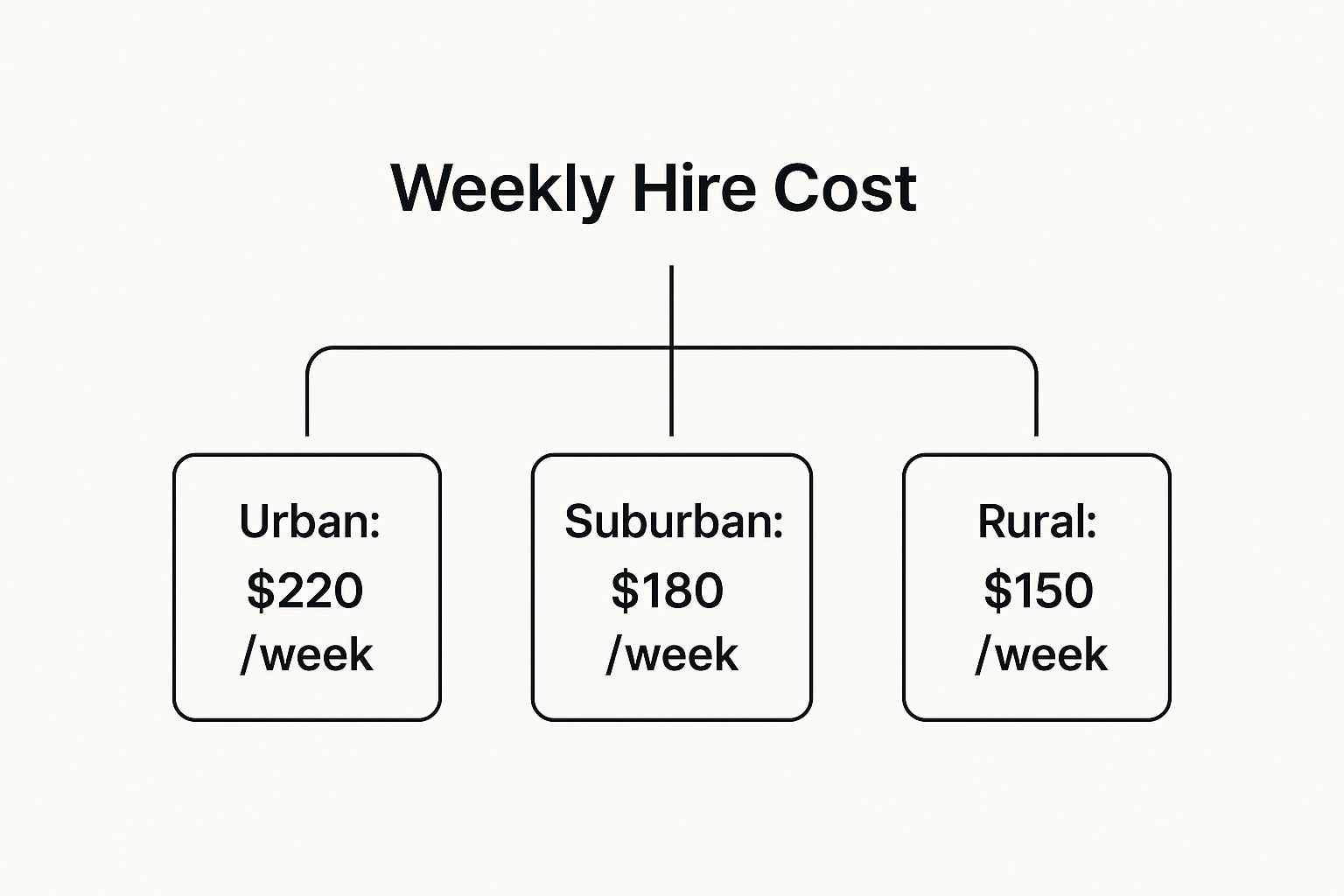
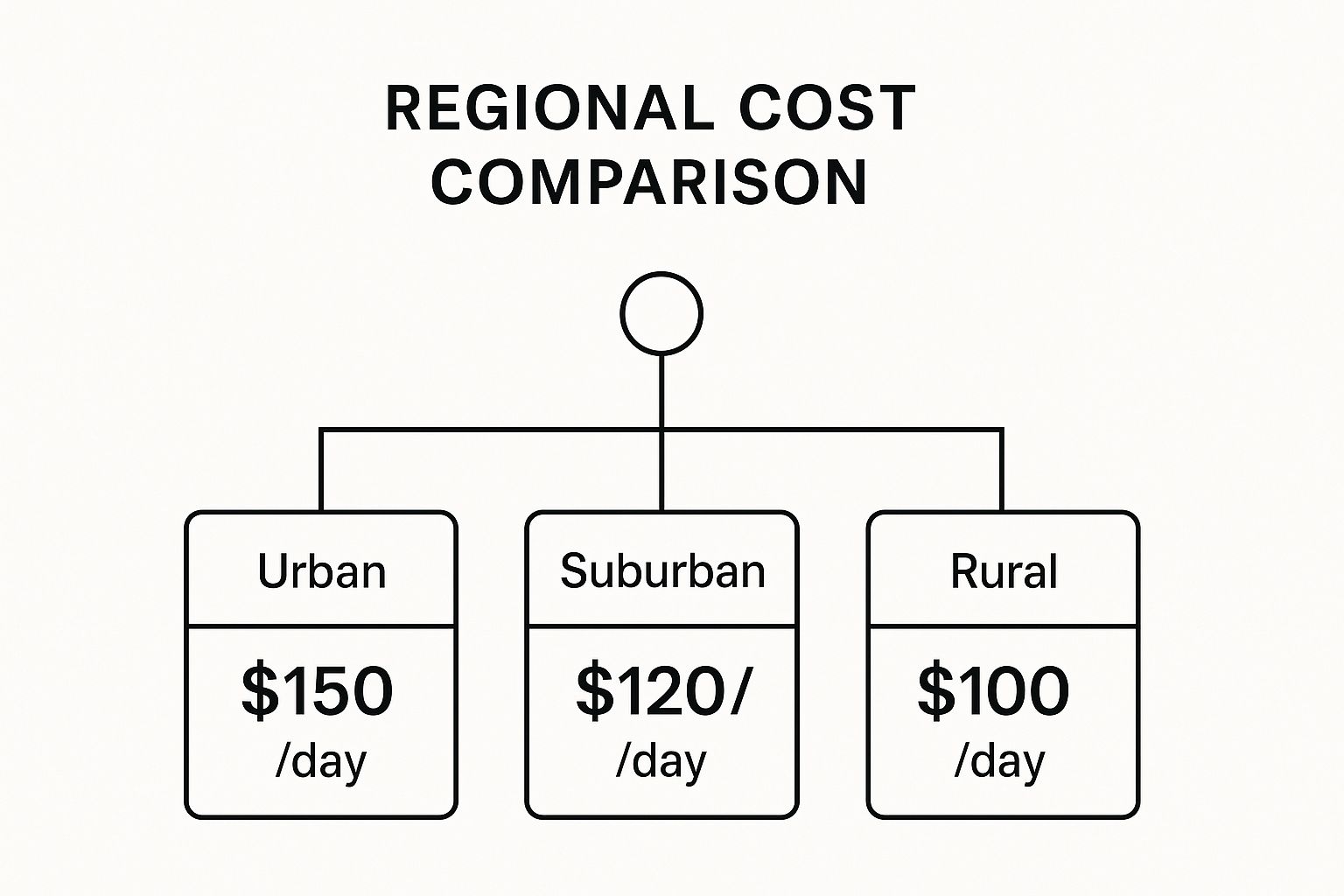
The chart below gives you a rough idea of how location alone can impact weekly hire costs.

Infographic about welfare unit hire cost per week
Welfare Unit Hire Cost Per Week: A Builder's Guide 23 Hire Portable Building Site Toilets, Portable Event Toilets, Luxury Toilets, Welfare Units and Generators

As you can see, urban sites often carry higher logistical costs, and that’s usually reflected in the hire price.

Why Choose Sarah’s Hire for Your Project?

A Sarah's Hire welfare unit on a clean, organised construction site
Welfare Unit Hire Cost Per Week: A Builder's Guide 24 Hire Portable Building Site Toilets, Portable Event Toilets, Luxury Toilets, Welfare Units and Generators

We know you’ve got options when it comes to site welfare. At Sarah’s Hire, we’re not a faceless national chain; we’re a family-run business built on providing a straightforward, reliable service. We understand the day-to-day pressures of managing a busy construction site because we work with builders like you every single day.
Our promise is simple: you get what you need, when you need it, with no messing about.

"We have used Sarah's Hire for a number of years now. They are always helpful, quick to respond, and their units are always clean and well-maintained. A great local company to deal with." – Mark S., Project Manager

  • No-Nonsense Pricing: The welfare unit hire cost per week we quote is the price you pay. No hidden fees or confusing charges, just honest pricing so you can manage your budget properly.
  • Reliability You Can Count On: Our units are meticulously maintained and fully compliant with all HSE regulations. You get a clean, functional, and professional setup from day one.
  • Personal, Local Service: You’ll have a dedicated team on your side. We’re here to offer practical advice and make sure your delivery, servicing, and collection run like clockwork.

Your Questions About Welfare Unit Hire Answered

We get a lot of the same questions from site managers trying to sort out their welfare facilities. To make things easier for you, we’ve put all the answers in one place.

What does the weekly service include?

When you see a price for the welfare unit hire cost per week, our standard weekly service is almost always baked in. This isn’t just a quick pop-in; it’s a proper job to keep your unit clean, hygienic, and working perfectly for your team. Once a week, our team will visit your site to:

  • Empty and Clean the Toilet: We’ll empty the waste tank, then give the toilet a full clean and disinfection.
  • Restock All Consumables: This means topping up the loo roll, hand soap, and paper towels so you don't run out.
  • Top Up Water and Fuel: We make sure the generator is fuelled up and the water tanks for the sink and toilet are full.

This regular visit means you can forget about the day-to-day upkeep.

How much notice do you need for delivery?

The more notice you can give us, the better, as it helps with our delivery schedules. That said, we know projects can pop up at the last minute. We can often arrange for next-day delivery if you get your order in early enough. If you’re in a tight spot and need a unit for a Monday morning start, just give us a call. We’ll always do our best to get a unit to your site on time.

Can I save money on long-term hires?

Yes, absolutely. We always offer better weekly rates for longer-running jobs. If you know your project is going to last for several months, just tell us when you enquire. We can lock in a discounted rate from the start, which makes budgeting much easier for the whole job.

Do you deliver to difficult-to-access sites?

Yes. We're used to delivering to all sorts of sites, from tight city centre new-builds to remote rural renovations. As long as there's reasonable access for our vehicles, we can get a unit to you. If you have any concerns about access, just let us know when you call and we can talk through the logistics.

Get a Clear Quote for Your Site Welfare

Ready to tick site welfare off your to-do list? The next step is getting a straightforward, no-obligation quote that’s built around your specific project. Our team is here to make the whole process as simple as possible.

We’ll ask you about your exact needs—how many people are on site, how long the job is likely to run, and where you’re located—to give you a clear welfare unit hire cost per week that fits your budget. Getting high-quality, compliant facilities sorted isn't just about ticking boxes; it's vital for keeping team morale high and productivity on track. A comfortable crew is a focused crew.

We can help you plan everything, from the main welfare unit right down to your portable toilet hire for building sites, making sure you’ve got every angle covered. Looking after your team properly with the right facilities shows you’re a professional outfit that values its people.

Get in touch today to chat through your project and get a simple quote for your welfare unit hire. Let's get your site fully kitted out and ready to go from day one.


Ready to get started? Contact Sarahs Hire for a clear, no-nonsense quote today. Call us on 01981 500 753 or email info@sarahhire.com to discuss your project needs.

A Builder’s Guide to Accessible Toilet Size Regulations UK

Getting the accessible toilet size right on your construction site isn’t just about ticking boxes – it’s a non-negotiable part of keeping your project compliant and inclusive. Planning your site welfare facilities can feel like navigating a minefield of regulations, but when it comes to accessibility, the core number you need to remember is 2200mm deep by 1500mm wide. That’s the standard minimum for a compliant, wheelchair-accessible toilet in the UK, and it's the foundation of a safe, usable facility for everyone on your team.

At Sarah’s Hire, we know you're juggling a hundred things at once. The last thing you need is to waste time deciphering dense legal documents about site facilities. That's why we provide straightforward, fully compliant accessible toilets for construction sites like yours. We deliver the right units, on time, so you can focus on the job at hand, confident that your site welfare is sorted.

Your Practical Guide to Accessible Toilet Compliance

When you're running a construction project, the details are endless. But getting site welfare facilities right is one area you simply can't afford to overlook. You need to provide accessible toilets that not only meet strict UK regulations but are also practical and safe for everyone on your site. The problem? Official guidance can be overly technical and hard to apply in a real-world setting.

This guide cuts through the jargon. We’ve pulled together the straightforward, practical information you, as a builder or site manager, actually need. We explain the 'why' behind the dimensions and requirements, so you can make informed decisions. At Sarah's Hire, we don't just supply toilets; we provide the peace of mind that comes from knowing your facilities are spot on, every single time.

Making Compliance Simple

Getting accessibility right from day one saves you time, money, and potential headaches down the line. It ensures your site is inclusive and meets your legal duties under the Equality Act 2010. Our goal is to make this process as simple as possible for you.

  • Clarity on Regulations: We translate dense legal speak into clear, actionable advice you can use on your site today.
  • Focus on Practicality: Our guidance is built for real-world application, focusing on what you actually need to do to get it right.
  • Peace of Mind: With our fully compliant units, you can be confident your site welfare is handled, letting you focus on the bigger picture.

Let us take care of the details. With Sarah’s Hire, compliance is one less thing for you to worry about, ensuring your project runs smoothly and inclusively from the start.

Understanding the UK's Core Accessibility Standards

If you're managing a site, getting your head around the key accessibility regulations is step one. In the UK, the rulebooks that matter are Approved Document M (everyone just calls it 'Doc M') of the Building Regulations and the British Standard BS 8300. It’s best to think of these not as suggestions, but as the official blueprint for creating accessible spaces that actually work for people.

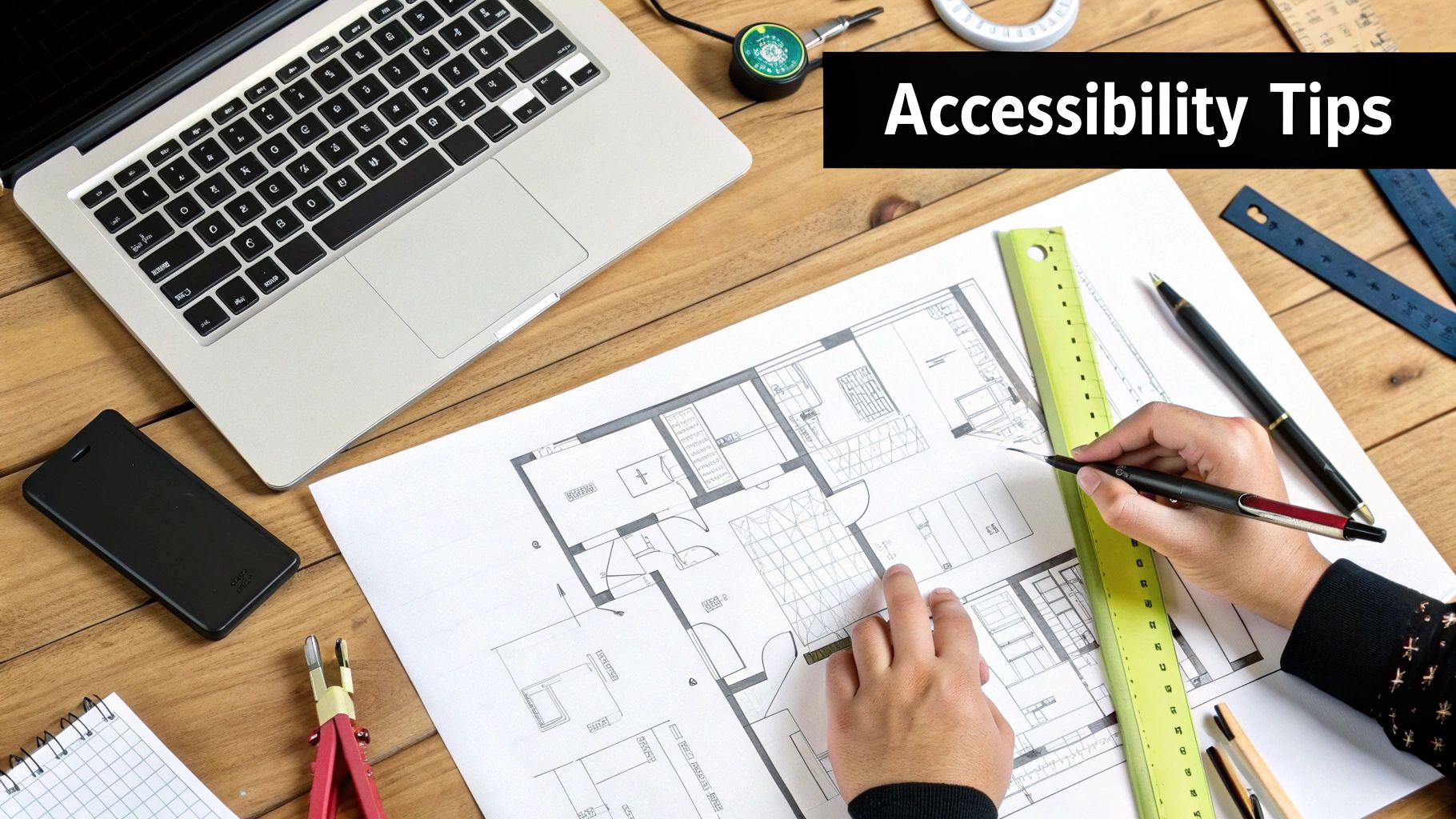
Image
A Builder's Guide to Accessible Toilet Size Regulations UK 29 Hire Portable Building Site Toilets, Portable Event Toilets, Luxury Toilets, Welfare Units and Generators

These documents are the reason why there are specific rules for accessible toilet size, the turning space a wheelchair needs, and exactly where grab rails have to go. They also cover things like the correct heights for toilets and sinks. Following these standards isn't just good practice; it's a legal must for your site.

Breaking Down the Key Documents

So, what do these documents actually mean when you're on the ground, trying to get things built? Let's cut through the jargon and get to the practical stuff you need to know.

  • Approved Document M ('Doc M'): This is part of the Building Regulations for England and Wales and sets the absolute minimums for accessibility. It’s your go-to guide for making sure the basic dimensions and layout are right.
  • BS 8300: This British Standard offers more detailed, best-practice advice. It goes beyond the legal minimums, helping you design spaces that aren't just compliant, but genuinely comfortable and easy to use for a wider range of people.

Getting these details right is vital for all parts of a public building. It's a similar principle to other safety rules, where understanding things like emergency exit signage requirements is critical for overall building compliance.

Why These Standards Are So Specific

You might look at the measurements and wonder why they're so precise. The dimensions in Doc M and BS 8300 aren't just pulled out of thin air; they've been carefully calculated based on the real-world needs of wheelchair users and people with limited mobility.

The standard recommendation for an accessible toilet cubicle is a minimum of 2,200 mm x 1,500 mm. This isn't an arbitrary number. It’s the exact space needed to let a wheelchair user turn around and transfer safely onto the toilet. This focus on functional space is what separates a truly usable, compliant toilet from one that just ticks a box on paper.

The Essential Dimensions and Layout Checklist

When it comes to accessible toilet size, precision is everything. A few centimetres can make the difference between a compliant, usable facility and one that creates real problems for people on your site. This isn't just about ticking boxes; it's about getting the details right from day one.

Getting the core dimensions spot on ensures that a wheelchair user can enter, move around, and use the facilities safely and with dignity. These aren’t just numbers on a page—they’re the foundation of a space that truly works.

The Unobstructed Turning Circle

If there’s one thing you absolutely must get right, it’s the wheelchair turning circle. Think of it as an imaginary circle on the floor that has to be kept completely clear of any obstructions. No excuses.

  • Minimum Diameter: The turning circle must have a diameter of at least 1,500 mm (1.5 metres).
  • Purpose: This space allows someone in a wheelchair to turn around 360 degrees without bumping into the toilet, sink, or walls. It’s absolutely vital for independent movement.
  • Common Mistake: We often see bins, sanitary units, or other items placed inside this circle on sites. This instantly makes the toilet non-compliant and a nightmare to use. You have to keep this area completely clear.

This diagram shows how crucial elements like clear floor space and the turning radius are for a functional layout.
As you can see, the turning circle and clear space are the starting point for the entire design, dictating where you can place fixtures like grab bars so they can actually be used properly.

Core Layout and Spacing

Beyond the turning circle, the placement of the toilet and sink is governed by strict guidelines. This is all about making a safe transfer from a wheelchair to the toilet possible.

A non-negotiable part of this is the lateral transfer space. This is a clear area, measuring at least 750 mm wide, that sits to one side of the toilet pan. It's the space a wheelchair user needs to pull up alongside the toilet for a direct, sideways transfer. To help designers and architects nail these details, tools for building Revit Family Libraries for accessible components can be a huge time-saver.

The layout is just as important as the overall size. A large room with poorly placed fixtures is no more compliant or useful than one that is too small.

Minimum Dimensions for UK Accessible Toilets

To help you keep track, here's a quick-reference table covering the essential minimum dimensions and clear space requirements you need to meet.

Element Minimum Dimension or Requirement
Room Size At least 2,200 mm long x 1,500 mm wide
Turning Circle 1,500 mm diameter, unobstructed
Doorway Width 900 mm clear opening
Toilet Seat Height 480 mm from floor to seat top
Basin Height 720-740 mm from floor to top edge
Lateral Transfer Space 750 mm wide, clear space beside the toilet

These figures are your starting point for any compliant accessible toilet project. Getting them right ensures the facility is not just legally compliant, but genuinely usable.

Essential Fixtures and Fittings Beyond the Footprint

Getting the accessible toilet size right is a great start, but it's what you put inside that really counts. The right fixtures and fittings are what turn a correctly-sized box into a genuinely safe, dignified, and usable facility for everyone on your site. These aren’t just nice-to-haves; they are the non-negotiable details that make all the difference.

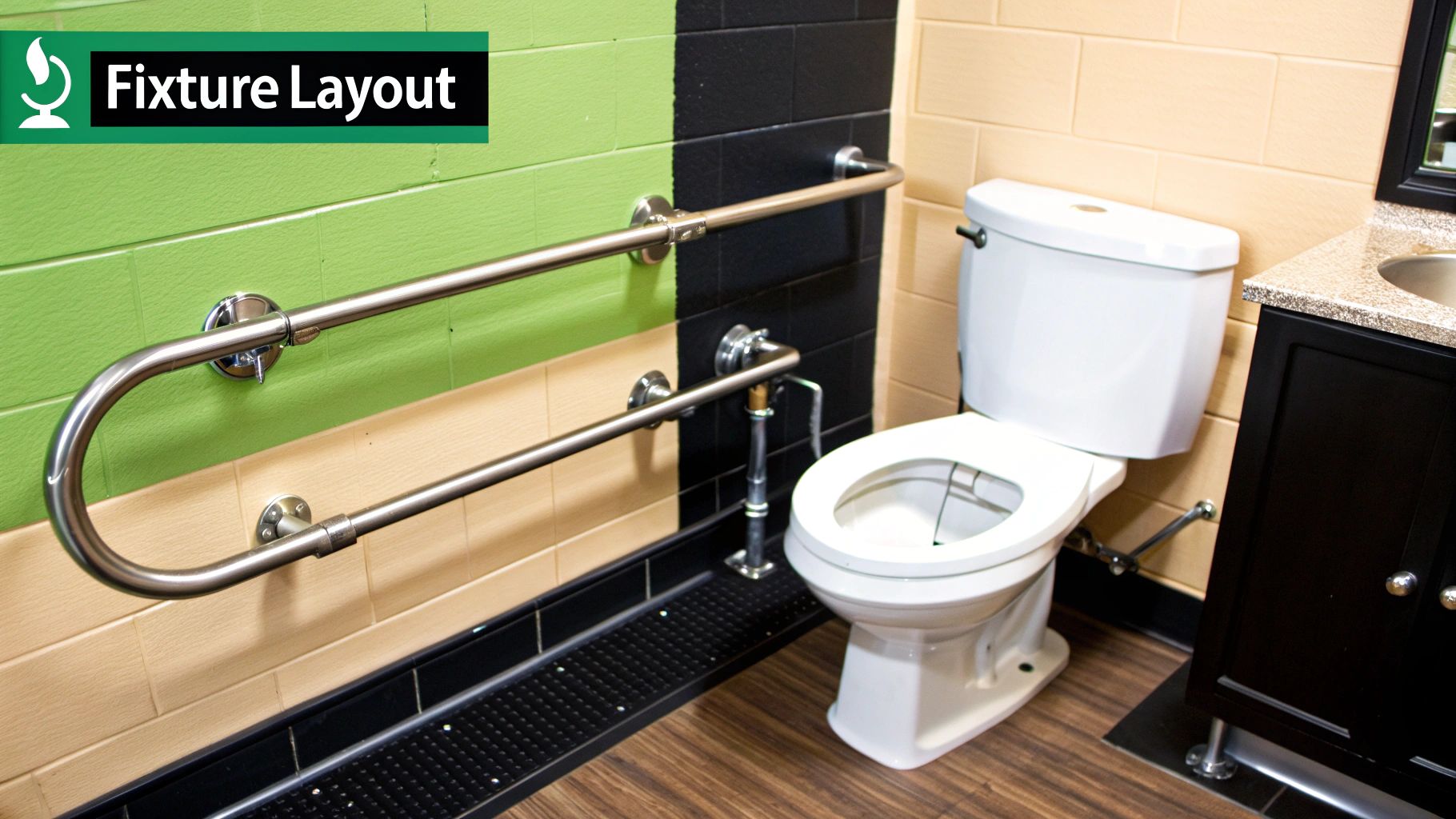
Image
A Builder's Guide to Accessible Toilet Size Regulations UK 30 Hire Portable Building Site Toilets, Portable Event Toilets, Luxury Toilets, Welfare Units and Generators

This means paying close attention to everything, from the type of taps you install to the colour of the toilet seat. Every single component has a job to do, designed to support independent use and provide critical assistance if someone gets into trouble. Nailing these details is what separates a truly compliant toilet from one that just ticks a box.

Must-Have Components for Compliance

Let's break down the essential kit. Think of this as your internal checklist to make sure every accessible loo you provide is not just compliant, but genuinely fit for purpose. These elements all work together to create a safe and practical space.

Here’s the core equipment every accessible toilet must have:

  • Grab Rails: These are absolutely vital for giving users support and stability. You need horizontal rails beside and behind the toilet, plus a drop-down rail on the side where a person transfers from their wheelchair. They have to be rock-solid and positioned at exactly the right height.
  • Emergency Assistance Alarm: A red pull-cord alarm system is mandatory. The cord needs to hang freely, with one toggle near the floor and another within easy reach of the loo itself. This ensures someone can call for help even if they've fallen.
  • Easy-to-Use Taps: Taps must have lever handles, not fiddly twist-knobs. This allows them to be operated with a closed fist or an elbow, which is crucial for anyone with limited grip strength.
  • Correct Toilet and Basin Height: The toilet pan should be 480 mm high to make transferring from a wheelchair much easier. The washbasin needs to be set at 720-740 mm from the floor, with clear space underneath so a wheelchair user can get right up to it.

Details That Make a Real Difference

Beyond the main fixtures, it’s the smaller details that can transform a person's experience from awkward to effortless. High-contrast fittings, for instance, are a game-changer. A toilet seat that’s a different colour to the pan and the floor helps people with visual impairments find it easily.

Likewise, something as simple as a shelf can be critical. A colostomy shelf, placed right next to the toilet, provides a clean, convenient surface for people who need to manage stoma bags. Yet this simple feature is often overlooked in permanent installations. By hiring from a specialist provider like us, you can be sure these thoughtful details are already included in your unit.

Why Choose Sarah’s Hire for Your Site Facilities?

When you’re running a busy construction site, you need suppliers you can count on. Choosing Sarah's Hire for your accessible toilets means one less thing to worry about. We get that you’re under pressure to meet deadlines, which is why our service is built to be simple, reliable, and always on time.

Image
A Builder's Guide to Accessible Toilet Size Regulations UK 31 Hire Portable Building Site Toilets, Portable Event Toilets, Luxury Toilets, Welfare Units and Generators

Here’s why site managers across the South East trust us to get the job done:

  • Guaranteed Compliance: Our units are designed to meet all current UK regulations, including the crucial accessible toilet size and layout rules. You get peace of mind knowing you're providing fully compliant facilities, taking all the guesswork out of site welfare.
  • Punctual & Reliable Service: We know your project timelines are non-negotiable. That’s why we pride ourselves on prompt delivery and collection, ensuring your site is equipped exactly when you need it. We work around your schedule, not the other way around.

"Sarah's Hire has never let us down. The accessible units are always clean, compliant, and delivered exactly when they say they will be. It's a hassle-free service that lets us get on with the build." – Mark T., Site Manager in Sussex

We provide dependable construction site toilet hire that keeps your project on track, without any fuss.

Our Main Service Areas

We're proud to support construction projects right across the South East. Our key service areas include:

  • Sussex
  • Surrey
  • Kent
  • Hampshire
  • London

Your Accessible Toilet Questions Answered

We get a lot of questions from builders and site managers about accessible toilet hire. Here are direct, no-nonsense answers to the most common queries we hear on site, helping you stay compliant and get the job done right.

What Is the Minimum Accessible Toilet Size in the UK?

The standard minimum size for a wheelchair-accessible unisex toilet is 2200mm deep by 1500mm wide. Think of this as a non-negotiable footprint set out in Approved Document M. This isn't just a random number; it’s the exact space needed for a wheelchair user to enter, complete a full turn, and transfer safely to the toilet. Anything smaller simply won't work and will leave you with a facility that isn’t fit for purpose or compliant with the law.

Do I Legally Need an Accessible Toilet on a Construction Site?

Yes, absolutely. Under the Equality Act 2010 and current health and safety rules, you have a legal duty to provide proper welfare facilities for everyone on your team. This includes making 'reasonable adjustments' for workers with disabilities. Providing a fully compliant accessible toilet is a core part of meeting that duty. It’s about making your site inclusive, safe, and welcoming for every single person who works there.

What Is the Difference Between an Ambulant and Accessible Toilet?

It's easy to get these two mixed up, but they serve completely different needs. A wheelchair accessible toilet is a large, self-contained room—the 2200mm x 1500mm standard we just talked about. It's built for a wheelchair user, sometimes with a carer, and crucially, it includes that all-important turning circle. An ambulant disabled cubicle, on the other hand, is a slightly bigger cubicle you’d find inside a main toilet block. It’s for people who can walk but might have limited mobility, featuring things like an outward-opening door and extra grab rails. The key difference? It is not big enough for a wheelchair.

Can an Accessible Toilet Also Be Used as a Baby Changing Facility?

While it might seem like a clever way to save space on site, combining these facilities is a bad idea and can make the toilet non-compliant. An accessible toilet must have its key features, like the emergency pull-cord and clear floor space, kept free at all times. Adding a baby changing unit creates a massive obstruction, making it difficult or even impossible for a wheelchair user to move around safely. Best practice is always to provide separate, dedicated facilities.

Get Your Compliant Accessible Toilets Sorted Today

Don't leave site accessibility to chance. Making sure you have the right facilities isn't just about ticking a box—it's essential for legal compliance, site safety, and creating a work environment where everyone is looked after. Getting the correct accessible toilet size and layout is non-negotiable, but it doesn't have to be a headache for you.

If you need reliable, regulation-compliant accessible toilet hire for your project, Sarah’s Hire is here to help. Our team knows the rules inside out and can advise on the best solutions for your site's specific needs, ensuring every detail is covered. We serve projects across Sussex, Surrey, Kent, Hampshire and London, making sure you get the right kit on time. Let us handle the site welfare, so you can focus on the job.

Our dependable service provides everything you need, from single units to full welfare setups. To see the quality of our equipment, take a look at an example of our portable toilet hire for building sites. We make sure you're fully equipped and compliant from day one.


Ready to get a quote and sort your site welfare? Sarah's Hire is ready to help. Call us on 01432 355729 or email us at sarah@sarahshire.com to talk through what you need today.

UK Cost of Portaloo Hire: A Practical Guide for Event Planners

Planning an event is a massive undertaking. You're juggling venues, caterers, guest lists, and a dozen other moving parts. The last thing you need is the headache of figuring out essential facilities. You know you need toilets, but navigating the confusing world of portaloo hire costs can leave you feeling overwhelmed and unsure of how to budget properly.

At Sarah's Hire, we get it. That's why we've put together this straight-talking guide. We cut through the jargon to give you clear, practical information on the real cost of portaloo hire. We provide reliable, clean, and hassle-free facilities so you can focus on what you do best: creating an unforgettable event.

Your No-Nonsense Guide to Event Portaloo Hire Costs

Whether you're organising a village fete, a stunning outdoor wedding, or a lively local festival, getting the toilets right is non-negotiable for a successful event. But with so many options, understanding portaloo hire costs can feel like a moving target, making it tough to pin down your budget.

This guide is here to change that.

We’ll break down the real-world factors that shape your final quote, from the type of unit you need to how long you’ll have it on-site. Think of it as your playbook for making a smart, informed decision, ensuring you get sparkling clean, reliable facilities for your guests without any nasty surprises on the invoice.

Estimated Event Portaloo Hire Costs at a Glance

To give you a starting point, here’s a quick look at typical hire costs for different types of loos popular for events. Remember, these are just estimates to help you build an initial budget – your final quote will depend on your specific needs.

Portaloo Type Typical Event Use Estimated Cost (Excl. VAT)
Standard Event Loo Festivals, fairs, sports events From £55 (weekend hire)
Luxury / Premium Loo Weddings, corporate events, VIP areas From £450 (weekend hire)
Disabled Access Loo All public events From £75 (weekend hire)
Urinal Block Festivals, concerts, large-scale events From £80 (weekend hire)

These figures give you a ballpark idea, but let's dig into what actually influences them.

What to Expect in This Guide

We've laid this guide out to give you a clear picture of what goes into your quote. You’ll find simple, no-nonsense information on:

  • Key Cost Drivers: We’ll lift the lid on the main things that affect your final price, like the type of loo and the number of guests.
  • Unit Comparisons: A straightforward look at the different portaloo options and what you can expect to pay for each.
  • Short-Term vs. Long-Term Rates: We'll touch on how hire duration changes costs, especially relevant for multi-day festivals.
  • Avoiding Hidden Fees: We'll show you what extra charges to watch out for so you get a completely transparent quote.

To make sure you've got every angle covered, it’s always a good idea to use an ultimate event planning checklist. It’s a great way to keep track of all the moving parts, including essential facilities like toilets.

At Sarah’s Hire, we believe in honest pricing and dependable service. That way, you can focus on your event, knowing the essentials are sorted. Let’s get you the info you need to make the right choice.
What Really Influences Portaloo Hire Prices?

Image
UK Cost of Portaloo Hire: A Practical Guide for Event Planners 36 Hire Portable Building Site Toilets, Portable Event Toilets, Luxury Toilets, Welfare Units and Generators

The final price on your portaloo hire invoice isn't just a number pulled out of thin air. It’s a careful calculation based on a few key factors that add up to the true cost of portaloo hire. Getting your head around these helps you ask the right questions and land a quote that genuinely fits your event and your budget.

Think of it like ordering a wedding cake. A simple single-tier sponge costs less than a four-tier creation with intricate decorations. The same logic applies here; the more features and services you need for your guests, the more the price will reflect that.

The Type of Unit You Choose

This is easily the biggest driver of your final cost. A standard event loo is the workhorse of festivals and fetes. It’s clean, functional, and the most budget-friendly choice. It does the job reliably, no questions asked.

But if you're planning a wedding or a corporate event, you’ll want something more comfortable and impressive for your guests. A luxury toilet trailer—complete with flushing toilets, hot running water, and proper lighting—offers a much higher level of comfort but naturally comes at a premium.

The UK portable toilet market is pretty substantial, generating around £785 million in 2023. Standard units made up over 65% of that, which just shows how popular these essential facilities are. As demand grows, providers are offering a wider range of options to suit every occasion.

Hire Duration and Number of Units

The next major factor is simple: how long is your event, and how many loos do you need?

A short-term weekend hire for a festival is priced differently to a single-day hire for a wedding. Most event hires are considered 'short-term', and the price is calculated to cover delivery, setup, and collection within a tight timeframe.

Likewise, the number of units plays a huge role. Hiring a single toilet for a small garden party will have a set price, but ordering ten for a big festival often comes with a bulk discount. We always work with you to find the most cost-effective solution for the scale of your event. If you also need facilities for a build crew, check out our guide on construction site toilet hire.

Real-World Example: "Sarah's Hire provided the facilities for our annual food festival. They helped us calculate the perfect number of units for 2,000 guests, including accessible toilets. The delivery was seamless, and the loos were immaculate. It took a massive weight off my shoulders." – Jessica, Event Organiser, Kent

Service Frequency and Location

Finally, servicing and geography influence the price. For a single-day event, servicing isn't usually required. However, for a multi-day festival, you will need the units to be emptied, cleaned, and restocked daily. This on-site service will be factored into the overall cost.

Your location also matters. Delivery and collection charges are based on how far our depot is from your venue. This is exactly why a local provider like Sarah’s Hire can often offer a more competitive and reliable service across our core areas in Sussex, Kent, Hampshire, and Surrey.

Comparing Portaloo Types and Their Costs

Not all portable toilets are created equal, and their features have a direct impact on the final cost of portaloo hire. To make the right call for your budget and your event, let’s break down the main options so you can see exactly what you’re getting for your money.

Think of it like choosing a venue. A village hall has a different feel (and price tag) to a grand stately home. It’s all about matching the facilities to the tone of your event.

Standard Chemical Toilets

This is your go-to choice for festivals, fairs, and informal outdoor gatherings. Standard chemical toilets are completely self-contained, so they don't need any plumbing or power hook-ups. They are hands-down the most budget-friendly option, providing essential, no-frills facilities at the lowest price point.

Their simplicity is their biggest strength. It makes them incredibly quick to deliver and set up just about anywhere, making them the perfect solution for large crowds and casual events.

Mains-Connected Toilets

If you want a more familiar, home-like experience for your guests at a venue with existing utilities, a mains-connected toilet is a brilliant step up. As the name suggests, these units connect directly to an on-site water supply and drainage, giving you a proper flushing system.

This adds a level of comfort that most people really appreciate, but it does come with a slightly higher hire price. You'll also need to make sure you have the necessary utilities available nearby, which makes them a better fit for established event venues or showgrounds.

Luxury Toilet Trailers

For weddings, corporate events, or any occasion where you need to make a great impression, luxury toilet trailers are the premium choice. These are a world away from a standard plastic unit. You can expect proper flushing toilets, hot running water, sinks with mirrors, and even interior lighting.

Naturally, these high-end facilities command a higher price, often starting from £450 + VAT for a weekend hire. But for creating a comfortable and sophisticated atmosphere, they are an essential investment that your guests will thank you for.

Specialised Units

Beyond the main three, you might need a specialised unit to meet specific legal or practical requirements at your event.

  • Wheelchair-Accessible Toilets: These much larger units provide plenty of space for wheelchair users and are a legal necessity for public events to ensure everyone is catered for. They feature lower toilets, grab rails, and a flat-floor design for easy access. You can find more details on our disabled access toilets page.
  • Urinal Blocks: For events with big crowds like festivals, concerts or races, urinal blocks are a smart and cost-effective solution. They dramatically cut down queue times for the main toilets and can handle a huge volume of users, making them a practical addition to any large-scale hire.

To help you quickly weigh up the options, here’s a simple table comparing the different types of loos we’ve just covered.

Portaloo Features and Cost Comparison

Unit Type Key Features Ideal For Relative Cost
Standard Chemical Self-contained, no-frills, chemical flush. Casual events, festivals, fairs. £
Mains-Connected Connects to water & waste, traditional flush. Well-equipped venues, long-term events. ££
Luxury Trailer Flushing toilets, sinks, hot water, lights, mirrors. Weddings, corporate events, VIP areas. ££££
Accessible Unit Large interior, flat floor, grab rails. All public events. ££
Urinal Block High capacity, multi-user, reduces queues. Festivals, concerts, large sporting events. ££

As you can see, choosing the right unit really comes down to balancing your budget against the expectations of your guests.

Image
UK Cost of Portaloo Hire: A Practical Guide for Event Planners 37 Hire Portable Building Site Toilets, Portable Event Toilets, Luxury Toilets, Welfare Units and Generators

It's also worth remembering that where you are can affect the price. As the image shows, urban locations often have higher associated costs due to tricky logistics and other operational factors.

Unpacking Long-Term vs Short-Term Hire Rates

Image
UK Cost of Portaloo Hire: A Practical Guide for Event Planners 38 Hire Portable Building Site Toilets, Portable Event Toilets, Luxury Toilets, Welfare Units and Generators

The length of your hire is one of the biggest factors in the weekly cost of portaloo hire. For most event planners, you'll be looking at short-term hire. Think of it like booking a hotel room – a single night always costs more per day than settling in for a whole month. The exact same idea applies here.

When you hire for a short-term event, like a weekend festival or a one-day corporate do, the per-day rate is almost always higher. That’s because the price has to cover the intense logistics of a quick turnaround: rapid delivery, precise placement, and prompt collection, all squeezed into a very tight schedule.

The Value in a Longer Commitment

On the other hand, long-term hire for building projects or seasonal farm work offers much better value for money. When we know a loo will be on-site for weeks or months, the costs for transport and setup get spread out over that entire period. This efficiency lets us offer a much lower weekly rate.

While this might seem less relevant for a one-day wedding, it's crucial for organisers of multi-week festivals or seasonal attractions. Understanding this distinction helps you budget accurately.

A six-month building project might see a weekly hire rate that’s 30-40% lower than what you’d pay for a three-day festival. That difference really shows the financial upside of planning for a longer hire.

A Tale of Two Projects

Let's break it down with a real-world example to see how it works in practice.

  • Scenario A: The Music Festival: A three-day event needs 20 standard toilets. The hire includes delivery on Friday and collection first thing Monday. The per-unit cost looks high, but it covers the concentrated effort from our team to get everything set up and whisked away perfectly on schedule.
  • Scenario B: The Construction Site: A six-month housing development needs two standard toilets. The weekly rate is significantly lower because the delivery and collection happen just once, and the regular weekly service is a simple, predictable job for us.

The festival pays more per day, per unit, because the logistical demand is intense and condensed. The building site, however, gets the benefit of time, securing a much better rate. At Sarah’s Hire, we’ve built our pricing to be fair and transparent for both scenarios.

Avoiding Hidden Costs and Extra Fees

A great-looking quote can quickly fall apart if it’s not telling you the full story. To properly budget for the cost of portaloo hire, you need to know about the extra charges that can sometimes creep in. At Sarah’s Hire, we believe in being completely upfront, so we’ll always talk you through these points to make sure the price we quote is the price you pay.

It’s a bit like booking a budget flight. The initial price looks brilliant, but once you add luggage, choose a seat, and fancy a drink, the final bill is much higher. We want to help you avoid that feeling entirely.

Delivery and Collection Charges

The most common extra fee is for delivery and collection. This isn't a hidden charge, but it’s often listed separately because it depends entirely on where your event is in relation to our depot. The further away you are, the more it will cost to cover our driver's time and fuel.

We always give you a clear, itemised cost for this so you can see exactly what you're paying for. It’s a standard part of the logistics, and we’re always transparent about it.

Servicing and Consumables

For any multi-day event like a weekend festival, a daily service is essential. This will be built into your quote. But what happens if your festival weekend turns into a particularly muddy one?

  • Extra Servicing: If you need more frequent waste removal and cleaning to keep the units fresh and ready for your guests, we can easily arrange that for an additional fee.
  • Consumables: Our units always arrive fully stocked. For very long or high-traffic events, though, you might need extra loo rolls or hand sanitiser. It’s always worth asking how these top-ups are handled.

Our Promise: A quote from Sarah’s Hire is always clear and complete. We’ll discuss all potential costs upfront, from delivery to any on-site servicing you might need, so there are absolutely no surprises down the line.

Other things to ask any provider about include damage waivers—a bit like insurance for the unit while it's at your event—and any fees for out-of-hours or weekend deliveries. Knowing about these details from the start means you can budget with total confidence.

Why Choose Sarah’s Hire for Your Portaloo Needs

When you're organising a big event, the last thing you need is a supplier letting you down. You need a partner you can rely on to get the job done right – on time and on budget. At Sarah’s Hire, we keep the whole process of hiring a portaloo simple and stress-free.

Here’s why event planners across the South East trust us with their sanitation needs.

Clear and Honest Pricing

We believe in straightforward quotes with no hidden fees. The price we agree on is the price you pay, giving you complete confidence when managing your event budget. No nasty surprises on the final invoice – just clear, honest pricing.

Reliable and Timely Service

We know that for events, timing is everything. A late delivery can cause chaos. We guarantee on-time delivery and collection, every single time. Our units are always delivered spotlessly clean and fully stocked for your guests.

Dedicated Customer Support

Our friendly, local team is here to help you get exactly what you need. We’ll talk you through choosing the right number and type of units for your guest count and set up a plan that works perfectly for your schedule. We’re proud to be a local company serving our communities.

We cover:

  • Sussex
  • Kent
  • Hampshire
  • Surrey

Choosing Sarah’s Hire means choosing a reliable local partner who is genuinely committed to your event's success.

Your Portaloo Hire Questions Answered

When you're organising an event, the last thing you want is confusion over the essentials. To help you get your budget sorted without any fuss, we've answered a few of the most common questions we get about portaloo hire costs.

Here’s the straight-talking advice you need.

How Many Loos Do I Actually Need?

This is always the first question, and rightly so. The answer really depends on your guest numbers and event duration, but there are guidelines to keep queues short and everyone happy.

  • For an Event: A good starting point is one toilet for every 100 guests if your event runs for up to six hours.
  • Serving Alcohol? If you’re serving booze, you’ll want to increase the number of toilets by 15-20%. It makes a massive difference to queue times and guest comfort.

Getting this number right from the start is one of the easiest wins for a smooth-running event.

What's Included in the Hire Price?

No one likes hidden extras, so we keep things simple. A standard event hire quote includes:

  • Delivery and collection of the units.
  • All necessary consumables (loo roll, hand sanitiser).
  • For multi-day events, it will also include the scheduled on-site servicing to empty, clean, and restock the loos.

The UK portable toilet market is a serious business, worth nearly £800 million in 2024, and it's growing. It just shows how vital these facilities are everywhere from weddings to festivals. If you're interested in the trends, you can read the full research about the portable toilet market.

Do I Need to Sort Anything Out On-Site?

For our standard chemical loos? Nope, not a thing. They’re completely self-contained and arrive ready for action, which is why they’re perfect for any outdoor venue, field, or park.

The only exception is if you hire a mains-connected toilet or a luxury trailer. For that proper flushing loo experience, you'll need to have a water supply, power source, and a drainage point nearby. Don't worry though, our team will run through the exact requirements with you when you book.

How Far Ahead Should I Book?

Honestly, the earlier the better, especially if you want to avoid that last-minute panic during peak season.

If you're planning a wedding or a large event during the busy spring and summer months, we’d suggest booking 4-6 weeks in advance to guarantee availability. For a smaller event, giving us a week or two's notice is often enough time to get everything sorted for you.

Ready to Get Your Event Toilets Sorted?

Getting a clear, no-obligation quote is the first step. Our expert team is ready to help you find the perfect solution for your event.

Call us today on 01273 495 721 or email info@sarahshire.com to discuss your needs.

Higher Toilets for Disabled Users: Your Practical Hire Guide

Running a construction site or planning an event means you've got a lot to juggle, and getting the facilities right is a top priority. But here's a detail that's often missed: a standard accessible toilet doesn't always meet the needs of every disabled user. The biggest issue? The height of the seat. A standard-level toilet can make transferring from a wheelchair difficult, awkward, and even unsafe.

At Sarah's Hire, we solve this problem directly. We provide specialist higher toilets for disabled users that are designed for safe, easy transfers, ensuring everyone on your site has access to facilities that offer dignity and independence. We get you the right equipment, on time, with no fuss, so you can focus on your project.

Why Standard Accessible Toilets Often Aren't Enough

At a glance, a standard accessible toilet seems to tick the boxes. It’s got more space than a regular portable loo and a few grab rails. But for many people, especially those with mobility challenges, the devil is in the detail. And one of the most crucial details is the height of the toilet itself.

Imagine trying to get up from a very low-slung armchair compared to a dining chair. It takes a lot more effort, right? That’s the kind of struggle many wheelchair users face every day with standard-height toilets. This small difference in height can be the deciding factor between independence and needing help, or between staying safe and risking a fall.

The Critical Importance of Toilet Height

A standard toilet forces a user to lower themselves down quite a way, which can be tough and painful for anyone with joint problems, muscle weakness, or who is recovering from an operation. That’s why higher toilets for disabled users are designed to sit much closer to the height of a typical wheelchair seat, which is around 17-19 inches.

This simple alignment makes a world of difference. It takes the strain off a person’s arms, shoulders, and back when they transfer. By closing that vertical gap, a higher toilet isn't just about comfort—it's about safety and preserving dignity.

This image shows exactly how that extra height makes a genuine difference.

Image
Higher Toilets for Disabled Users: Your Practical Hire Guide 44 Hire Portable Building Site Toilets, Portable Event Toilets, Luxury Toilets, Welfare Units and Generators

As you can see, a straightforward design tweak—raising the seat—is the key to creating a facility that’s truly usable and supportive for those who need it most.

To give you a clearer picture, let's break down the main differences.

Standard Accessible vs Higher Toilets At a Glance

See the key differences between a standard accessible toilet and a specialised higher toilet designed for users with mobility challenges.

Feature Standard Accessible Toilet Sarah’s Hire Higher Toilet
Seat Height Standard domestic height, around 15 inches. Raised height, around 17-19 inches.
Transfer Ease Requires significant effort and upper body strength. Far easier and safer transfer from a wheelchair.
User Suitability Meets basic regulations but is difficult for many. Ideal for wheelchair users and people with limited mobility.
Safety Can increase the risk of slips, strains, and falls. Drastically reduces physical strain and enhances safety.
Independence May require the user to have assistance. Promotes dignity and independence.

It's clear that while a standard unit meets the bare minimum, a higher toilet is designed with the user’s actual experience in mind.

Moving Beyond Basic Compliance

Just ticking the "accessible toilet" box on your checklist isn't enough to create a genuinely inclusive environment. Real accessibility means thinking about the practical, real-world experience of every single person on your site or at your event. For builders and event organisers, this means looking past the minimum rules and considering what people actually need.

"We had a big community fun day and needed to get the facilities spot on. Sarah's Hire advised us on the higher toilets for wheelchair users, and the feedback was brilliant. Guests told us they felt properly looked after. It made a real difference." – Mark, Event Organiser in Essex

This commitment to doing things properly has real benefits. It shows a level of care and professionalism that attendees and workers notice and appreciate. For a construction site, it means all team members can work comfortably. For a festival or wedding, it means every guest feels welcomed and properly looked after.

By choosing higher toilets for disabled users from Sarah’s Hire, you’re investing in a solution that goes beyond the basics, ensuring everyone has access to facilities that are not just compliant, but genuinely supportive.

The Real-World Difference a Few Inches Can Make

So, what does a bit of extra height on a toilet really mean in practice? For someone transferring from a wheelchair, those few inches are everything. A higher toilet seat dramatically reduces the physical effort needed, taking the strain off arms and shoulders and making the whole process safer and simpler.

It’s not just a matter of convenience; it’s about actively reducing the risk of falls and injuries on your site. Think about older workers or guests dealing with conditions like arthritis – for them, a higher seat transforms a painful, difficult task into something manageable. When you provide higher toilets for disabled users, you’re showing you genuinely care about their well-being.

Image
Higher Toilets for Disabled Users: Your Practical Hire Guide 45 Hire Portable Building Site Toilets, Portable Event Toilets, Luxury Toilets, Welfare Units and Generators

This single feature makes a massive impact, fostering independence and creating a more dignified experience for everyone.

Promoting Independence and Dignity

For many disabled people, being able to use the loo without help is a cornerstone of independence. A standard-height toilet can strip that away, forcing them to rely on a carer or struggle in a way that feels completely undignified.

A raised toilet, set at a similar height to a wheelchair, empowers users to manage their own needs safely and in private. This simple adjustment restores a sense of autonomy that is incredibly important. When you choose the right facilities, you’re not just providing a loo; you’re providing respect.

Enhancing Safety and Reducing Strain

Safety is non-negotiable, whether it's on a building site or at a festival. The transfer between a wheelchair and a toilet is a high-risk moment for falls, and a big height difference only dials up that danger.

Providing a higher toilet is a practical and effective way to minimise this risk. It creates a much more level transfer, which means:

  • Less physical strain: Users don't have to awkwardly lift their entire body weight, which eases the pressure on joints and muscles.
  • Improved stability: A smoother, more direct transfer is a more stable one, helping prevent slips or a loss of balance.
  • Greater confidence: People feel safer and more secure, which is essential for their overall comfort and well-being.

This focus on safety also protects you. By proactively cutting down on accident risks, you’re creating a more secure environment for everyone involved. For a closer look at our standard units, you can check out our basic portable toilet hire options.

A Critical Need Across the UK

Despite some progress, finding genuinely accessible toilets is still a massive headache across the UK. A 2023 survey revealed some pretty stark figures: 76% of disabled people have been forced to avoid visiting places simply because of a lack of suitable loos. The same study found that 41% named poor access to toilets as a major barrier they face. It just goes to show how vital it is to get the facilities right. You can find more insights in the Euan's Guide Access Survey 2023.

When people can't find a toilet they can use, they can't stay. By providing genuinely usable higher toilets for disabled individuals, you ensure everyone can participate fully, whether it's for a full day's work or the whole weekend at a festival.

This isn’t just a nice-to-have feature. It’s an essential part of making your site or event truly open to all. You’re not just meeting a need—you’re removing a barrier that forces people to stay at home.

Understanding UK Accessibility Regulations

Let's be honest, staying on the right side of UK accessibility standards can feel like navigating a maze. But for you as a site manager or event planner, getting it wrong simply isn't an option. It all comes down to understanding your legal duties and how providing the right facilities, like higher toilets for disabled users, keeps you fully compliant.

The two main pillars you need to know are the Equality Act 2010 and the Building Regulations 2010 (specifically, Approved Document M). These aren't just guidelines; they're legal requirements designed to make sure everyone gets safe and dignified access to facilities.

Your Core Legal Responsibilities

At its heart, the Equality Act 2010 says you must make "reasonable adjustments" to stop disabled people from being at a major disadvantage. For an event or building site, this absolutely includes providing proper toilet facilities. Just offering a standard portable loo doesn’t cut it if it's impossible for someone with mobility issues to use.

Approved Document M then gets into the nitty-gritty, giving the technical specs for things like door widths, grab rail placement, and turning space for wheelchairs. Providing a higher toilet is a classic example of a "reasonable adjustment" that directly tackles a physical barrier many disabled people face.

Your job isn’t just to provide an accessible toilet, but to provide one that is genuinely usable. A toilet that’s too low for a wheelchair user to transfer onto safely fails that test.

Meeting these standards means you’re not just ticking a box; you’re creating a truly inclusive environment. While we're focused on UK rules, it’s often helpful to see how others do it. Looking at international standards, like those in the United States and their specific ADA faucet requirements, can offer a wider perspective on accessible design.

How Accessibility Standards Are Changing

Accessibility isn't a one-size-fits-all issue, and UK regulations have been evolving to reflect that. A huge step forward has been the legal requirement for Changing Places toilets in many new public buildings. These are a world away from a standard accessible loo.

Changing Places facilities are built for people with profound disabilities who need much more space and specialised equipment. For the over 250,000 people in the UK who simply cannot use standard accessible toilets, they are an absolute necessity. They include features like adult-sized changing benches and hoists, supporting people with conditions like muscular dystrophy or spinal injuries. It's great to see that, thanks to government funding, there are now over 1,800 registered Changing Places toilets in England—a massive step in the right direction.

This progress shows a clear trend: standards are always improving to meet people's real-world needs. As a site manager, staying ahead of the curve shows you're committed to doing things properly.

Your Compliance Checklist

It can feel like a lot to remember, so here’s a straightforward checklist to keep you on track. Get these points covered, and you’ll create a site that’s safe, compliant, and welcoming for everyone.

  • Get the Numbers Right: You need at least one unisex accessible toilet. For bigger events or sites, you'll need more to keep queues down and ensure everyone is catered for.
  • Check the Features: Your accessible toilets must have compliant features. Think properly positioned grab rails, non-slip flooring, and doors wide enough for easy wheelchair access.
  • Focus on Height: Don't just settle for a basic accessible unit. Opting for higher toilets for disabled users is a key "reasonable adjustment" that makes a real difference to transfer safety.
  • Keep Access Clear: The path to the toilet has to be free from clutter, well-lit, and easy for a wheelchair user to navigate. No obstacles!
  • Keep it Clean and Stocked: A dirty or unstocked loo is as good as no loo at all. Regular cleaning and maintenance are part of your duty of care and a legal requirement for workplace welfare.

By following these guidelines and working with a knowledgeable supplier like Sarah’s Hire, you can be confident that your site isn’t just compliant, but genuinely inclusive too.

Essential Features of a Truly Accessible Toilet

When you're hiring a portable loo, it's easy to just tick the "accessible" box and think the job's done. But a truly accessible unit is so much more than a bigger box. Beyond the crucial raised height of higher toilets for disabled users, several other features are non-negotiable for making sure everyone on your site is safe, comfortable, and can use the facilities with dignity.

Think of it like this: the raised height is the foundation, but you still need solid walls, a roof, and windows to make a functional house. Let's walk through the practical checklist of what really matters.

Grab Rails: Sturdy and Correctly Placed

The first thing you should check is the grab rails. These aren't just for show; they are vital supports that people absolutely rely on to transfer safely from a wheelchair to the toilet and back again.

For this reason, they must be:

  • Securely fixed: Give them a good shake. The rails should feel completely solid, with no wobble or give. They need to be able to support a person's full body weight, no questions asked.
  • Correctly positioned: Regulations specify exactly where grab rails should be placed—usually on the wall behind the toilet and on the side wall. This isn't random; it provides stable support points throughout the entire transfer process.
  • Easy to grip: The rails should have a diameter and texture that are easy to hold onto securely, even for someone with limited grip strength.

A properly designed unit, like the ones you can see in our accessible toilet gallery, will have these robust supports perfectly integrated from the start.

Non-Slip Flooring and a Wide Entrance

Slips and falls are a major risk in any toilet, but the danger is even greater in an accessible unit where users may have mobility challenges. That's why proper non-slip flooring is essential, not just a nice-to-have. The surface has to provide excellent grip, even when it’s wet.

Just as important is the entrance. The doorway needs to be wide enough for a wheelchair to pass through without any awkward shuffles or tight squeezes. An outward-swinging door is also standard practice for a very good reason—if someone were to fall inside, they wouldn't block the entrance, preventing others from getting in to help.

Thoughtful Interior Layout

Once inside, the layout is everything. A wheelchair user needs enough clear floor space to make at least a 180-degree turn. This turning circle is critical for allowing them to get into position and then exit comfortably without a fuss.

A cluttered or cramped interior completely defeats the purpose of an accessible toilet. Ample space isn't a luxury; it's a fundamental requirement for independence and safety.

It's the small details that make a big difference, too. Things like the placement of the toilet paper dispenser and the door lock matter. They must be within easy reach from a seated position. And it's not just about height—the lock itself needs to be easy to operate. If you want to dive deeper into what makes a good lock, a homeowner's guide to different bathroom door lock types can offer some useful insights. By checking these practical features, you can be sure the unit you hire truly delivers on its promise of accessibility.

Why Choose Sarah’s Hire?

When it comes to site facilities, choosing the right supplier makes all the difference. Getting accessibility wrong simply isn’t an option, so you need a team that understands exactly what’s required, both by law and by the people using the toilets. Here’s why event organisers and site managers across the UK trust us to get the job done right.

Image
Higher Toilets for Disabled Users: Your Practical Hire Guide 46 Hire Portable Building Site Toilets, Portable Event Toilets, Luxury Toilets, Welfare Units and Generators

  • Expert Advice, No Jargon: We know the regulations inside and out. We give you straight-talking, practical advice to ensure your site is fully compliant and genuinely user-friendly, without overcomplicating things.
  • Reliability You Can Set Your Watch To: Your toilets will arrive on time, spotlessly clean, fully stocked, and ready for immediate use. We pride ourselves on a dependable service that lets you get on with your job.
  • Designed for Real-World Use: Our higher toilets are modern, robust, and built with safety and dignity as the top priority. From non-slip floors to correctly placed grab rails, we sweat the details so you don't have to. Check out our quality portable toilet hire for building sites.

We keep a close eye on all accessibility developments. For instance, the government’s Changing Places scheme has made fantastic progress, allocating over £30.5 million to install more than 600 new, highly specialised facilities for severely disabled individuals across England. This just shows how important providing top-tier accessible solutions has become—a standard we strive to meet with all our hire services. You can read more about these accessibility improvements on GOV.UK.

We’re proud to serve locations across the country, ensuring your accessibility needs are met with professionalism and care. Our key service areas include:

  • London
  • Essex
  • Hertfordshire
  • Kent
  • Surrey
  • Sussex

Frequently Asked Questions

Image
Higher Toilets for Disabled Users: Your Practical Hire Guide 47 Hire Portable Building Site Toilets, Portable Event Toilets, Luxury Toilets, Welfare Units and Generators

We get it—when you're sorting out facilities for an event or a building site, you just want clear, straightforward answers. So, here are the most common questions we're asked about hiring higher toilets for disabled users, answered straight-up so you know exactly where you stand.

How Many Accessible Toilets Do I Need?

There’s no single magic number here, as it all comes down to the size and length of your event or project. But UK guidance gives us a really solid place to start.

As a bare minimum, you should have at least one unisex accessible toilet. For bigger events or long-term construction projects, you'll naturally need more to make sure nobody's left waiting. The easiest way to get it right is to give us a call with your project details.

Our team has done this hundreds of times. We can give you a proper recommendation based on your numbers and make sure you're not just compliant, but that your guests or team are genuinely well looked after.

Are Your Toilets Suitable for All Wheelchair Users?

Our accessible units have been designed to meet the needs of most wheelchair users. We've focused on the features that really matter: a raised seat height to make transfers easier, wide doors for easy entry, and plenty of space to move around inside.

Of course, all the essentials are there too, like sturdy grab rails and proper non-slip flooring. But we know that "accessible" can mean different things to different people.

If you have a specific concern – maybe you need extra room for a carer or need to accommodate a larger motorised wheelchair – please just ask. We can give you the exact dimensions and specs to make sure our toilets are the right fit.

It's all about making sure you get a solution that genuinely works for everyone on your site.

What Does the Hire Price Include?

We keep things simple and transparent. Our hire service is all-inclusive, so the price you're quoted is the price you pay. No nasty surprises down the line.

Your hire price covers everything you need to be up and running:

  • Delivery and setup: Our team delivers the units on schedule and positions them exactly where you need them for safe and easy access.
  • All the essentials: Every toilet arrives fully stocked with loo roll and hand sanitiser, ready to go from the moment it lands.
  • Hassle-free collection: When you're done, we’ll come and collect the unit quickly and cleanly.

For any long-term hires, we also include a regular cleaning and restocking service to keep everything hygienic. Our goal is to make the whole process completely hassle-free, leaving you to focus on your event or project, knowing the facilities are in good hands.

Get Your Accessibility Sorted Today

Making sure your site or event is fully accessible isn’t just a box-ticking exercise. It’s about creating a welcoming and safe environment for everyone. Providing proper higher toilets for disabled users is a huge part of getting that right, and it’s a detail that shows you care.

The team here at Sarah’s Hire takes the guesswork out of it for you. We’ll help you figure out exactly what you need to be compliant and, more importantly, to make sure every guest or worker is looked after properly.

Give our friendly team a call to talk through what you need and get a no-fuss quote. Let's get your facilities sorted.

Call us on 01245 475 700 or email info@sarahshire.com.

A Builder’s Guide to Signage for Disabled Toilets

When you're managing a construction site, getting the signage for disabled toilets spot-on is far more than just a box-ticking exercise. It’s fundamental to creating a site that’s safe, dignified, and legally compliant here in the UK. Let's get straight to it: clear, correct signs are the first step to making your site genuinely accessible and welcoming for every worker and visitor.

Nailing Your Accessible Toilet Signage

If you’re overseeing a construction project, you know that sorting out portable toilet hire is one of those crucial details. But it’s not just about having the units on the ground; it’s about making sure they are truly accessible and, just as importantly, clearly marked for those who need them. This is where getting the signage right becomes essential for meeting your obligations under the Equality Act 2010.

You've got enough to worry about without deciphering complex regulations. That's where we come in. At Sarah's Hire, we don't just drop off units; we provide a complete solution that ensures your site is compliant from day one. When you hire our accessible toilets, you're not just getting top-notch facilities, you’re tapping into our experience to ensure your site is fully compliant and inclusive, making your job that little bit easier.

Thinking through your signage strategy offers some major benefits:

  • Steer Clear of Legal Headaches: Getting your signs right is a key part of fulfilling your duties under the Equality Act 2010.
  • Make Life Easier for Your Team: Clear, intuitive signage removes guesswork and stress for workers, subcontractors, and visitors.
  • Demonstrate Your Commitment: Proper accessibility shows everyone—from the client to your crew—that you run a professional, inclusive site.

Why Getting Your Signage Right is So Important

Let's be blunt: just sticking a standard wheelchair symbol on a door and hoping for the best isn't good enough anymore. It’s a risky move. UK regulations have moved on, and so have people's expectations. Poor signage for disabled toilets can cause real problems for people trying to use them and can land you in legal trouble under the Equality Act 2010.

Image
A Builder's Guide to Signage for Disabled Toilets 53 Hire Portable Building Site Toilets, Portable Event Toilets, Luxury Toilets, Welfare Units and Generators

This is particularly critical when it comes to hidden conditions. It’s shocking to learn that over 60% of discrimination incidents reported by people with Crohn's or Colitis when using accessible toilets involve verbal abuse. This statistic really drives home how vital inclusive signage is. You can read more about the challenges faced by those with non-visible disabilities on the Crohn's & Colitis UK website.

Ultimately, thoughtful and compliant signage isn't just about ticking boxes to avoid fines. It's about fundamental respect and making sure every single person on your site feels safe, seen, and welcome.

Designing Signs Everyone Can Understand

A good sign should give clear directions, not create a puzzle. When it comes to signage for disabled toilets, your main goal is to make it instantly understandable for everyone, even from across a busy site. All the design elements need to work together to make the experience inclusive and genuinely helpful.

Image
A Builder's Guide to Signage for Disabled Toilets 54 Hire Portable Building Site Toilets, Portable Event Toilets, Luxury Toilets, Welfare Units and Generators

Let's break down the key components you absolutely have to get right for your site.

The Essentials of Clear Signage

  • Symbols are Your Universal Language: The International Symbol of Access (the classic wheelchair symbol) is a must-have. But to be truly inclusive, think about adding other symbols that represent non-visible disabilities. It’s a small touch that makes a big difference.
  • Colour Contrast is Critical: This is a non-negotiable for anyone with a visual impairment. High-contrast pairings like a bold blue and crisp white, or a striking black and yellow, are essential for readability in all weather and light conditions.
  • Wording Matters: The current best practice is to use the term ‘Accessible Toilet’. Why? Because it’s a more welcoming and accurate description that focuses on the facility’s inclusive design, not on the person using it.
  • Keep it Simple: This isn't the place for fancy, elaborate fonts. Stick to clean, simple typefaces that are large enough to be read easily from several feet away. The clearer, the better.

Placing Your Signs for Maximum Impact

You can have the most brilliantly designed sign in the world, but if it’s tucked away behind a stack of materials or fixed at the wrong height, it’s basically useless. Getting the placement right is every bit as important as the design itself, particularly on a sprawling, chaotic construction site where clear directions are absolutely essential.

Think of it as creating a seamless journey for someone, guiding them from the site entrance right to the toilet door.

Image
A Builder's Guide to Signage for Disabled Toilets 55 Hire Portable Building Site Toilets, Portable Event Toilets, Luxury Toilets, Welfare Units and Generators

This means you need good directional wayfinding signs to get people to the right area, and then a clear, properly placed sign on the toilet door itself. For door signs, the height is crucial. It has to be positioned so it’s easily visible for wheelchair users, not just those standing.

It’s shocking, but a recent UK audit found that not a single accessible toilet they reviewed met all the required design standards, and that includes getting the signage placement right. If you’re interested, you can read the full research on this persistent gap and see just how common these mistakes are.

We saw this first-hand on a large London housing project we supplied. The site manager, David, told us, "Initially, our directional signs were an afterthought. After a chat with Sarah's Hire, we implemented a simple, clear system. The feedback was immediate – everyone, especially delivery drivers and visitors, found it much easier to navigate the site." For an idea of the kinds of units that work well in these environments, take a look at our guide to long-term construction site toilet hire.

Moving Beyond Basic UK Compliance

https://www.youtube.com/embed/gm_-vHbABxQ

Ticking the box for basic legal compliance is one thing. But creating a site that is genuinely welcoming and accessible for everyone? That's where you can really make a difference. The Equality Act 2010 sets out the minimum you have to do, but let's be honest—simply putting up a sign doesn't always translate into a good real-world experience.

When the sign promises accessibility but the facility falls short, it's not just an inconvenience; it can be a source of real frustration and exclusion for your team.

It’s a bigger problem than you might think. A startling UK study revealed that none of the accessible toilets audited actually met all the recommended standards, even when they had the right sign on the door. This points to a huge gap between what's promised and what's delivered. This isn't just about avoiding legal trouble. It's about showing people you've thought about their needs and genuinely care.

Compliance Checklist: Minimum vs Best Practice

So, how do you bridge that gap on your site? It starts with understanding the difference between just meeting the rules and actively creating an inclusive environment. I've put together this quick comparison to highlight what the law requires versus what truly makes a difference in practice.

Feature Minimum UK Requirement Best Practice Recommendation
Symbol International Symbol of Access (ISA). Use the ISA but add clear text like "Accessible Toilet" underneath.
Placement On the door or adjacent wall. Consistent placement at 1400mm-1700mm from the floor, on the wall next to the handle side of the door.
Tactile Elements Not strictly required for temporary units. For long-term projects or site offices, consider adding braille and raised lettering on permanent signs.
Contrast "Adequate" visual contrast. High contrast is key. Think bold white text on a dark blue background, or vice versa. Avoid stylish but low-contrast colour schemes.
Information Basic symbol indicating an accessible toilet. Add a QR code linking to facility details (e.g., cleaning schedule) or a fault reporting system. It shows you're on top of maintenance.

This table isn't just a checklist; it's a mindset shift. Moving from the left column to the right is how you go from compliant to truly considerate.

One of the most effective ways to enhance your signage is by incorporating simple tech. For instance, adding a QR code can open up a world of possibilities. You can find some surprising and innovative uses for QR codes that go far beyond just linking to a website.

Why Choose Sarah's Hire?

When you're running a busy construction site, you need suppliers who get the job done right, first time. At Sarah’s Hire, we don't just deliver toilets; we provide a complete, worry-free service that takes compliance off your plate.

  • We Know the Rules: Navigating UK regulations is our job. We ensure your entire setup, including all the necessary signage for disabled toilets, is fully compliant from the moment we arrive. No guesswork, no hassle for you.
  • Built for the Job: Our units are tough, modern, and meticulously serviced. They're built to withstand the demands of a construction site, ensuring everyone has access to a safe and dignified facility. You can see the standard of our construction site toilet hire options for yourself.

We're proud to serve construction projects across the South East. Our key areas of operation include:

  • Essex
  • Suffolk
  • Cambridgeshire
  • Hertfordshire
  • Kent
  • London

Image
A Builder's Guide to Signage for Disabled Toilets 56 Hire Portable Building Site Toilets, Portable Event Toilets, Luxury Toilets, Welfare Units and Generators

As the numbers show, investing in proper, compliant toilet hire isn't just about following the law—it's a smart decision that protects your project, your budget, and your reputation.

Your Questions Answered

We get asked a lot about the finer points of signage for accessible toilets on construction sites. Here are some of the most common queries, answered with straightforward, practical advice.

What’s the Right Wording to Use on the Signs?

This is a great question. While you might still see 'Disabled Toilet', the best practice and more inclusive term is ‘Accessible Toilet’. It’s a subtle but important shift. 'Accessible' focuses on the design of the facility itself, making it clear it’s built to accommodate a wide range of needs. We also strongly recommend adding a small, thoughtful note like, ‘Not every disability is visible’. This small touch can make a huge difference in fostering a more understanding environment on your site.

Do I Need Different Signs for a Short-Term Job vs. a Long-Term Project?

Yes, your approach should adapt. While compliance is non-negotiable for both, the practicalities are different. For a short-term site, your main focus should be on clear, robust, and weatherproof directional signage. For a long-term project with more permanent site offices, the rules are often stricter, and you may need to incorporate features like braille and tactile lettering directly onto the door signs to meet building regulations for those structures.

How Does Sarah’s Hire Help Me with All This?

Simple: we take the guesswork out of it for you. When you hire accessible toilet units from us, they come with the correct, compliant signage already fitted. That’s one major job ticked off your list. Beyond that, our experienced team has seen it all. We can give you practical advice on where to place the units and how to map out your directional signs to make sure your site is as easy to navigate as possible for everyone.


Ready to make your site fully compliant and accessible without the stress? You're in the right place. Contact Sarah’s Hire today for a straightforward quote on your next project.

Call us on 01981 500 753 or email info@sarahshire.com to get sorted.

Portable Toilet Rentals in Edgbaston: Your No-Fuss Guide

Organising an event at the Edgbaston Botanical Gardens or managing a construction site near the university? You’ve got a lot on your plate. One detail you can't afford to overlook is providing clean, reliable toilets for your guests or crew. When you’re under pressure, sorting out sanitation needs to be simple. That's where we come in. Sarah’s Hire provides straightforward portable toilet rentals in Edgbaston, taking the hassle out of welfare facilities so you can focus on the job at hand. We deliver, we service, we collect – it's that easy.

Keep Your Edgbaston Project on Track

Whether you're running a busy construction site or planning a community event, the last thing you need is a logistical headache. Providing proper sanitation is more than just ticking a box for health and safety; it's about treating people with respect. It shows you're a professional who cares about comfort and wellbeing.

Think about it: for a wedding, a local festival, or a major building project, the quality of the facilities reflects directly on you. Nobody wants to see long queues or use dirty loos. Getting this basic detail right is a huge part of making your project a success.

Why Good Toilets are a Top Priority

Here’s the straight-talking truth: when toilets are clean and accessible, people don’t even notice them. They just work. But when they’re bad, it’s the first thing everyone complains about, souring the mood for guests or dragging down morale for your team.

At Sarah's Hire, we make sorting out portable toilet rentals in Edgbaston completely painless. We handle everything from start to finish:

  • Prompt Delivery: We’ll get your units to your site on time, exactly when you need them.
  • Strategic Placement: Our team will help you position the toilets for maximum convenience and easy servicing.
  • Regular Servicing: We’ll keep them clean, stocked, and ready for use throughout the hire period.
  • Hassle-Free Collection: Once you’re done, we’ll be there to take them away without any fuss.

Our goal is to provide a seamless service that works in the background, supporting your event or site without you having to think about it.

"A well-run site is a safe and productive site. Having reliable, clean toilets delivered on time from Sarah's Hire meant our team could focus on the job without disruptions. It’s a small detail that makes a big difference to the workday." – Mark T., Construction Site Manager, Edgbaston.

We know different jobs have different needs. A busy building site requires tough, functional units, while a smart outdoor wedding calls for something a bit more refined. You can see our robust construction site toilet hire options to get a better idea of what's available.

This guide gives you practical advice to help you:

  • Navigate your options and pick the perfect loo for your needs.
  • Calculate exactly how many toilets you’ll need.
  • Understand our seamless delivery and servicing process.

Choosing the Right Loo for the Job in Edgbaston

Image
Portable Toilet Rentals in Edgbaston: Your No-Fuss Guide 62 Hire Portable Building Site Toilets, Portable Event Toilets, Luxury Toilets, Welfare Units and Generators

Let's get straight to it: not all portable toilets are created equal. Choosing the right one means matching the unit to its purpose. You wouldn’t bring fine china to a building site, and the same logic applies here. What a construction crew needs is a world away from what guests at a wedding expect.

Getting this right from the start saves you a lot of hassle. It means everyone, whether they're in work boots or wedding shoes, has clean, suitable facilities. Let’s walk through the main options to help you decide.

Toilets for Construction Sites

On a building site in Edgbaston, you need something tough, practical, and no-nonsense. Your team needs a loo that can handle mud, dust, and the general wear and tear of a construction environment.

  • Robust Build: These units are built like tanks from durable materials designed for heavy, daily use.
  • Easy to Service: They are designed for quick, efficient cleaning and waste removal, so there’s minimal disruption to your work schedule.
  • HSE Compliant: Crucially, our construction loos meet all the necessary health and safety standards, keeping your site compliant and your team happy.

Think of these as the workhorses of the portable toilet rentals world. They're built to do a simple job reliably, day in and day out.

Toilets for Events

When you're planning an event, appearances matter. Your guests expect a higher standard of comfort and cleanliness, and our event units are designed to deliver just that.

These toilets are typically newer, meticulously maintained, and often include extra touches to make the experience more pleasant. They're a step up in both looks and features, ensuring the facilities match the quality of your event.

You’re not just ticking a box by providing a toilet; you’re offering a clean and comfortable experience for your guests. It’s a small detail, but a positive loo experience genuinely improves their overall impression of your event.

Accessible and Family-Friendly Options

Making your Edgbaston event or site inclusive isn’t just good practice—it’s often a necessity. We offer facilities designed to ensure everyone can be accommodated safely and comfortably.

  • Accessible Toilets: These units are much larger to allow for wheelchair access. They come equipped with grab rails for support and a lower toilet seat, making transfers easier. You can see the spacious design in our image of a disabled access toilet.
  • Baby Changing Facilities: For family-friendly events, a dedicated, clean space for parents to change their little ones is a game-changer. It’s a thoughtful touch that parents will truly appreciate.

Offering these specialised units shows you care about accessibility and family needs, making everyone feel welcome.

How Many Loos Do You Actually Need?

Figuring out the right number of portable toilets is a balancing act. Get it wrong, and you'll either have frustrated guests in long queues or you'll have paid for units that sit empty. Thankfully, this isn't guesswork; it's simple maths based on your plans.

Let's walk through the straightforward formulas we use in the industry. This way, you can be confident you’ve got enough facilities to keep everyone happy and comfortable, while ticking the right health and safety boxes.

For Event Planners in Edgbaston

When planning an event, your toilet calculation comes down to three things: how many people are coming, how long the event will last, and whether you're serving alcohol. It’s a simple fact that serving alcohol increases toilet use by about 15-20%, so you must factor that into your numbers.

Here’s a real-world example:

  • Scenario: You’re hosting a garden party in Edgbaston for 150 guests. It's set to last 5 hours, and there's a bar.
  • Recommendation: For an event of this scale and duration with alcohol, you’d need at least 3-4 standard units, plus an accessible toilet if required. This ratio handles peak times without queues snaking across the lawn.

For Construction Site Managers

On a building site, the rules are clear-cut. The Health and Safety Executive (HSE) has strict guidelines: you need one toilet for every seven workers on a shift. This isn't a suggestion; it’s a requirement to ensure proper welfare standards are met.

  • Scenario: You have a crew of 20 people on an 8-hour shift at your Edgbaston site.
  • Recommendation: Applying the 1-to-7 rule, a site with 20 workers would need a minimum of 3 dedicated construction toilets.

Getting the numbers right is a fundamental part of your project's logistics. It's about accurately predicting demand, much like when you're calculating how much storage space you need for other essential resources.

To make things even clearer, here’s our simple rental process, from your first call to the final collection.

Image
Portable Toilet Rentals in Edgbaston: Your No-Fuss Guide 63 Hire Portable Building Site Toilets, Portable Event Toilets, Luxury Toilets, Welfare Units and Generators

This graphic shows our simple, three-step approach: book, deliver, and service. We've designed it to make your portable toilet rentals experience in Edgbaston completely straightforward.

What to Expect: Our Delivery and Servicing Process

Image
Portable Toilet Rentals in Edgbaston: Your No-Fuss Guide 64 Hire Portable Building Site Toilets, Portable Event Toilets, Luxury Toilets, Welfare Units and Generators

Once you've booked your portable toilet rentals, you can hand the reins over to us. We’ve perfected our process to be as smooth and transparent as possible, so you know exactly what’s happening from drop-off to final collection. Our job is to handle all the logistics, leaving you free to focus on your event or project.

It starts with a quick chat. Before we load the lorry, we'll coordinate with you to find the best place for the units on your Edgbaston site. This isn't just about finding any old spot; it’s about choosing a location that’s practical for everyone.

The Initial Site Placement

Getting the placement right is key for both user convenience and our ability to service the units properly. When our team arrives, here’s what we’re looking for:

  • Firm, Level Ground: The toilets must be stable for safety and comfort. We'll find a spot that’s completely flat to avoid any wobbles.
  • Clear Vehicle Access: Our service vehicles need to get within 10 metres (about 30 feet) of the units. We’ll need a clear, unobstructed path to pump out waste and restock everything efficiently.
  • User Convenience: The loos should be easy for your guests or workers to find, but without being right in the middle of the action. We can help you find that perfect balance.

Our local knowledge of Edgbaston means we’re pros at navigating the area. You can count on our delivery team to arrive on time and get everything set up without any fuss.

Our Dependable Servicing Schedule

A clean toilet is the only kind of toilet people want to use. That's why our servicing schedule is built to keep your facilities in top condition for the entire hire period.

Our standard service is weekly, and it’s a comprehensive clean. Each visit includes:

  • Emptying and sanitising the waste tank using effective, eco-friendly chemicals.
  • Restocking all essentials, like toilet paper and hand sanitiser.
  • A thorough clean of the unit's interior.

We are proactive when it comes to hygiene; it’s non-negotiable. Consistent, high-quality servicing is the secret to a good hire experience and is crucial for meeting health and safety standards.

The portable toilet industry is always moving forward, with a push towards sustainability and better safety measures. Innovations like advanced odour-control and GPS fleet tracking are making servicing even more efficient. To get a broader view, you can read research on the portable toilet rental market on grandviewresearch.com. We stay ahead of these trends so you always get the best service.
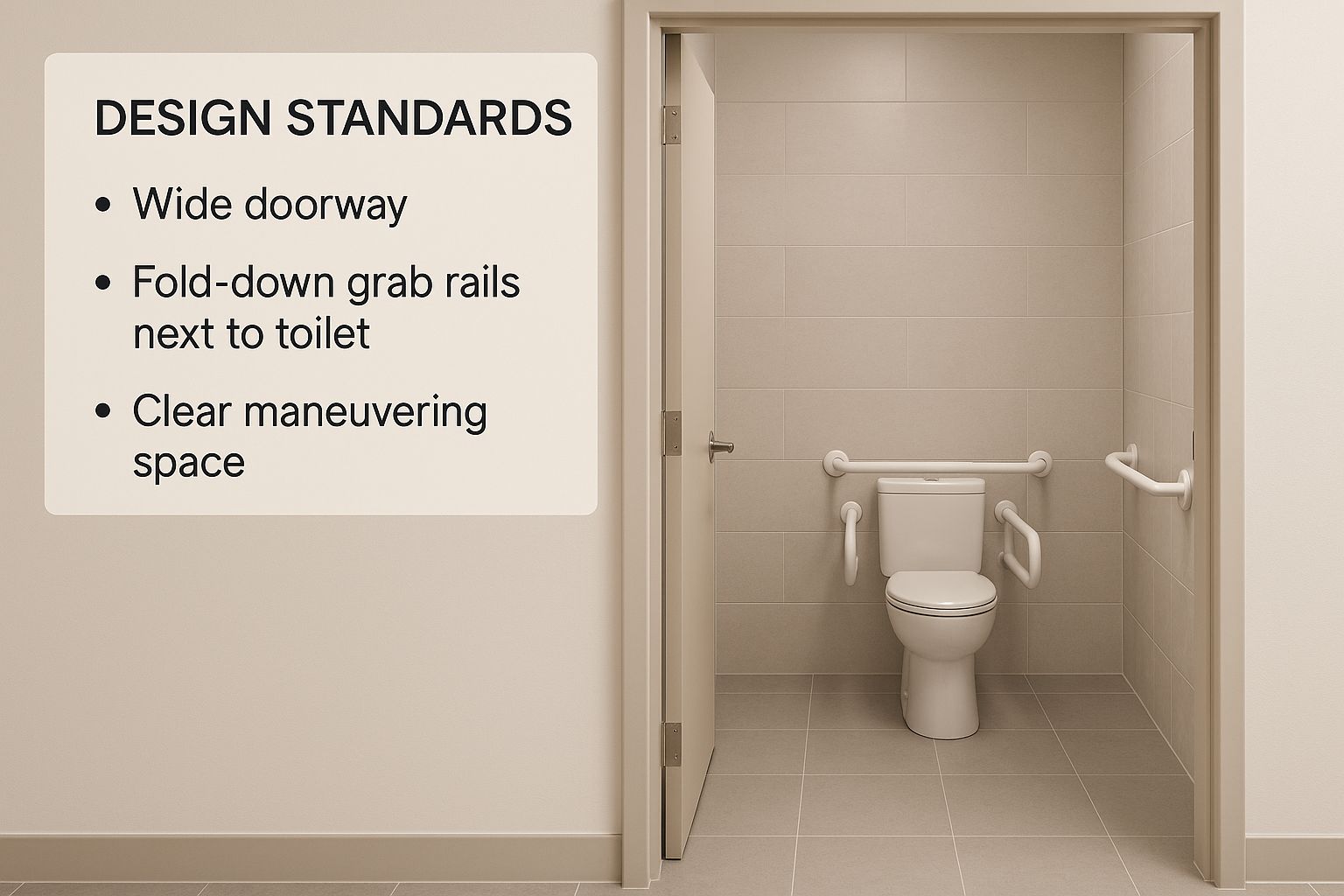
Why Choose Sarah’s Hire in Edgbaston?

When you’re looking for portable toilet rentals in Edgbaston, you need a supplier who is reliable, professional, and easy to work with. At Sarah’s Hire, we’ve built our reputation on being that go-to partner for projects across the West Midlands.

Our approach is built on straightforward, dependable service. That means clear, honest communication from the start. We do what we say we’ll do – simple as that.
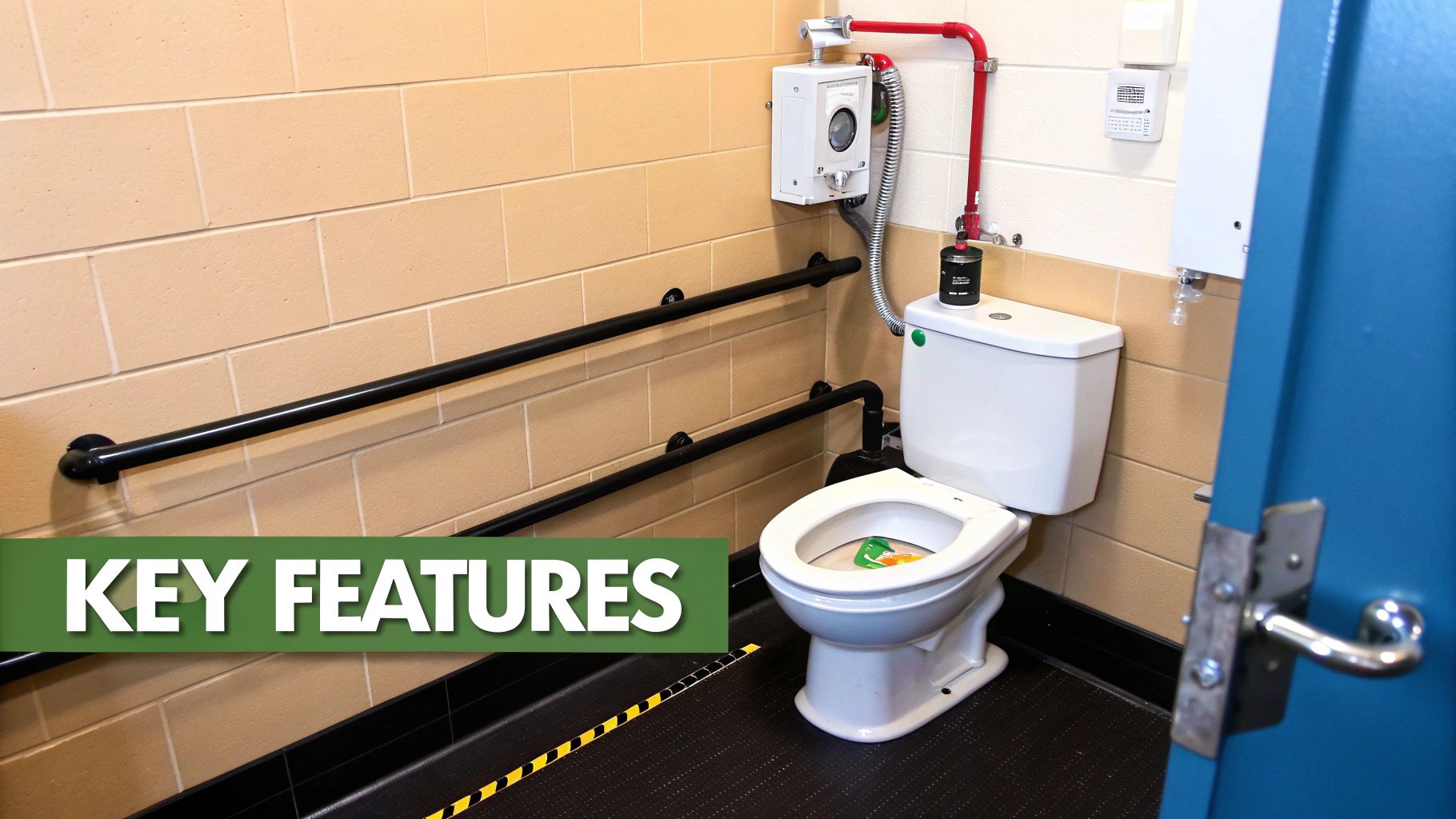
  • Local Experts: We know Edgbaston and the West Midlands inside out. Our deep local knowledge means we anticipate access issues and navigate the area efficiently, saving you time and hassle.
  • Unbeatable Reliability: You can count on us for on-time delivery, consistent servicing, and absolutely no hidden surprises on your bill. We stick to our promises.
  • Commitment to Cleanliness: Hygiene is our top priority. Every unit, like our popular white portaloo, arrives spotless and is kept that way with our rigorous servicing schedule.

We operate across the West Midlands, so if you need portable toilet rentals in any of the following areas, we’ve got you covered:

  • Edgbaston
  • Birmingham
  • Solihull
  • Sutton Coldfield
  • Dudley
  • Walsall
  • Wolverhampton
  • West Bromwich

"Working with a local company made all the difference. The Sarah’s Hire team understood the site access challenges in Edgbaston and had everything sorted without any fuss. It's a professional service from start to finish." – Event Organiser, Edgbaston
The demand for high-quality temporary toilets in the UK is growing, driven by a busy construction sector and a packed events calendar. With strict public health rules, reliable facilities are more important than ever. You can read more insights on the European portable toilet market on cognitivemarketresearch.com. As your local specialist, we’re on the ground, ready to meet that demand with the high standards you expect.

FAQ: Your Questions Answered

Image
Portable Toilet Rentals in Edgbaston: Your No-Fuss Guide 65 Hire Portable Building Site Toilets, Portable Event Toilets, Luxury Toilets, Welfare Units and Generators

When you’re organising portable toilet rentals in Edgbaston, you just want clear answers. Here are the most common queries we get from customers like you.

How often will the portable toilets be serviced?

Our standard service is weekly. Each visit is a thorough job designed to keep the unit fresh and hygienic. This includes:

  • Emptying the Waste Tank: We hygienically empty the holding tank.
  • Deep Cleaning: The entire unit is cleaned and sanitised.
  • Restocking Supplies: We replenish toilet paper and hand sanitiser.

If you’re running a large, multi-day festival or a busy construction site, a weekly clean might not be enough. No problem. We can arrange a more frequent servicing schedule – twice a week or even daily – to meet your exact needs.

Where can the toilets be placed on my site?

Placement is crucial. Toilets must be positioned on firm, level ground to ensure they're stable. For servicing, our vehicles must be able to park safely within 10 metres (about 30 feet) of the toilet so our hoses can reach.

Please remember, our team cannot lift units over obstacles like walls or fences. We need a clear, accessible path for delivery and collection. We’re happy to walk the site with you on delivery day to find the perfect spot.

Do the toilets need a connection to water or power?

No. Our standard portable toilets are completely self-contained. That’s one of their biggest advantages. Each unit has its own waste tank and comes supplied with sanitising chemicals that break down waste and control odours. You don't need to worry about connecting them to mains water, drainage, or an electricity supply. This makes them the ideal solution for any location in Edgbaston.

What happens if we have an issue with a toilet?

If you run into any problem with one of our units – a broken lock, a need for an emergency clean, or anything else – just call us. We pride ourselves on our rapid response. We’ll dispatch a team member to your site as soon as possible to get it sorted, causing minimal disruption to your event or work schedule. You can rely on us to be there when you need us.


Ready to get your sanitation sorted? For reliable, no-fuss portable toilet rentals in Edgbaston and the West Midlands, trust the local experts. Get in touch with Sarah's Hire today for a free, no-obligation quote.

Call us on 01432 359193 or email sarah@sarahshire.com to discuss your needs.

Find out more at https://www.sarahhire.com.

Building Site Toilet Hire Gloucester: Your Guide to Disabled Access Regulations

Running a building site in Gloucester means juggling a dozen critical tasks at once, and ensuring your welfare facilities are up to scratch is one of the most important. Getting disabled toilet regulations UK law right from the start isn’t just about ticking a compliance box—it's about keeping your project running smoothly and making sure every member of your team has safe, dignified access. The last thing you need is a project delay or a fine because your site facilities aren’t compliant.

At Sarah’s Hire, we understand the pressure you’re under. You need a straightforward, reliable solution for your building site toilet for Gloucester that just works, so you can focus on the build. We deliver fully compliant, clean, and well-maintained disabled access toilets directly to your site, taking the hassle and guesswork out of your hands.

Your No-Nonsense Guide to Site Accessibility

On a busy Gloucester building site, you’re managing tight deadlines, strict budgets, and the safety of your entire crew. Navigating the complexities of welfare facility regulations can feel like another job you just don't have time for. But getting it wrong can lead to serious problems, from project hold-ups to legal issues. Providing proper disabled access isn't optional; it's a legal requirement and a mark of a professionally run site.

This guide is for you—the site manager, the project lead, the builder on the ground who needs clear, practical advice without the legal jargon. We’ll cut straight to what you need to know and how to get it done right.

At Sarah’s Hire, we’re here to make this part of your job simple.

  • Fully Compliant Units: Our disabled access toilets meet all UK regulations, giving you complete peace of mind.
  • Hassle-Free Service: We deliver to your site, handle all the cleaning and maintenance, and collect it when the project is finished.
  • Focus on Your Build: Let us manage the welfare facilities, so you can concentrate on what you do best.

The Legal Framework Explained

Trying to navigate the legal side of site facilities can seem daunting, but the core principles are straightforward. It all comes down to ensuring safety, dignity, and access for everyone. Under UK law, including the Equality Act 2010 and specific building regulations like Approved Document M, providing accessible toilets is a standard requirement, not an optional extra.

These laws are in place for a crucial reason. With around 1 in 5 working-age adults in the UK having a disability, providing proper facilities is a necessity. To ensure you’re meeting disabled toilet regulations UK standards on your Gloucester site, partnering with a provider like expert toilet installation services who understands compliance inside and out is the smartest move.

The regulations cover specific details like door widths, grab rail placement, and the space needed for a wheelchair user to manoeuvre. For a temporary construction site, hiring a fully compliant portable unit is by far the easiest and most reliable way to meet these standards without needing to become an expert in the fine print yourself.

Understanding Your Core Legal Responsibilities

As a builder, you know rules aren't just red tape; they're about doing the job safely and correctly. When it comes to disabled toilet regulations UK law provides the blueprint for every compliant project, and it’s vital you know your responsibilities.

Think of it this way: the law sets out the main principles, and the various regulations provide the detailed specifications. It might seem like a lot to take in, but once you understand the key pillars, it becomes much clearer.

The most important piece of legislation is the Equality Act 2010. This act requires all businesses and service providers to make 'reasonable adjustments' for disabled people. This legal duty covers everything from access ramps to the welfare facilities on your building site.

Your Duty on a Building Site

So, what does 'reasonable adjustments' mean for you on a site in Gloucester? It means you have a legal duty to anticipate and remove any barriers that could prevent a disabled person from accessing your site or using its facilities safely and with dignity.

This responsibility applies in two key ways:

  • For your workforce: The Health and Safety at Work Act 1974 reinforces this, stating that you must provide suitable welfare facilities for all employees, including those with disabilities.
  • For public-facing projects: If your project involves constructing a public building, the requirements of the Equality Act are even more stringent to ensure the final building is fully accessible to everyone.

For temporary sites, hiring a fully compliant accessible toilet is the simplest way to meet these legal duties. It demonstrates you’ve taken proactive steps to fulfil your duty of care.

Building Regulations and Approved Document M

While the Equality Act explains why you need to provide access, the Building Regulations tell you how. The key document for you to be aware of is Approved Document M, often referred to as 'Doc M'. This guide translates the broad principles of equality law into practical, technical instructions for construction.

Doc M is split into two volumes:

  • Volume 1 – Dwellings: For new houses and flats.
  • Volume 2 – Buildings other than dwellings: For all other buildings, including offices, shops, and public spaces.

For most commercial projects, you’ll be referring to Volume 2. It details the exact specifications for accessible toilets, from the dimensions of the room to the precise placement of grab rails. We’ll cover the specific measurements next, but for now, just remember that Doc M is your go-to guide for getting the physical layout right.

Builder's Quote: "On any job, the first thing we do is establish which regulations apply. For site setup, Health and Safety is paramount. For the final build, Approved Document M is our bible. Getting this sorted from day one saves us from costly rework and delays down the line."

Understanding these legal duties isn't about memorising clauses. It's about knowing your responsibilities so you can plan your site with confidence. By ensuring your temporary welfare facilities are compliant, you create a safe, inclusive, and legally sound environment for everyone, letting you get on with the job.

Decoding Document M for Practical Site Application

Right, let's get down to the practical details. You understand the legal background; now let’s see how that translates to your actual site. Approved Document M is where theory becomes practice, giving you the precise guidance on layout and dimensions for accessible toilets.

Getting these details right isn’t just a ‘nice to have’—it’s non-negotiable for project sign-off and ensuring the facilities are genuinely usable. We're going to break this down into a simple checklist for you and your team.

The regulations are all about creating enough space for a wheelchair user to move around and use the facilities safely and with dignity. The dimensions are designed with real-world movements in mind, such as transferring from a wheelchair to the toilet.

The Core Space Requirements

First and foremost, you need enough space. The minimum dimensions for a wheelchair-accessible unisex toilet are set for a very specific reason: they ensure a wheelchair can actually turn around inside. Without this fundamental space, all other features become irrelevant.

  • Minimum Room Size: The room must be at least 2200mm deep by 1500mm wide. This is the calculated space required for a standard wheelchair to complete a full turn.
  • Doorway Clarity: The door must provide a clear opening width of at least 850mm. It also needs to open outwards so it doesn't obstruct the internal space or accidentally trap someone.
  • Manoeuvring Space: There must be a clear, unobstructed turning circle of at least 1500mm by 1500mm inside the room.

This visual guide helps to put all the essential design standards for a compliant accessible toilet into perspective.

Image
Building Site Toilet Hire Gloucester: Your Guide to Disabled Access Regulations 70 Hire Portable Building Site Toilets, Portable Event Toilets, Luxury Toilets, Welfare Units and Generators

As you can see, the layout is just as important as the overall size. Every fixture must be positioned correctly for easy access.

Getting the Layout Spot On

Once the space is sorted, the layout is critical. The placement of the toilet, basin, and grab rails is specified down to the millimetre to ensure people can use them independently. Think of it as a carefully planned setup where every element has a vital role.

The most important part of this is the transfer space. This is the clear area directly next to the toilet, which must be a minimum of 750mm wide. This space allows a wheelchair user to position themselves parallel to the toilet for a safe transfer.

Site Manager's Tip: "The transfer space is sacred ground. Nothing can encroach on it—no bins, no radiators, nothing. Keeping this area completely clear is one of the first and most critical checks during an inspection. It’s a non-negotiable."

Essential Fixture Heights and Positions

Finally, let's look at the heights and positions of the key fixtures. Getting these wrong can make the facility uncomfortable or even unusable for some people.

  • Toilet (WC) Height: The height of the toilet pan (from floor to seat) should be between 460mm and 500mm. This height aligns better with a typical wheelchair seat, making transfers easier.
  • Basin (Sink) Height: The rim of the basin should be between 720mm and 740mm from the floor, allowing a wheelchair user to get their knees underneath it. Lever taps are essential, as they are far easier to operate than standard taps.
  • Alarm Pull Cord: The red emergency cord must be easy to reach from both the toilet and the floor. It should have two red bangles: one set at 100mm from the floor and the other between 800mm and 1000mm. This ensures someone can call for help even if they have fallen.

Here's a quick summary of those key measurements to keep handy.

Document M Essential Dimensions for Accessible Toilets

Feature Minimum Requirement Key Consideration
Room Size 2200mm (D) x 1500mm (W) Allows for a full wheelchair turning circle.
Door Opening 850mm clear width Must open outwards to avoid obstructing internal space.
Transfer Space 750mm wide next to the WC Must be kept completely clear of any obstructions.
Toilet Seat Height 460mm – 500mm from floor Aligns with wheelchair height for easier transfers.
Basin Rim Height 720mm – 740mm from floor Provides knee clearance for wheelchair users.
Alarm Cord Bangles 100mm & 800-1000mm from floor Ensures the cord is reachable if someone has fallen.

Getting every one of these specifics right is exactly why hiring a pre-certified unit is the most practical solution for a busy Gloucester site. When you hire from us, you know every one of these measurements has been checked and signed off, removing the risk and saving you valuable time.

Essential Fixtures: Grab Rails, Alarms and Signage

Image
Building Site Toilet Hire Gloucester: Your Guide to Disabled Access Regulations 71 Hire Portable Building Site Toilets, Portable Event Toilets, Luxury Toilets, Welfare Units and Generators

A compliant disabled toilet is more than just a large room. The real-world safety and usability depend on the details—the fixtures and fittings people rely on. Getting these elements right is what turns a space from merely compliant to genuinely safe and accessible.

These aren't optional extras; they are critical tools mandated by disabled toilet regulations UK to support independence and provide a lifeline in an emergency. Each fixture has a specific job, and it must be installed correctly to function properly.

Getting a Grip with Grab Rails

Grab rails are arguably the most important component for a user's safety. They provide stability and support during transfers, which can be the most difficult part of using the toilet. Document M is very specific about the types of rails needed, each with a precise location and function.

Crucially, they must be a contrasting colour to the wall behind them to help them stand out, which is vital for users with visual impairments.

Think of them as a complete support system:

  • Horizontal Rails: One is placed on the wall next to the toilet, offering a firm handhold for someone lowering themselves or transferring sideways.
  • Vertical Rails: A vertical rail is positioned beside the basin to help people pull themselves up from a seated position or steady themselves.
  • Drop-Down Rails: These are fitted on the open side of the toilet (the transfer side). They can be lowered to provide support on both sides and then folded up to create clear space.

Placement isn’t a guessing game. If a rail is too high, too low, or too far away, it becomes useless or even dangerous.

Emergency Assistance Alarms: A Non-Negotiable Lifeline

The emergency alarm is a vital safety feature. It’s how a user can call for help if they fall, feel unwell, or get into difficulty. The regulations are incredibly specific to ensure it works in a worst-case scenario.

The system must include a red pull cord that reaches the floor, marked with two red bangles—one at 100mm from the floor and the other between 800mm and 1000mm. This setup ensures the alarm can be pulled even by someone lying on the floor.

A Critical Safety Warning: Never tie up the emergency cord to keep it 'tidy'. A cord that doesn't reach the floor is a major safety failure and an immediate red flag during any site inspection.

The system must also have a reset button reachable only from inside the cubicle, ensuring someone has to physically attend to the user to cancel the alarm. An audible and visual signal must also be triggered outside the room to alert people that help is needed immediately. The layout of our portable disabled toilet units is designed to meet these exact specifications.

Clear and Correct Signage

Finally, don’t overlook signage. It’s the first thing people see, so it must be clear, simple, and correctly placed. The international symbol for access (the wheelchair symbol) must be used on the door.

Good signage does more than just show the way; it gives a user confidence that the facility is suitable before they even open the door. The principles of clear communication are universal, and understanding the general importance of signage can improve accessibility across your entire site.

When you hire a unit from Sarah's Hire, you can be confident that every grab rail, alarm, and sign is already correctly in place, taking all the guesswork out of compliance for you.

Your Gloucester Partner for Compliant Toilet Hire

Image
Building Site Toilet Hire Gloucester: Your Guide to Disabled Access Regulations 72 Hire Portable Building Site Toilets, Portable Event Toilets, Luxury Toilets, Welfare Units and Generators

You don’t just need a toilet supplier for your project. You need a local partner who understands the day-to-day pressures of a Gloucester building site and knows the disabled toilet regulations UK law inside and out. That’s us. At Sarah’s Hire, we are your reliable, on-the-ground expert for all welfare facilities.

We provide a complete solution that removes compliance headaches from your to-do list, making this part of your job as simple as it should be.

Built for Builders in Gloucestershire and Surrounding Areas

We know that on your site, time is money. You can’t afford to be chasing suppliers or worrying about whether the toilets have been serviced. Our entire service is designed around the real-world needs of builders like you.

We provide prompt, reliable service to sites across the region, including:

  • Gloucester
  • Cheltenham
  • Stroud
  • Tewkesbury
  • Cirencester
  • The Forest of Dean

From a happy customer: "Sarah's Hire is our go-to for site facilities. They delivered a fully compliant disabled access unit to our Gloucester site right on schedule. The weekly servicing was like clockwork, and their team was professional from start to finish. It’s peace of mind you can’t put a price on."

Our process is refreshingly straightforward. From your first call to the final collection, we ensure everything runs smoothly. We handle all the details of portable toilet hire for building sites with professionalism and expertise.

Why Choose Sarah’s Hire?

When you’re running a project, you need partners you can count on. Here’s why builders across Gloucester trust us:

  • No-Fuss Reliability: We do what we say we’ll do, when we say we’ll do it. Your toilets arrive on time, are serviced regularly, and are kept spotlessly clean.
  • Expertise You Can Trust: We know the regulations inside and out, so you don’t have to. Our team ensures your site meets its legal duties, protecting you from potential fines or project delays.

Common Questions from Gloucester Builders

We get asked the same questions by builders all the time, so we've put together some straightforward answers. No jargon, no fluff – just the information you need to keep your site compliant and your crew happy.

Do I really need an accessible toilet for my crew?

Yes, it's a legal requirement. The Equality Act 2010 and Health and Safety regulations are clear. If you have any disabled employees, or even the potential for them to be on site, you must provide appropriate welfare facilities. It’s about making 'reasonable adjustments' and running a safe, inclusive, and legally sound operation.

What’s the difference between an accessible toilet and an ambulant cubicle?

This is a great question, as they are often confused but serve different needs.

  • An accessible toilet is a self-contained unit, large enough for a wheelchair user to manoeuvre and use independently. This is what you need for a building site.
  • An ambulant disabled cubicle is typically found within a larger toilet block. It's wider than a standard cubicle and has grab rails for someone who can walk but needs extra support, like a person using crutches.

How often will you service a hired disabled toilet?

Reliable weekly servicing is included as standard with every hire. Our team will visit your site to give the unit a thorough clean and sanitisation, empty the waste tank, and restock all consumables. We ensure the toilet remains hygienic and ready for use throughout the entire hire period. The same high standards you see in our regular construction site toilet hire apply to all our units.


Ready to get your Gloucester site sorted with a fully compliant accessible toilet? Sarah's Hire makes it simple. Call us today on 01432 359193 or email sarah@sarahhire.com for a fast, no-obligation quote.