

Portable toilet for disabled users – it’s not a luxury, it’s a legal requirement. Whether you’re running a site or event, Sarah’s Hire makes it easy and compliant. Making sure everyone feels welcome and properly looked after shouldn’t be one of them. A standard portable loo just doesn’t work for your guests or workers with disabilities. We get it. That’s why at Sarah’s Hire, we provide a simple, no-fuss solution: a fully compliant portable toilet for disabled users, delivered right where you need it, when you need it.
Why Standard Toilets Don’t Make the Cut
You’ve planned the schedule, briefed your crew, and sorted the logistics. But have you thought about the welfare facilities? It’s an easy detail to overlook, but getting it wrong can seriously impact the comfort and dignity of your attendees or team members. For anyone with mobility challenges, a standard portable toilet is a non-starter.
- No Space: A wheelchair user can’t even get through the door, let alone turn around inside.
- No Support: The lack of grab rails is a genuine safety risk for anyone needing extra stability.
- No Access: That high step at the entrance might as well be a mountain.
This is where we step in. Sarah’s Hire removes the headache of ensuring accessibility. We supply top-quality, regulation-compliant portable toilets for disabled users right across the UK. It’s not just about ticking a box for the Equality Act 2010; it’s about showing every single person on your site that you’ve got their back.
To ensure you don’t miss crucial details when organising an inclusive event, a structured plan is essential. Tools like a comprehensive event planning checklist template can be a lifesaver, helping you manage everything from guest experience to site logistics.
This guide gives you practical, straight-talking advice on what you need to know. We’ll cover your legal duties, the key features to look for, and how to get placement and maintenance spot-on. Let’s make your site accessible for everyone, from day one.
Understanding Your Legal Duties
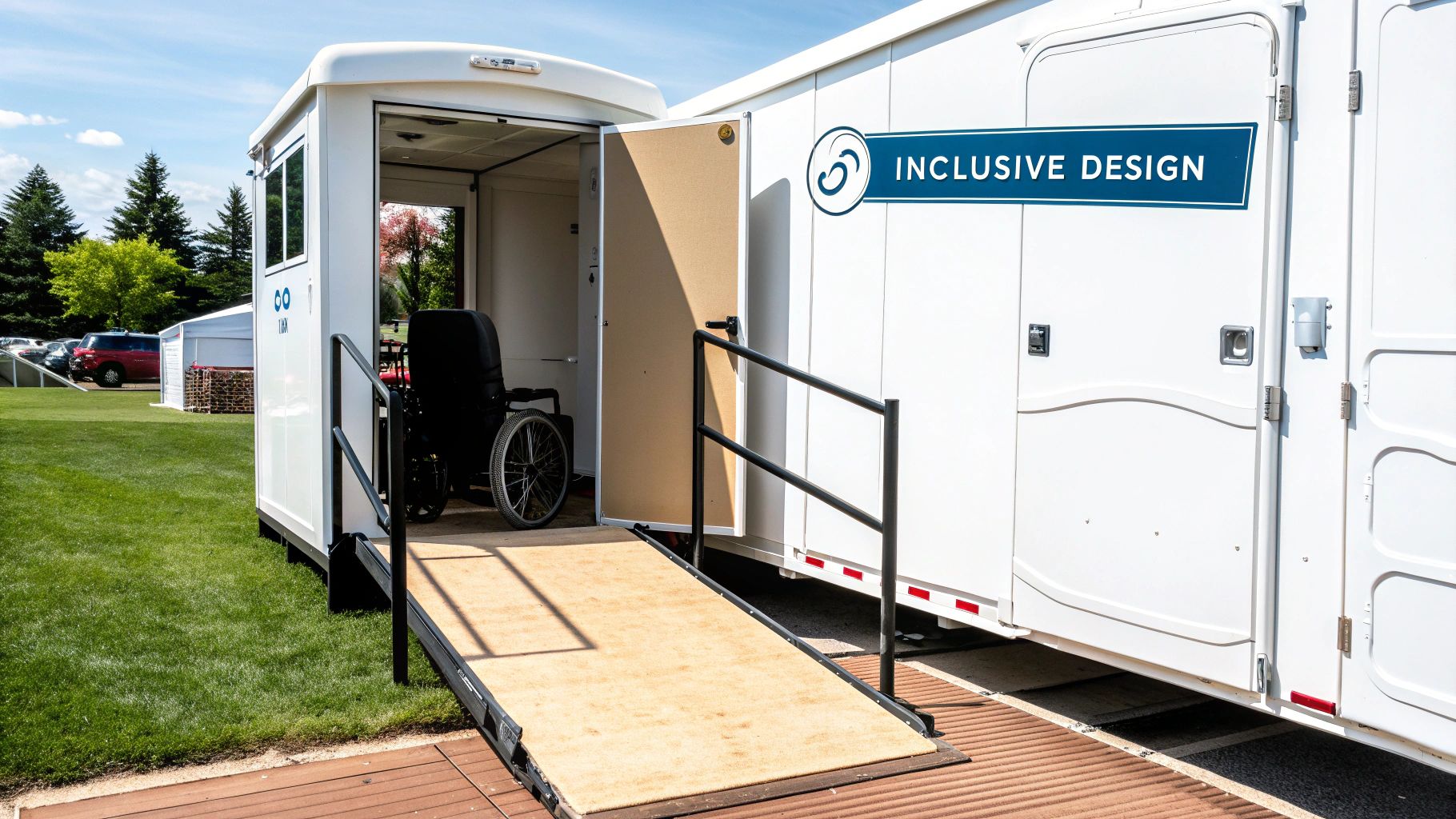
Before you hire any facilities, you need to understand the legal requirements. Getting accessibility right isn’t just about being considerate; it’s a firm legal duty under the Equality Act 2010. This law requires you to make ‘reasonable adjustments’ for people with disabilities, whether they’re guests at your event or crew on your construction site.
Providing a dedicated portable toilet for disabled users is one of the most basic and important adjustments you can make. It’s a clear sign that you’re committed to genuine inclusivity. This is about more than avoiding legal trouble—it’s about doing the right thing.
So, how many units do you need? There’s no single answer. It depends entirely on the scale of your event or project. A small village fete has very different needs to a major music festival or a large-scale construction project.
Meeting Your Legal Obligations
The Equality Act 2010 is the key piece of legislation. It applies to anyone providing services to the public, and it also covers your duty as an employer. Failing to make ‘reasonable adjustments’ can be classed as discrimination, and that’s a headache you don’t need.
A huge part of compliance is providing “adequate” facilities. But what does that mean in practice? This is where professional advice pays off.
“The team at Sarah’s Hire made the whole process easy. They advised on the right number of units for our festival size and ensured we were fully compliant. It was one less thing for us to worry about.” – Festival Organiser, Sussex
As a rule of thumb, a widely accepted best practice is to provide at least one accessible unit for every 10 standard portable toilets. This ratio is a solid starting point to ensure fair and timely access for wheelchair users and others with mobility challenges.
Practical Steps for Compliance
Thinking about who will be on your site is the best first step. Are you expecting lots of families with pushchairs who could also use the extra space? Is it a community event for older residents? Knowing your audience is everything.
- Know Your People: Consider the demographics of your workforce or event-goers. This will give you a better feel for how many accessible toilets you’ll realistically need.
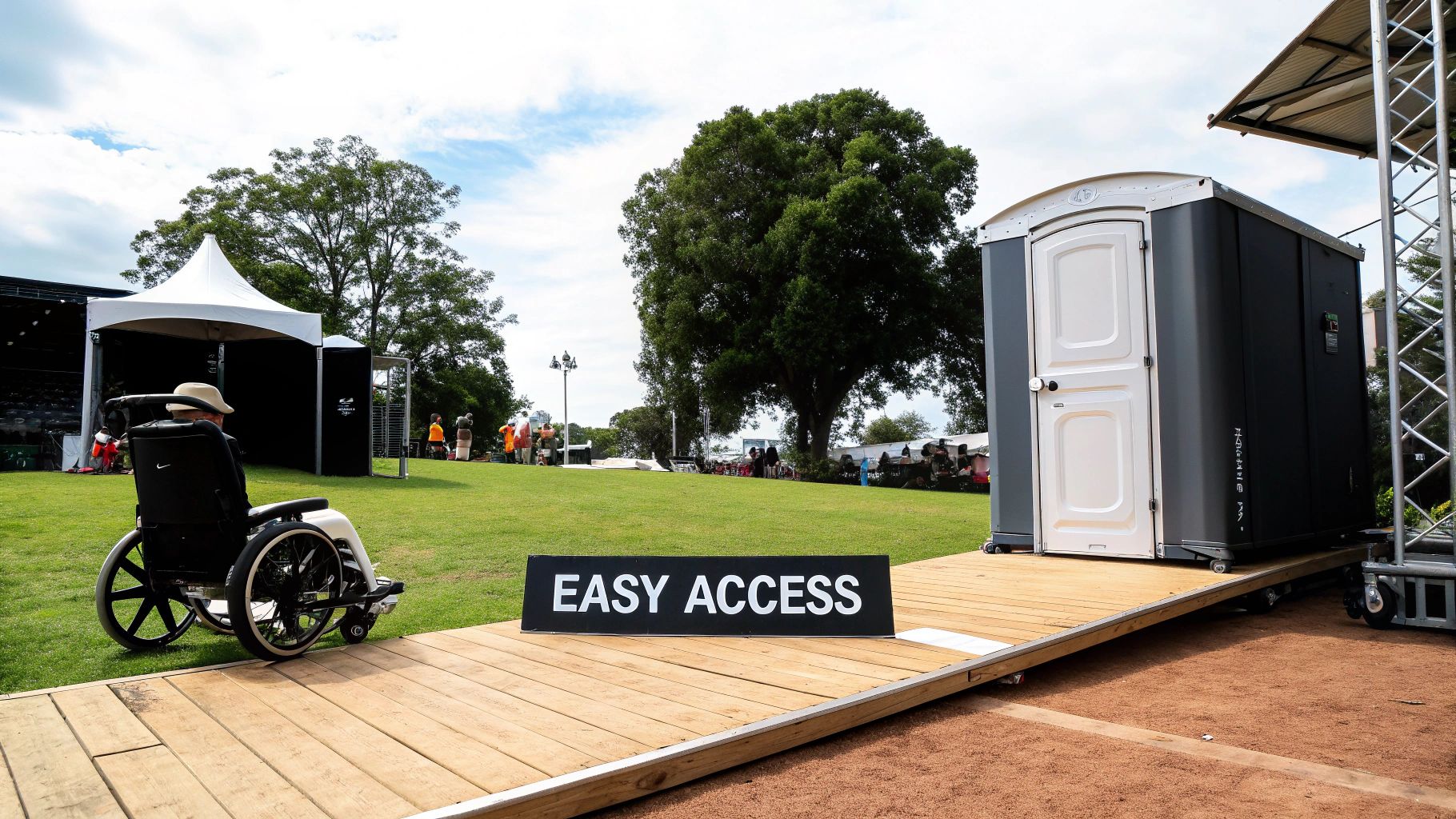
- Plan Your Placement: Decide exactly where the portable toilet for disabled users will go. It must be on firm, level ground, with a clear, wide, and unobstructed path leading to it.
- Signage is Key: Make sure the unit is clearly signposted from all major points across your site. People shouldn’t have to search for it.
For a more detailed breakdown, our guide on disabled toilet regulations UK offers the information you need to get everything spot on. A little planning goes a long way in creating a welcoming environment for everyone.
What to Look For in an Accessible Portable Toilet
When you hire a portable toilet for disabled users, don’t make the mistake of thinking ‘accessible’ just means bigger. While extra room is crucial, a truly compliant unit has several non-negotiable features. Knowing these helps you spot the difference between a genuinely accessible toilet and a larger box that doesn’t meet the standard.
The most critical feature is the entrance. A proper accessible unit must have a flat-floor design. This means no ramp, no lip, and no step. It’s about creating seamless, ground-level entry so a wheelchair user can get in and out without assistance or struggle.
Key Features Inside the Unit
Once inside, the interior layout is just as important. The door needs to be extra-wide, not just for entry, but also for closing it easily from a seated position. The internal space must be large enough for a full 360-degree wheelchair turn and, in many cases, to accommodate a carer comfortably.
Here are the vital safety features you should insist on:
- Strategically Placed Grab Bars: These aren’t optional; they’re essential. They must be securely fixed to the walls to provide solid support for transferring from a wheelchair to the toilet.
- Lower Toilet Seat Height: The seat is positioned slightly lower than in a standard loo. This small adjustment makes transfers from a wheelchair safer and far less strenuous.
- Anti-Slip Flooring: The floor must have a textured, anti-slip surface to prevent a wheelchair’s wheels or shoes from sliding, especially if the floor gets wet.
This image shows the key measurements and features that make a unit truly compliant and usable.
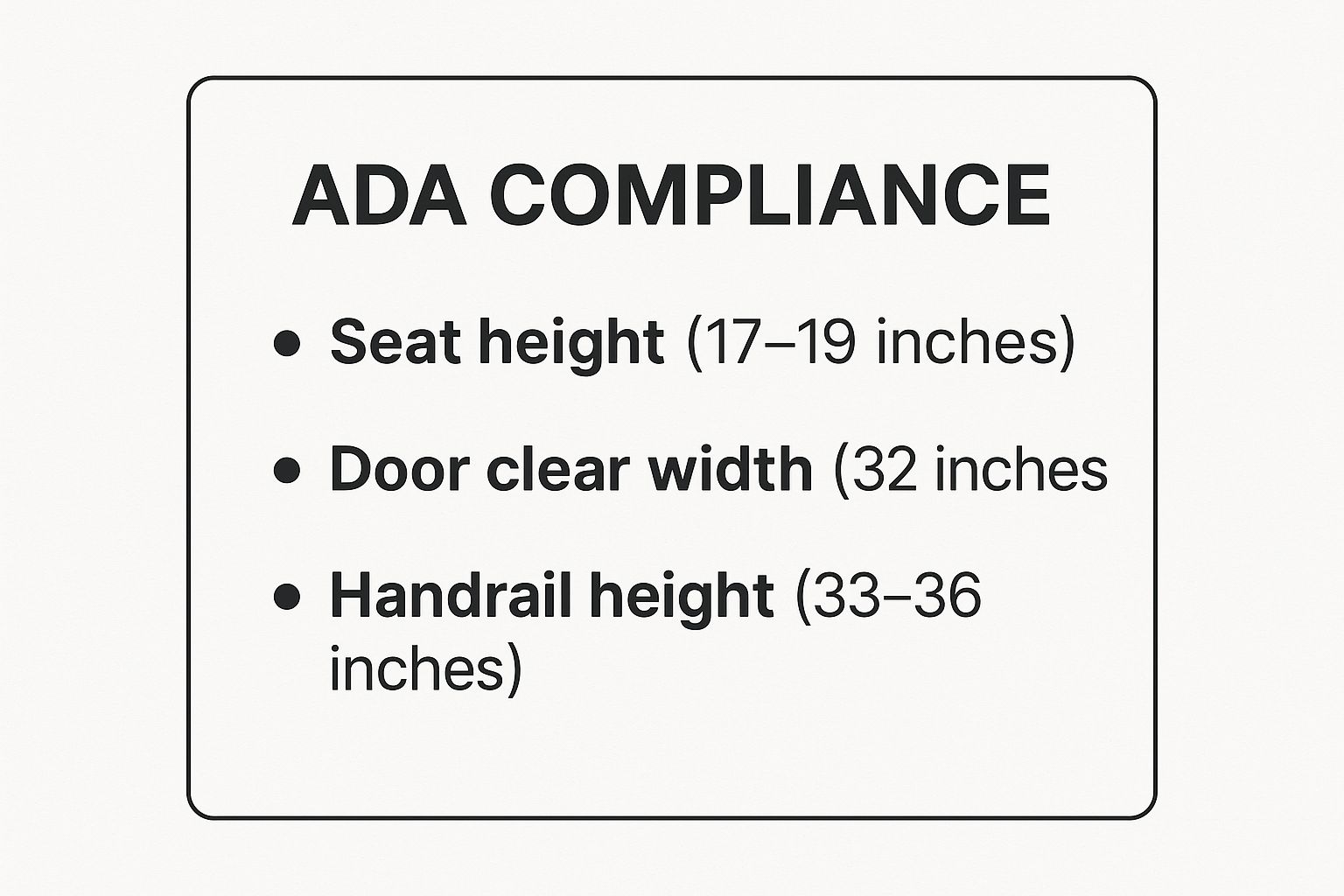
These dimensions aren’t random numbers; they are defined by regulations to guarantee safety and usability for the people who depend on them. For more details, you can learn about our specific accessible toilet dimensions and how they comply with UK standards.
On-Site Placement and Logistics
Hiring the right accessible toilet is a great start, but it’s only half the battle. The best unit in the world is useless if people can’t get to it safely. Where you place the portable toilet for disabled users is just as critical as the features inside it.
We deliver to all sorts of locations—from bustling festivals and remote farms to busy construction sites across these areas:
- Herefordshire
- Gloucestershire
- Worcestershire
- Birmingham
- And surrounding regions
The golden rule? The unit must be positioned on firm, level ground. While grass can be fine, any soft, muddy, or sloping surface is a definite no. It’s a potential tipping hazard and makes wheelchair access a real struggle.
Creating a Clear and Safe Path
Think beyond the toilet’s immediate footprint. The journey to the loo matters just as much as the destination. The path needs to be wide, flat, and completely clear of obstacles like trailing cables or equipment.
This isn’t just a box-ticking exercise. Recent figures show that nearly half of UK adults over State Pension age (45%) live with a disability, many involving mobility. This puts into perspective why thoughtful placement is essential. If you’re interested, you can read more about the demographic drivers in the accessible sanitation market.
To get the access right, keep these points in mind:
- Obstacle-Free Route: Check for kerbs, steps, or tight corners that could block the way.
- Sufficient Lighting: If your event or work continues after dark, the path and the area around the toilet must be well-lit.
- Clear Signage: Use large, easy-to-read signs to direct people from key points on your site.
Servicing and Delivery
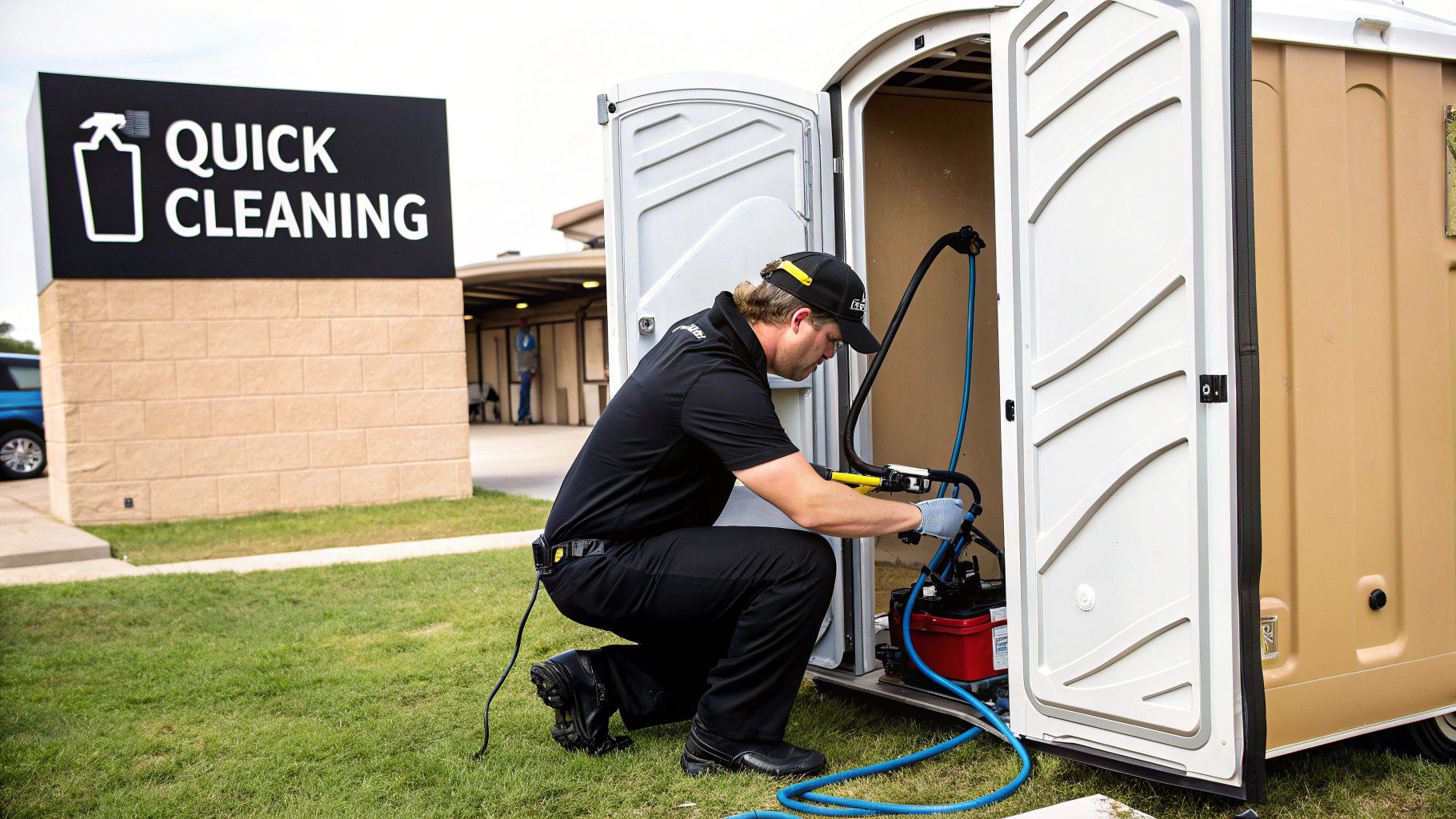
We’ll chat with you to pinpoint a spot that works for your users and our delivery vehicles. We need a clear route to drop off, service, and collect the toilet without disrupting your event or operations. For multi-day hires, we’ll agree on a regular servicing schedule to keep the toilet clean and fully stocked. Planning this from the start ensures your portable toilet for disabled users stays in top condition for the entire hire period.
Why Choose Sarah’s Hire?
When you need a reliable portable toilet for disabled users, you want a straightforward, no-fuss service from a partner you can trust. We aim to be part of your team, dedicated to making your event or site a success. It’s why clients across Sussex, Surrey, and beyond choose us time and time again.
- No-Nonsense Service: We get straight to the point. We deliver clean, modern, fully compliant units on time, every time.
- Expert Advice: With years of experience, we provide practical, honest guidance to ensure you get exactly what you need, without the hard sell.
“The service from Sarah’s Hire was fantastic from the first call. The accessible unit was high-quality, clean, and made a real difference for our guests’ experience.” – Event Manager, Surrey
Planning welfare facilities can be a puzzle, but we make it simple. For a complete rundown, check out our comprehensive event toilet hire guide for more practical tips.
FAQs: Your Questions Answered
Here are the straight-talking answers to the questions we hear most often from event organisers and site managers.
How many accessible toilets do I need?
The honest answer is: it depends. A solid starting point is at least one accessible unit for every 10 standard toilets. But think of this as a baseline. We’ll chat with you to understand your event or site to recommend the right number, ensuring everyone has dignified and timely access. The extra space is also incredibly useful for parents with buggies.
What’s included in the hire price?
No hidden costs. Our quotes are fully inclusive. This covers:
- Delivery and collection: We’ll bring the unit to your site and pick it up at a time that works for you.
- Professional setup: We don’t just drop the loo; we install it securely on firm, level ground.
- All consumables: The unit arrives fully stocked with toilet paper and hand sanitiser.
Can the toilet be placed on grass?
Yes, as long as the ground is firm and level. A grassy field can be a perfect spot, but it can’t be soft, boggy, or on a slope. This is non-negotiable for stability and safe wheelchair access. We’ll work with you to find a location that is safe for users and practical for our service vehicles.
Ready to make your site or event fully accessible? Sarah’s Hire provides clean, compliant, and reliable portable toilet solutions without the fuss.
Get a straightforward quote today!
Call us on 0203 935 6851 or email hire@sarahshire.com to discuss your needs.