

“Welfare unit van hire is one of the smartest ways to keep your crew safe, compliant, and comfortable on site.” Comfortable, and compliant is your number one priority. But when you’re working on a remote or temporary site, sorting out legally required facilities can be a real headache. You need a solution that’s as flexible and hardworking as your team. That’s where a welfare unit van from Sarah’s Hire comes in. It’s your all-in-one, mobile base that solves all your on-site welfare challenges from day one.
A welfare unit van isn’t just a vehicle; it’s an entire support hub on wheels. It cleverly combines a canteen, a toilet, and a warm, dry rest area into a single, HSE-compliant package. This means your team can take proper breaks, use hygienic facilities, and get out of the weather, all without leaving the job. For busy builders and site managers like you, it eliminates the cost and hassle of setting up separate temporary facilities, saving you time and money.
More Than Just a Van
Unlike a standard panel van, these vehicles are purpose-built to handle the tough demands of on-site work. They are professional conversions specifically designed to create a safe, comfortable, and compliant space for workers in the UK. Inside, you’ll find travel-safe seating, warm and dry rest areas, and all the essentials like toilets and cooking facilities.
Think of it as the ultimate upgrade for your mobile workforce, a crucial tool for boosting field service efficiency.
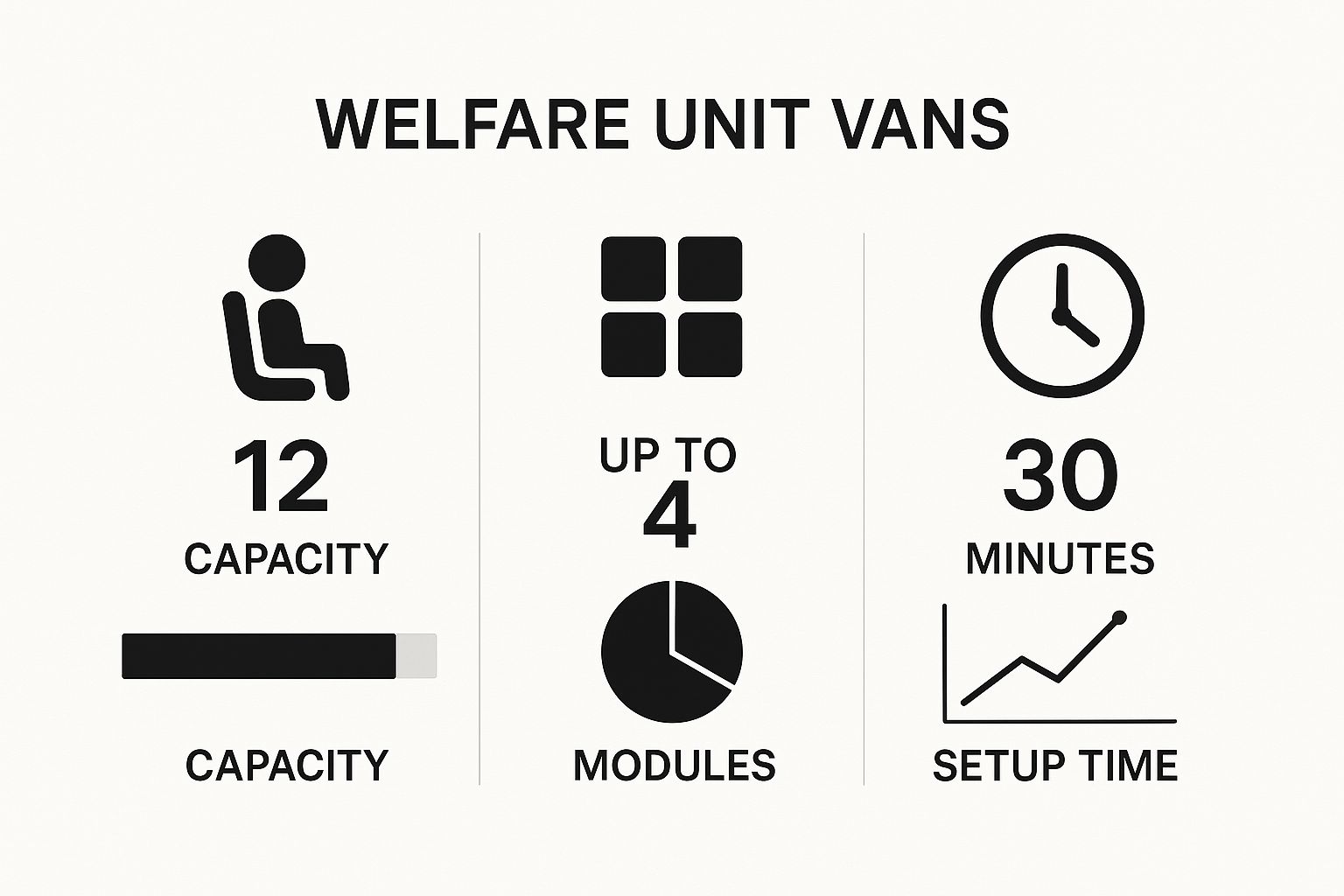
To make it crystal clear just how different these vehicles are, here’s a quick comparison.
Standard Van vs Welfare Unit Van a Quick Comparison
This table shows exactly what you get with a purpose-built welfare unit compared to a regular van.
| Feature | Standard Commercial Van | Purpose-Built Welfare Unit Van |
|---|---|---|
| Primary Use | Transporting tools and materials | Mobile crew welfare, transport, and on-site support |
| Seating | 2-3 seats in the cab | Up to 7 travel-safe seats (cab and cabin) |
| Canteen Area | None | Dedicated seating area, table, microwave, and hot water |
| Toilet Facilities | None | Fully-equipped, private toilet compartment |
| Heating/Drying Room | None | Heated area to dry wet gear and provide warmth |
| HSE Compliance | Not compliant for welfare needs | Designed to meet or exceed all HSE welfare regulations |
| Power Supply | Vehicle battery only | Independent power for lighting, heating, and appliances |
As you can see, a welfare unit isn’t just a transport vehicle; it’s a complete, compliant, and comfortable base of operations for your crew.
The Immediate Payback for Your Site
The benefits of hiring a welfare van go way beyond simple convenience. It has a direct, positive impact on your project’s bottom line.
- Boosts Productivity: When your crew has a comfortable place to eat, rest, and warm up, they’re more focused and energised for the job. No more time wasted travelling off-site for breaks.
- Improves Morale: Providing top-quality facilities shows your team you value their wellbeing. A respected crew is a motivated and loyal crew. It’s that simple.
- Guarantees Compliance: Our welfare units are built to meet or exceed Health and Safety Executive (HSE) regulations, which means no risk of fines or project delays for you.
By having all the essential facilities in one mobile unit, you get rid of logistical headaches and create a far better working environment. This guide will walk you through exactly how a welfare unit van can transform your operations, keeping your team safe, productive, and happy, no matter where the job takes you.
A Look Inside Your Mobile Welfare Unit
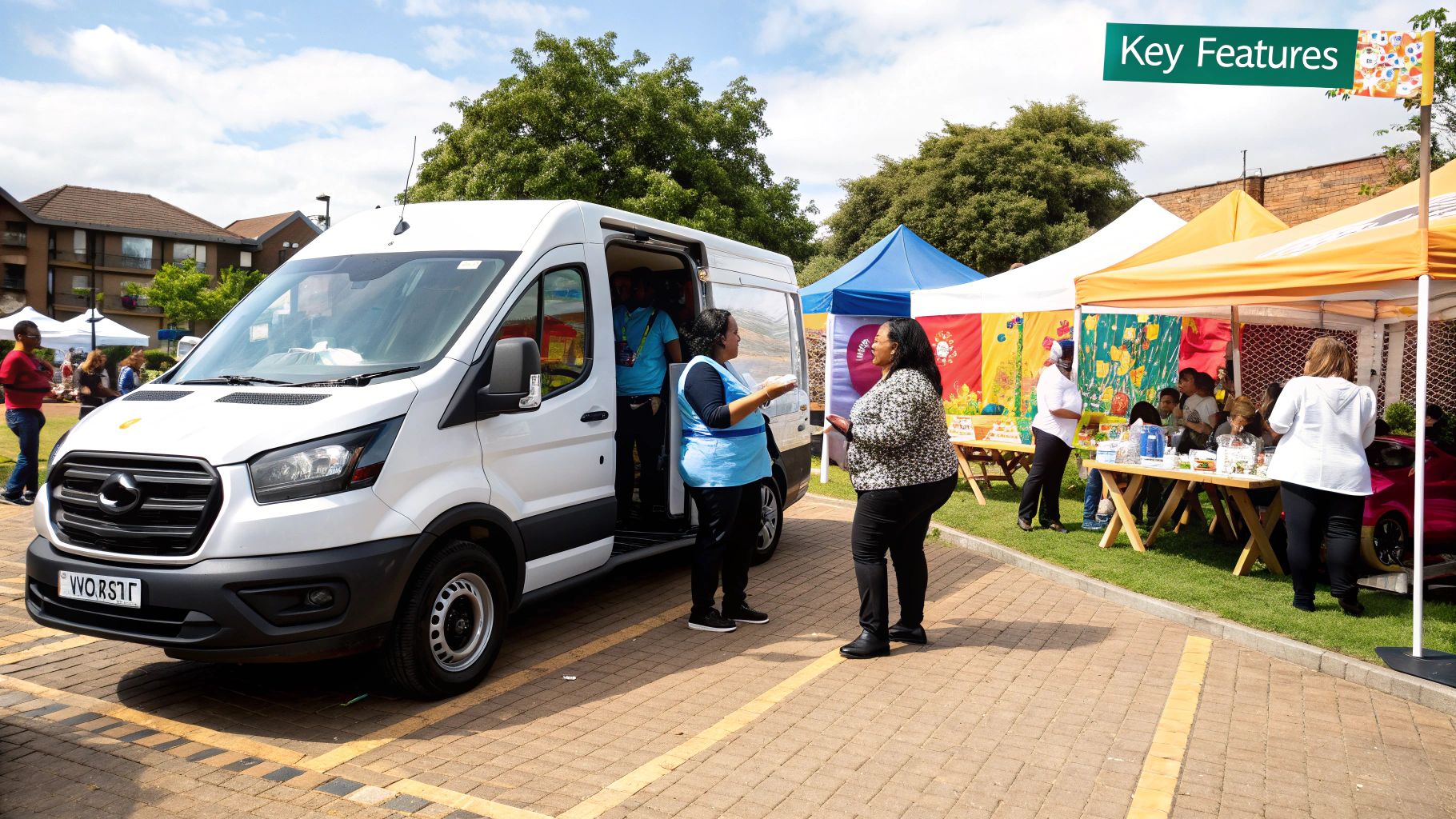
So, what actually makes a welfare unit van more than just a standard van? Let’s open the doors and have a proper look inside.
Think of it less like a vehicle and more like a mobile, self-contained headquarters for your crew. It’s been designed from the ground up with their comfort and your legal duties in mind. Every single feature is there for a practical reason—to make the workday safer, more comfortable, and ultimately, more productive.
These vans are cleverly partitioned to make every inch of space count. One section is for travel and taking a break, while the other is dedicated entirely to hygiene. This clear separation is key, as it ensures the area where your team eats and rests stays clean and welcoming all day long.
The Canteen Your Crew Deserves
Forget makeshift lunches in the cab of a cold van. The integrated canteen is the heart of any good welfare unit, giving your team a dedicated space to properly switch off and recharge. This isn’t a luxury; it’s fundamental to keeping morale and energy levels high, especially on those long, demanding jobs.
A well-equipped canteen is a total game-changer for site welfare. It transforms break time from a basic necessity into a genuinely restful period.
Here’s what you’ll typically find inside:
- Dedicated Seating and Table: A fixed table with comfortable, clean seating for multiple crew members. It’s a proper space to sit together and eat, away from the mud and tools.
- Hot Water Dispenser: Instant hot water is a must for tea, coffee, or hot snacks like pot noodles. It’s a small touch that makes a massive difference on a cold, wet day.
- Microwave Oven: Allows your team to heat up a proper meal from home. A warm lunch without leaving the site saves time and is a huge boost for wellbeing.
- Storage Space: You’ll find handy cupboards to keep food, drinks, and personal kit secure and out of the way, keeping the main area tidy and functional.
Hygienic and Private Facilities
Keeping hygiene standards high on site is a non-negotiable part of your Health and Safety Executive (HSE) duties. A welfare unit van makes this incredibly simple by providing separate, self-contained toilet and washing facilities. This is one of the most critical features setting it apart from any standard vehicle.
Having clean, private facilities right on-site stops time being wasted on trips to find public toilets and guarantees you’re always compliant with welfare regulations. It’s a simple solution to a common logistical headache.
The facilities are built to be robust, hygienic, and easy to maintain, giving your team the privacy and cleanliness they have a right to expect. While a mobile welfare unit is a perfect compact solution, for larger sites or events, you might need to add extra facilities. You can find more details in our guide to hiring portable toilets for building sites.
The toilet compartment is completely separate from the canteen and includes:
- A full-flushing chemical toilet.
- A dedicated sink with hot and cold running water.
- Soap dispensers and paper towels.
This setup means your crew can wash their hands properly before eating—a simple but vital step in stopping the spread of germs on a busy worksite.
A Warm and Dry Refuge
Working in the British weather means your crew will inevitably face cold, wet, and windy conditions. A key feature of every welfare unit van is its powerful heating system, which keeps the inside warm and comfortable no matter what’s happening outside.
This turns the van into a welcome refuge where your team can escape the elements, dry off wet gear, and warm up before heading back out. A warm, dry team is a safe and productive team. Simple as that.
Meeting HSE Regulations on Site
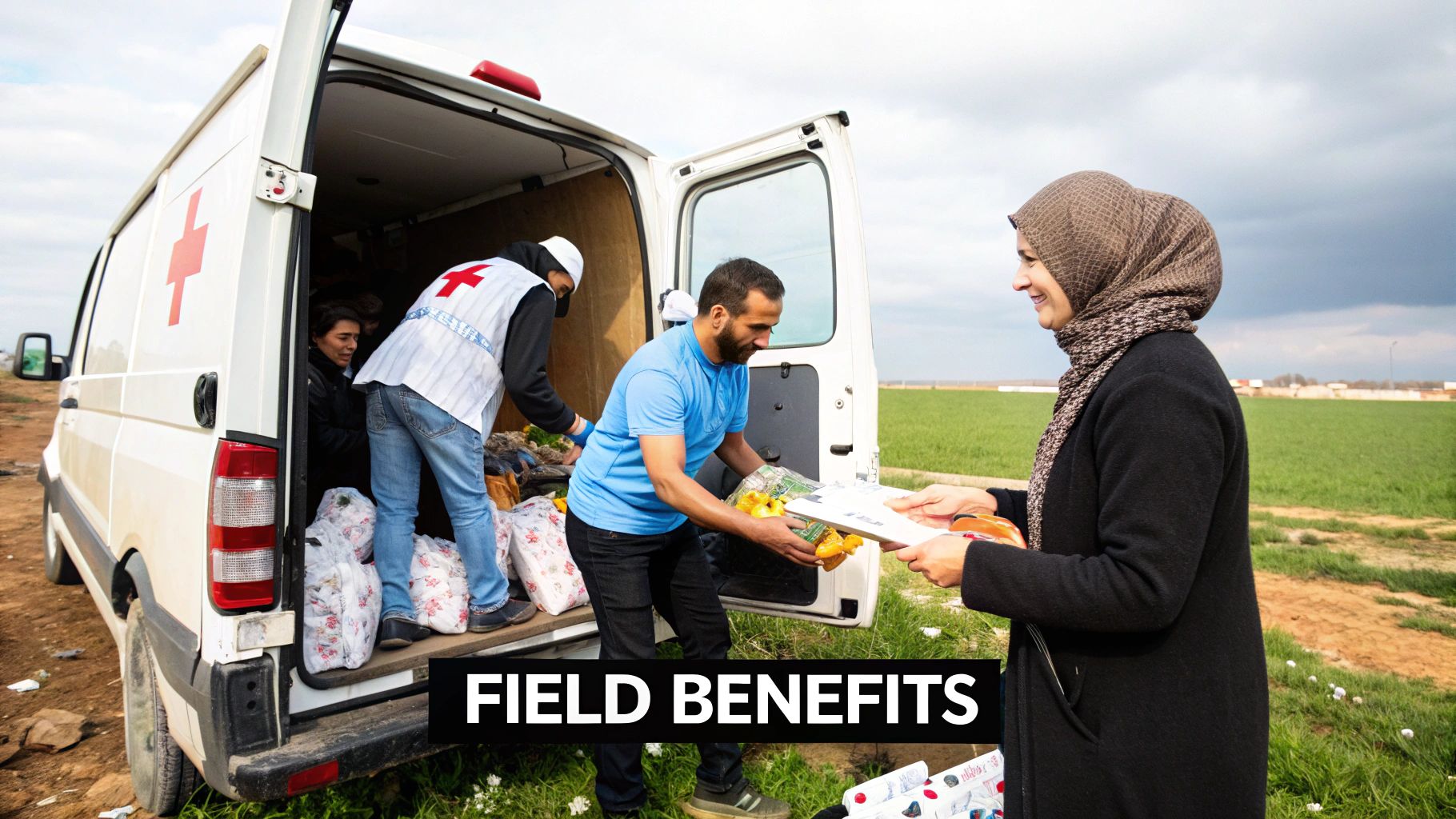
As a site manager, you know that keeping up with Health and Safety Executive (HSE) rules isn’t just about ticking boxes. It’s a serious legal duty that keeps your crew safe and your project running. Get it wrong, and you could be facing hefty fines, work stoppages, or a damaged reputation. This is exactly where a welfare unit van becomes your most practical ally.
HSE regulations can seem daunting, but when it comes to on-site welfare, the rules are actually quite clear. The Construction (Design and Management) Regulations 2015, or CDM 2015, lays it all out. In short, you must provide adequate welfare facilities for your team for the entire length of the project.
Hiring a single, properly equipped welfare unit van from Sarah’s Hire is the most straightforward way to meet all these legal duties at once. You get one mobile solution that ticks every box, giving you total peace of mind to focus on the job itself.
What the Law Demands
The HSE is very specific about what “adequate” facilities mean. Your duties cover several key areas, and a mobile welfare unit is designed to handle every single one. Think of it as your compliance checklist on wheels.
Here’s a no-nonsense breakdown of what you must provide:
- Sanitary Conveniences (Toilets): You need to supply clean, well-ventilated toilets for your team. A lone chemical toilet chucked in the back of a van won’t cut it unless it’s part of a dedicated, hygienic setup. For larger sites, you might need more than one, which is why understanding options like our guide to construction site toilet hire can be a real help.
- Washing Facilities: The rules demand sinks with hot and cold (or warm) running water, soap, and a way to dry hands. This must be right next to the toilets and the canteen area to ensure proper hygiene before eating.
- Drinking Water: A supply of fresh drinking water is non-negotiable. Our welfare units come with dedicated, clean water supplies for exactly this purpose.
- Changing Rooms and Lockers: Your crew needs a proper place to store their personal clothes and hang their protective gear. The heated cabin of a welfare van is perfect for this.
- Rest Facilities: You must give workers a clean, comfortable spot to rest, eat, and drink their meals. The heated canteen area, with its table and seating, is designed for precisely this.
“A project manager was overseeing a small-scale road maintenance job that moved daily. Setting up temporary toilets and a rest tent at each location was impossible. By hiring a single welfare unit van, they provided fully compliant facilities that moved with the crew, eliminating downtime and keeping the project on schedule.” – Quote from a happy Sarah’s Hire customer.
The Van as Your Compliance Partner
A welfare unit van is built from the ground up to meet these regulations from the moment it pulls onto your site. The separate, easy-to-clean toilet compartment with its own sink handles your sanitary and washing duties. The canteen provides the legally required rest area and gives access to drinking water. Everything is self-contained in one vehicle, making compliance refreshingly simple.
This is also part of a wider system of checks and balances. For example, vehicle licensing statistics in the UK show a robust system for all vans, including welfare units, to ensure they are road-safe and taxed correctly. You can be sure that any vehicle you hire from a professional outfit is properly registered and maintained.
By choosing a professional hire service, you ensure the unit is not only compliant with welfare rules but also fully legal and roadworthy. It’s also good practice to understand how these specifics fit into the bigger picture of keeping your team safe, and understanding general workplace safety procedures in NZ can offer valuable universal insights.
Is a Welfare Unit Van Right for You?
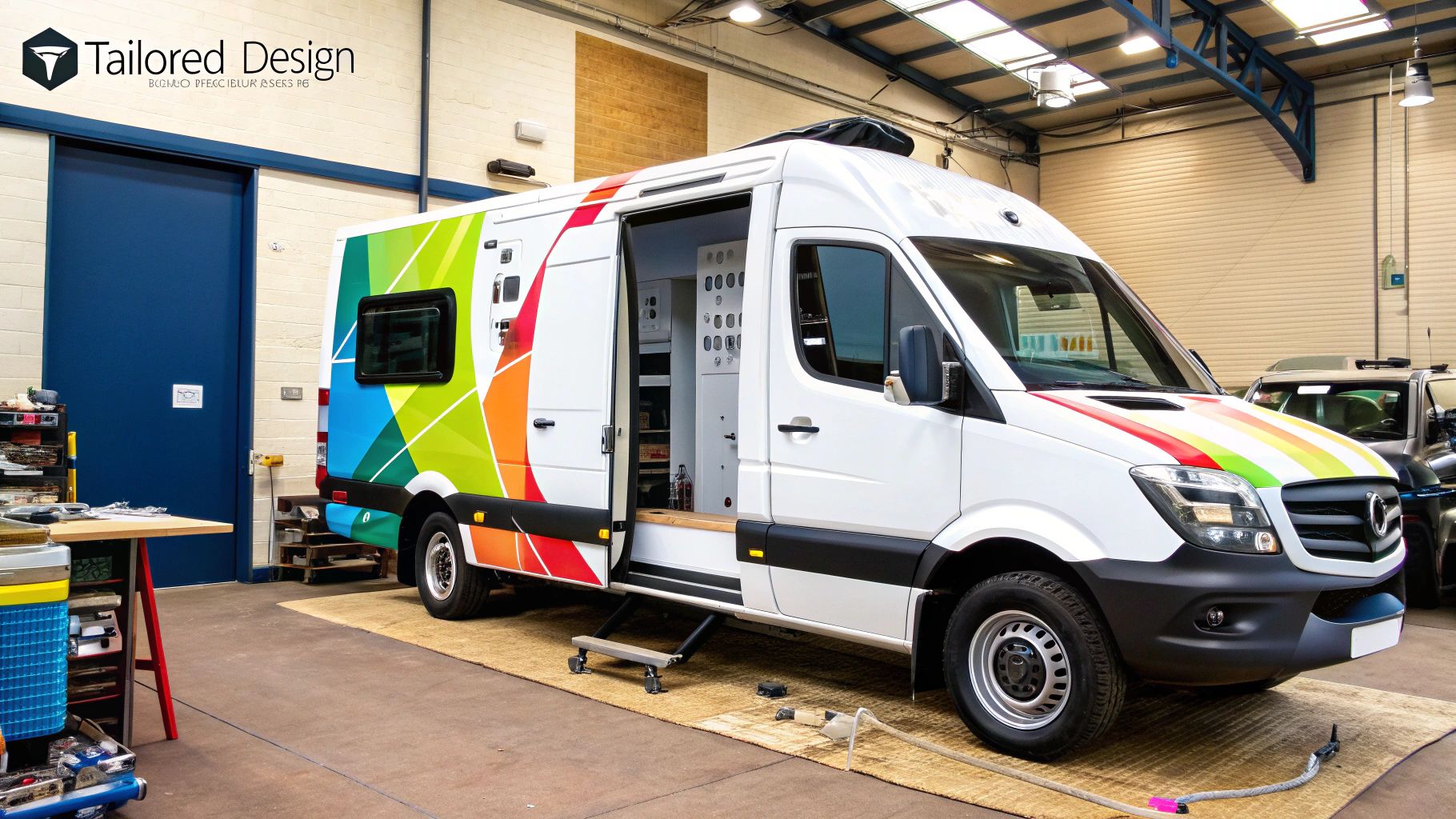
So, is a welfare unit van the right move for your project? Let’s get straight to it. If you have a team working away from a fixed base for any length of time, the answer is almost always yes. These aren’t just for one type of job; their real strength is how adaptable they are.
Think of a mobile welfare unit as the no-nonsense solution for any team on the move. Whether you’re a builder, a road crew, a farmer, or an event organiser, you face the same challenge: providing safe, clean, and comfortable facilities on-site.
This section will show you exactly how a welfare unit van solves that problem. We’ll walk through real-world examples from different industries to help you see just how essential these vehicles can be for your crew.
For Construction and Building Crews
If you’re a builder, your work is rarely in one spot for long. One week it’s a new housing development, the next it’s a quick renovation job across town. Putting up and taking down temporary welfare cabins at every new site is a huge drain on time, money, and manpower.
This is where a mobile unit becomes your best friend.
- Real-World Example: Imagine your team is handling snagging jobs across a new estate. Instead of driving back to the depot or finding a local café for breaks, the welfare unit van follows you. The crew gets instant access to a hot brew, a clean toilet, and a warm place to eat lunch, right outside the job. Productivity stays high, and your team feels properly looked after.
For Road and Rail Maintenance Teams
For crews working on motorways, A-roads, or railway lines, the worksite is constantly on the move. You could be miles from the nearest service station, often working through the night or in rough weather. Getting proper facilities to these transient and remote spots is a serious logistical headache.
A mobile welfare van is a constant, reliable hub of comfort and safety that follows your team down the line. It ensures that even in the most isolated spots, your crew’s basic needs are fully met, keeping them focused, safe, and compliant.
This is especially vital for night shifts, where finding any open facility is nearly impossible. A warm, well-lit space to take a proper break can make all the difference to your team’s morale and alertness.
For Agricultural and Farming Operations
Farms are sprawling workplaces. During busy seasons like harvesting or lambing, your team is often spread out across vast fields, far from the main farmhouse or yard. They need access to facilities without trekking halfway across the estate and wasting valuable time.
- Real-World Example: It’s potato harvesting season, and your team is working in a field at the far end of your land. A welfare unit van parked at the field’s edge becomes their on-the-spot break room. They can wash their hands properly before eating and shelter from a sudden downpour without having to abandon the job. It keeps the harvest on schedule and your team in good spirits.
For Events and Festival Staff
Putting on an event means looking after dozens, if not hundreds, of staff—from security and stewards to riggers and caterers. They work incredibly long hours and need a private space, away from the crowds, to rest, eat, and recharge.
A welfare unit gives them a dedicated backstage sanctuary. It’s a clean, private toilet and a comfortable spot to grab a coffee, making sure your team has the support they need to deliver a brilliant experience for your guests. Whether it’s a local fair or a huge festival, looking after your crew is just as important as looking after the attendees. You can discover more about event solutions with our insights into event portable toilet hire.
Why Choose Sarah’s Hire for Your Team?
When you’re looking to hire a welfare unit van, you need a partner you can rely on. At Sarah’s Hire, we get it. You’re under pressure to get the job done right, on time, and on budget. You need solid, reliable gear that turns up when you expect it, works without a hitch, and meets all the legal standards, no questions asked.
Why Sarah’s Hire?
- Unshakeable Reliability: Our modern fleet is meticulously serviced. You get a clean, fully-functioning unit that’s ready to work from the second it arrives. No excuses.
- Flexible & Straightforward: From one-day jobs to long-term projects, our hire terms are as flexible as you need them to be. No hidden jargon, no nasty surprises.
- We Handle Everything: We deliver, we service, we collect. We manage the waste and water refills, so you can focus on the job.
We proudly serve worksites across Herefordshire, Worcestershire, Gloucestershire, Birmingham, and parts of the West Midlands.
“The team at Sarah’s Hire made everything incredibly easy. We needed a welfare van for a two-week road maintenance project with changing locations. They delivered a spotless unit right on schedule and handled the servicing seamlessly. It’s a relief to work with a company that just gets it.” – A quote from a happy site manager.
We make it easy to get the reliable support you need, with our popular mobile welfare unit hire in Essex being a testament to our dedicated service in the region. If you’re managing a bigger project, our guide on choosing the right toilet hire can help you figure out your complete site welfare needs.
FAQ: Your Questions Answered
Got a few last-minute questions about hiring a welfare unit van? You’re not alone. Here are the clear and simple answers to what builders and site managers most often ask us.
What’s included when I hire a welfare unit van?
You get the full package, ready to go the moment it arrives. Every van is delivered spotlessly clean and fully serviced. As standard, you get:
- A canteen area with seating and a table.
- A microwave and hot water boiler.
- A separate, private chemical toilet with a washbasin.
- An initial stock of essentials like toilet paper, soap, and hand towels.
Do I need a special licence to drive a welfare van?
No. Our standard units are built on a 3.5-tonne chassis, which means anyone with a standard UK car driving licence (Category B) can drive one. It’s always the driver’s responsibility to ensure their licence is valid, but for most of your crew, it won’t be an issue.
How are the toilet and water serviced during the hire?
We take care of all servicing for you. For any hires lasting longer than a week, we’ll arrange a schedule to visit your site. Our technicians will professionally empty and clean the toilet’s waste tank and refill the fresh water supply. This ensures your facilities stay hygienic and ready for your team throughout the entire project, with zero hassle for you.
Get Your Welfare Unit Sorted Today
Ready to provide your crew with the safe, compliant, and comfortable facilities they deserve? Get a straightforward, no-obligation quote today.
Call us on 0203 935 6851
Email us at hire@sarahshire.com