

Site welfare facilities for construction. Running a construction site means you’re juggling a dozen things at once. But getting your site welfare facilities sorted is one job you can’t afford to get wrong. The problem is, dealing with unreliable suppliers, confusing regulations, and subpar units is a major headache you just don’t have time for. These facilities aren’t just a nice-to-have for your crew; they are a legal requirement that directly impacts your budget, timeline, and overall success.
That’s where Sarah’s Hire comes in. We provide straightforward, fully compliant site welfare facilities hire, delivering clean, modern units exactly when and where you need them. We handle the logistics so you can tick this crucial box and get back to focusing on the job.
So, What Exactly Are Site Welfare Facilities?
Let’s get straight to it. When we talk about site welfare facilities, we’re talking about the fundamental amenities you are legally required to provide for your team on any construction site in the UK. This isn’t about frills or luxury; it’s about basic health, safety, and human dignity. Think of it as your project’s pop-up support system, making sure your team has a safe, clean, and comfortable environment to work in.
If you skimp on these basics, you’re not just risking your team’s health and morale. You’re also looking at potential project delays and hefty fines from the Health and Safety Executive (HSE). Providing a warm place to eat, clean toilets, and proper hand-washing stations is simply non-negotiable.
The Core Essentials You Must Provide
As a bare minimum, your site welfare setup has to cover a few key areas. These aren’t just suggestions; they are the legal must-haves for any construction project, big or small.
- Toilets: You need clean, well-lit, and ventilated toilets. The exact number depends on your crew size, but you must have enough to make sure no one is left queuing.
- Washing Facilities: This means hot and cold running water, soap, and a way for people to dry their hands. A single cold tap just doesn’t cut it anymore and won’t get past an HSE inspection.
- Drinking Water: Fresh, clean drinking water must be easily available to keep your team hydrated all day.
- Changing Rooms & Lockers: If your team needs to get into specialist gear or PPE, you have to provide a private, secure space for them to change.
- A Place to Rest & Eat: This is a dedicated spot, sheltered from the wind and rain, where your team can sit down, eat their meals, and take a proper break away from the work area.
The importance of these facilities is locked into UK law. Under the Workplace (Health, Safety and Welfare) Regulations 1992, every single person who steps onto your site—from your full-time crew to delivery drivers—must have safe and easy access to proper welfare facilities.
Forgetting these essentials is a fast track to problems. Imagine your crew having to leave the site just to use a decent toilet or find somewhere warm to eat their lunch. That’s time down the drain, a big hit to productivity, and a clear signal that their wellbeing isn’t your priority. At Sarah’s Hire, we provide straightforward, fully compliant site welfare facilities so you can tick this crucial box and get back to focusing on the job.
Understanding Your Legal Duties for Site Welfare
Figuring out the legal side of site welfare can seem like a minefield, but it really boils down to one simple idea: looking after your team properly. Getting this right isn’t about ticking boxes on a form; it’s about providing the absolute essentials that keep your crew safe, healthy, and on the ball.
The two key bits of legislation you need on your radar are the Workplace (Health, Safety and Welfare) Regulations 1992 and the Construction (Design and Management) Regulations 2015 (CDM). Let’s break down what they actually mean for your site, in plain English.
The Non-Negotiable Basics
At their core, these regulations say you must provide decent facilities for every single person working on your site. That includes your direct employees, any subcontractors, and even the delivery drivers who are just dropping off materials. The days of a single cold tap and a portaloo tucked away in a corner are long gone—and for very good reason. Getting it wrong can lead to serious fines, work being stopped, and a reputation no one wants.
Your main duties include providing:
- Clean, Flushing Toilets: You need enough loos for the number of people on site. A good rule of thumb from the Health and Safety Executive (HSE) is one toilet for every seven people working a 40-hour week.
- Hot and Cold Running Water: This is an absolute must. Proper hand washing is vital for site hygiene and stops illness from spreading around the team.
- A Warm Place to Rest and Eat: Your crew needs a dedicated, sheltered spot away from the work area to have their breaks and eat their lunch. It’s a basic requirement for a reason.
- Secure Changing and Drying Rooms: If your team needs to get into specialist gear or PPE, you have to give them a private space to change, plus somewhere to hang up and dry wet kit.
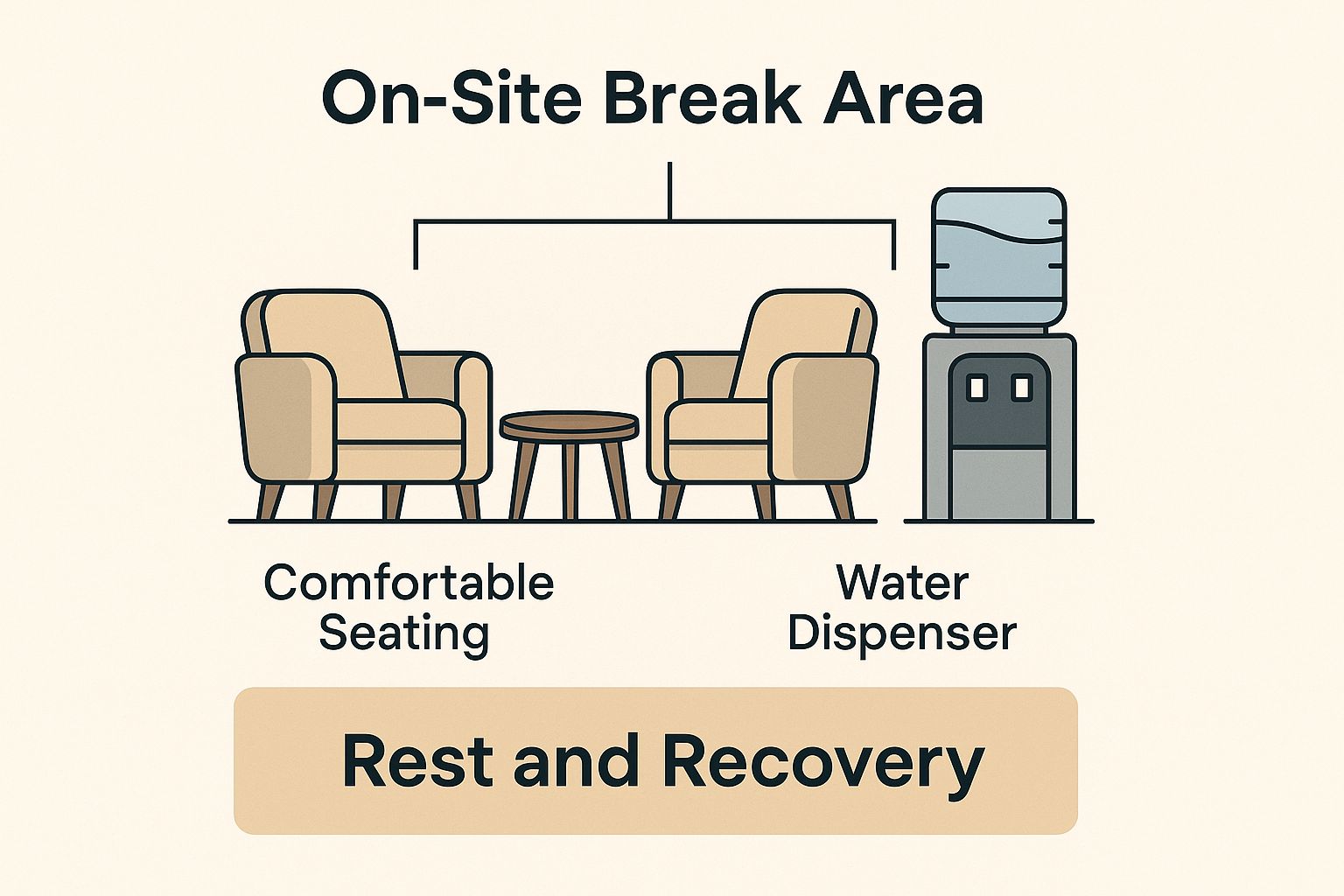
Providing a comfortable area for a cuppa and a break isn’t a luxury; it shows you’re committed to your team’s wellbeing, which pays off in better morale and focus.
To make it even clearer, we’ve put together a quick checklist based on the official HSE guidance. It’s a great way to double-check you’ve got the essentials covered.
HSE Minimum Welfare Facilities Checklist
| Facility Type | HSE Requirement Summary | Why It’s Critical |
|---|---|---|
| Sanitary Conveniences | Sufficient number of flushing toilets (e.g., 1 per 7 people). Clean, lit, and ventilated. | Prevents illness, maintains basic dignity and hygiene. |
| Washing Facilities | Hot and cold running water, soap, and towels/dryers. Must be next to toilets and canteens. | Crucial for stopping the spread of germs and diseases on site. |
| Drinking Water | A clean supply of drinking water, with cups provided. Clearly marked. | Keeps workers hydrated, which is essential for concentration and safety. |
| Changing Rooms/Lockers | Secure, private areas for changing and storing personal clothing and PPE. | Protects personal belongings and provides privacy for workers. |
| Rest/Eating Facilities | A warm, sheltered space with tables and seating to eat meals away from the work area. | Ensures workers can rest properly, boosting morale and productivity. |
Think of this table as your starting point. Hitting these minimums isn’t just good practice—it’s the law.
Why This Matters More Than Ever
Meeting these standards is about much more than just dodging a penalty. It’s a huge part of running a professional and efficient site. When you provide high-quality site welfare facilities, you send a clear signal that you value your team.
A well-cared-for team is a productive team. Providing proper welfare facilities reduces sick days, improves focus, and shows your workers you are invested in their health and safety. It’s a cornerstone of a positive site culture.
Failing to meet these basic legal duties can cause massive headaches beyond a fine. The HSE can shut your project down, leading to costly delays. You’ll struggle to keep good, skilled workers, who will simply head to a better-equipped site. And you’ll see a higher risk of accidents and illness.
By partnering with a reliable provider like Sarah’s Hire for your site welfare facilities, you can be sure you’re compliant from day one, giving you complete peace of mind. We also provide excellent portable toilets for building sites that meet all the required standards.
The Hidden Costs of Not Getting Welfare Facilities Right
Tempted to cut corners on welfare units to save a few quid? It’s an easy mistake to make, but that small saving upfront can cost you far more in the long run. The real price of poor site welfare isn’t just the hire fee you avoided; it’s measured in lost productivity, project delays, and even potential legal trouble.
When you don’t provide clean, warm, and compliant facilities, you’re sending a clear message that your team’s wellbeing isn’t a priority. It’s a direct hit to morale and a surefire way to lose your best people to competitors who get it right.
The True Impact on Productivity and Health
Poor site conditions are a massive drain on morale and a big cause of stress and sickness. Think about it—if your crew has nowhere decent to wash their hands, or no warm place to take a break, it directly impacts their health and focus. A bug can spread like wildfire through a team without proper hygiene facilities, potentially taking out half your workforce just when you need them most.
This isn’t just guesswork; the numbers paint a stark picture.
According to a 2024 report from the Health and Safety Executive, work-related stress, depression, and anxiety are responsible for 17.1 million lost working days each year. The Trades Union Congress also highlights that poor workplace conditions contribute to 34 million lost days annually, costing the UK economy over £400 million every single week.
These aren’t just abstract figures. They represent real delays and budget blowouts on projects just like yours.
Investing in high-quality site welfare facilities from the very start isn’t an expense—it’s one of the smartest investments you can make. It protects your timeline, your budget, and your reputation, while showing your team they’re valued. Making sure you have the basics sorted, like well-maintained portable toilets for your building site, is the first and most crucial step.
Choosing the Right Welfare Unit for Your Project
When it comes to site welfare facilities, one size definitely doesn’t fit all. The right choice really boils down to your project’s DNA: the number of people on site, how easy access is, and how long the job is scheduled to run.
Getting this right from the get-go saves you time, money, and a world of hassle. A unit that’s too small will only annoy your team and create delays, while one that’s too big is just money down the drain. We’re here to give you the practical, straight-talking advice you need to find that perfect fit.
Mobile Units vs Static Units
Your first big decision is whether to go for a mobile or a static welfare unit. Each has its own clear advantages depending on the job at hand. Think of it like choosing between a nimble van and a heavy-duty lorry—you need the right tool for the job.
- Mobile Welfare Units: These are your go-to for pure flexibility. Built onto a trailer, they can be towed into place with zero fuss, making them ideal for short-term projects or sites with tricky access. If you’re hopping between locations or on a job that only lasts a few weeks, a mobile unit is your most practical and budget-friendly bet.
- Static Welfare Units: For bigger, long-term projects, static units are the undisputed winners. These larger cabins are delivered by lorry and positioned in a fixed spot, giving your team more space and a much more robust setup. If your project is set to run for several months or even years, a static unit provides the stability and comfort your crew deserves.
What to Expect Inside Your Unit
Once you’ve settled on mobile or static, you need to think about what goes inside. All our units are designed to be fully compliant, but the layout can be tweaked to suit your crew. A well-organised unit is key to keeping your team happy and the site running like clockwork.
For instance, a small groundwork team on a two-week job would be perfectly sorted with a 6-person mobile unit. This would typically contain a canteen, a toilet, and a small drying area. It’s compact, efficient, and has all the essentials covered.
“We had a small team working on a new housing estate entrance for three weeks. Sarah’s Hire recommended a 6-man mobile unit. It was perfect – easy to position, had everything we needed, and the lads appreciated the clean, warm space for their break. Made all the difference.” – Dave, Site Foreman
On the flip side, a large-scale commercial build lasting 18 months will need a much more substantial setup. This could mean linking multiple static units together to create separate offices, a large canteen, dedicated drying rooms, and separate toilet blocks. Planning for the right number of facilities, including our reliable options for construction site toilet hire, is crucial for projects of this scale. Taking a moment to think about your project’s specific needs ensures you’re providing the best possible site welfare facilities from day one.
Why Choose Sarah’s Hire?
When you’re running a construction site, you need a hire partner who just gets it done. No fuss, no chasing, no hassle. We know the pressures you’re under. That’s why we focus on one thing: delivering clean, modern, and fully compliant site welfare facilities on time, every time.
- Unbeatable Reliability: We turn up when we say we will, with the exact kit you ordered. Our straightforward, get-it-right-first-time approach means one less thing for you to worry about.
- Expert Advice on Tap: Not sure what you need? We provide practical, no-nonsense advice to ensure you get the most efficient and cost-effective setup for your specific project.
- Peace of Mind Guaranteed: All our units are meticulously serviced, spotlessly clean, and meet all HSE regulations. You can get on with the job, confident that your site is fully compliant.
Our Service Areas in the East of England
When you’re managing a project, the last thing you need is a supplier who doesn’t know the area. Finding a reliable, local hire partner is the key to keeping your site on track. At Sarah’s Hire, we’re proud to deliver high-quality site welfare facilities right across the East of England, giving you the fast, no-fuss service you can only get from a team that’s on your doorstep.
Our dedicated team delivers directly throughout Norfolk, Suffolk, Essex, and Cambridgeshire. We know the roads, the back lanes, and the common access challenges, which means your delivery won’t get stuck in traffic or lost down a farm track.
We’ve Got Your Site Covered
Whether you’re working on a tight spot in a busy city centre or a remote rural build, we’ve got the local knowledge to get your units delivered without a hitch. We handle the logistics, so you don’t have to.
We’re regularly in all the major towns and cities, including:
- Norwich
- Ipswich
- Cambridge
- Colchester
- Peterborough
- Chelmsford
But our reach goes far beyond the main hubs. If your site is anywhere in the region, chances are we’ve delivered nearby before and can get to you quickly.
Being a local supplier means we’re more than just a voice on the end of the phone. We’re part of the local business community, and our reputation is built on helping projects like yours succeed. You’re never just another order number to us.
Give our team a call to confirm we cover your specific postcode. We’re here to provide the dependable site welfare facilities that keep your project moving forward, without the headaches.
Frequently Asked Questions
When you’re sorting out site welfare facilities, you just want clear, straight-talking answers. We get it. Here are the responses to the questions we hear the most from builders and site managers like you.
How many toilets do I need on my construction site?
The official HSE rule of thumb is a minimum of one toilet for every seven people working a standard 40-hour week. But you should treat this as a starting point. If you have different teams on different shifts, or lots of subcontractors coming and going, you’ll need more. We can help you work out the exact number so you’re comfortably covered and fully compliant.
Do site welfare facilities need hot water?
Yes, absolutely. This isn’t just a nice-to-have; it’s a firm legal requirement under UK health and safety law. A cold tap on its own just doesn’t cut it anymore for proper hand washing. All of our welfare units come equipped with hot and cold running water as standard. It’s vital for good site hygiene and helps stop illness from spreading.
What’s the difference between mobile and static units?
It all comes down to the job you’re running. Think of it like this:
- Mobile Welfare Units: These are built on a trailer, so they’re easy to tow and position. They’re the perfect solution for short-term jobs (a few weeks), projects with different phases in different locations, or sites with tight access where you can’t get a big lorry in.
- Static Welfare Units: These are bigger, more robust cabins delivered by a lorry and craned into place. They’re designed for long-term projects where they’ll stay put. They offer more space and a more permanent feel, making them ideal for large-scale builds that will run for many months or even years.
How are the units powered?
Our standard welfare units are self-contained and run on a built-in diesel generator. This means they are ready to go from the moment they land on your site, even if you don’t have mains power connected yet. This gives you maximum flexibility and ensures your crew has access to heating, lighting, and hot water from day one.
Get Your Site Sorted Today
Ready to get your welfare facilities sorted without the hassle? Our friendly team is here to give you practical advice and a straightforward quote. We’ll help you find the perfect setup for your project and schedule a delivery that works for you.
Call us on: 01603 952 389
Email us at: info@sarahshire.com
