

Construction site welfare units are essential for any safe, compliant, and well-run building project. At Sarah’s Hire, we supply high-quality welfare units across Herefordshire, Birmingham, and the wider West Midlands—so your team gets the comfort and support they need to stay productive and protected.
Running a busy construction site means you’re juggling health and safety, project deadlines, and your budget. Getting your construction site welfare facilities right can feel like just another task on a never-ending list. But what if it was the key to a safer, more productive site? Providing a clean, comfortable space for your team to rest, eat, and wash isn’t just about ticking boxes – it’s fundamental to their wellbeing and the success of your project. At Sarah’s Hire, we make it simple. We provide reliable, compliant, and high-quality welfare units so you can focus on the job at hand, knowing your team is well looked after.
Why Proper Site Welfare Is a Non-Negotiable
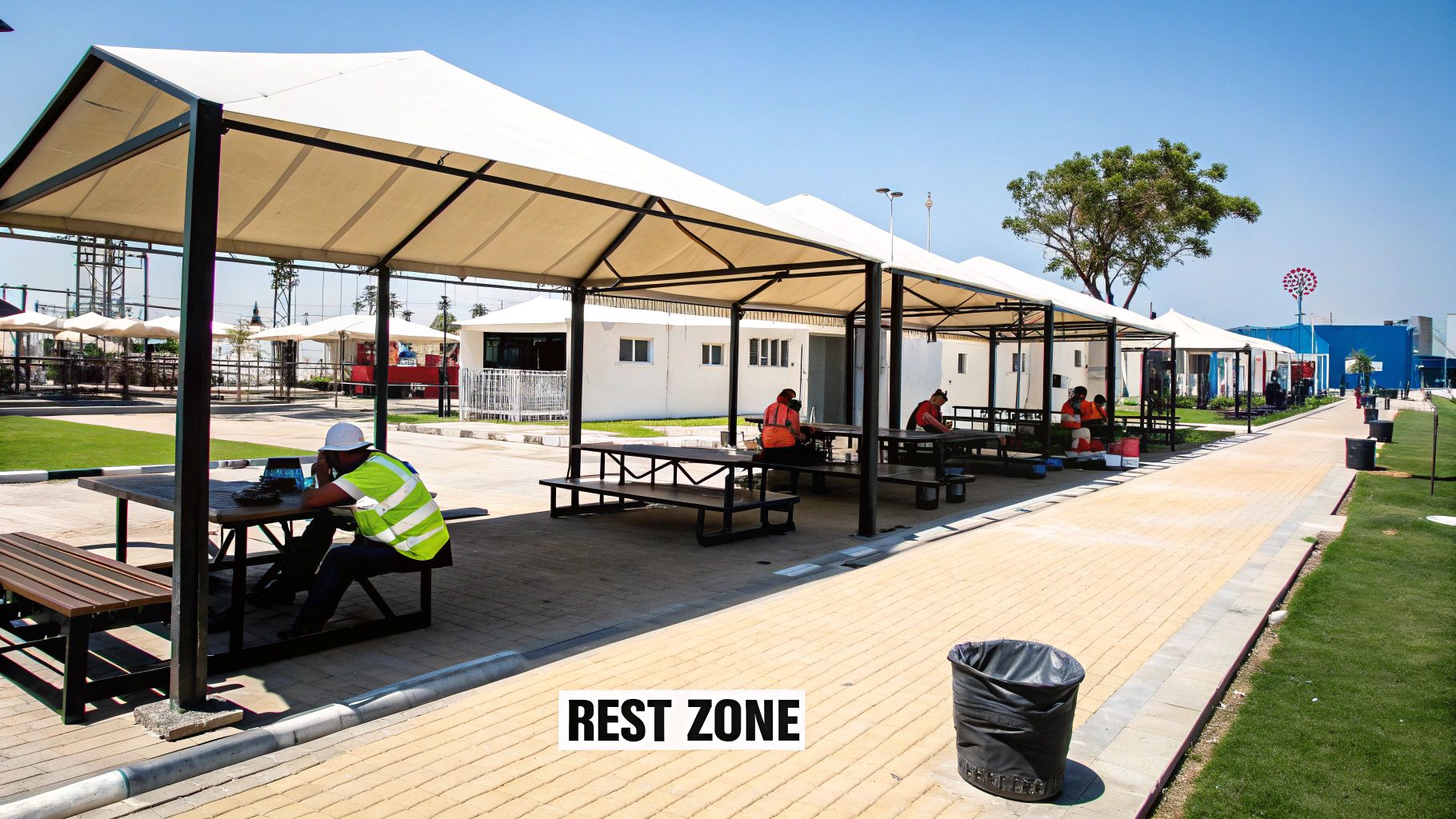
As a site manager, you know that your team is your most valuable asset. The environment you provide directly impacts their morale, focus, and the quality of their work. A cold, damp, or non-existent rest area sends a clear message that their comfort isn’t a priority. On the other hand, providing clean, warm facilities shows you respect your crew and value their contribution.
Getting your welfare facilities right isn’t just about following the rules—it’s about fundamentally improving how your entire project runs. When you prioritise welfare, you’re not just meeting a legal requirement; you’re building a culture of safety and professionalism from the ground up. A team that feels valued is a team that can focus. They’re far less likely to make mistakes, cut corners, or suffer accidents caused by fatigue.
“From day one, providing high-quality construction site welfare facilities demonstrates respect. We found this simple investment translated directly into higher productivity and fewer costly mistakes. It’s the true foundation of a successful project.”
- John Carter, Site Manager & long-term Sarah’s Hire customer
More Than Just Morale—It’s a Safety Imperative
The link between good welfare provision and site safety is impossible to ignore. The data speaks for itself. A key study revealed that sites with proper welfare provisions experience dramatically lower accident rates. In fact, after proper facilities were introduced, some sites reported accident frequency rates as low as 0.08 per 100,000 hours worked. One site even achieved zero RIDDOR incidents over more than 450,000 hours. You can read more about the impact of welfare facilities on project safety.
This isn’t a coincidence. Good facilities ensure your workers can:
- Rest Properly: A warm, dry place to take a break is crucial for preventing the physical and mental fatigue that leads to accidents.
- Maintain Hygiene: Easy access to clean water and washing facilities helps stop the spread of illness, which reduces absenteeism and keeps your project on schedule.
- Stay Focused: When your team’s basic needs are met, they can give their full attention to the job, improving quality and lowering the risk of errors.
Ultimately, investing in top-tier construction site welfare facilities from a trusted partner like Sarah’s Hire is an investment in your project’s success. It protects your team, enhances your reputation, and helps you deliver better results.
Understanding HSE Requirements for Site Welfare
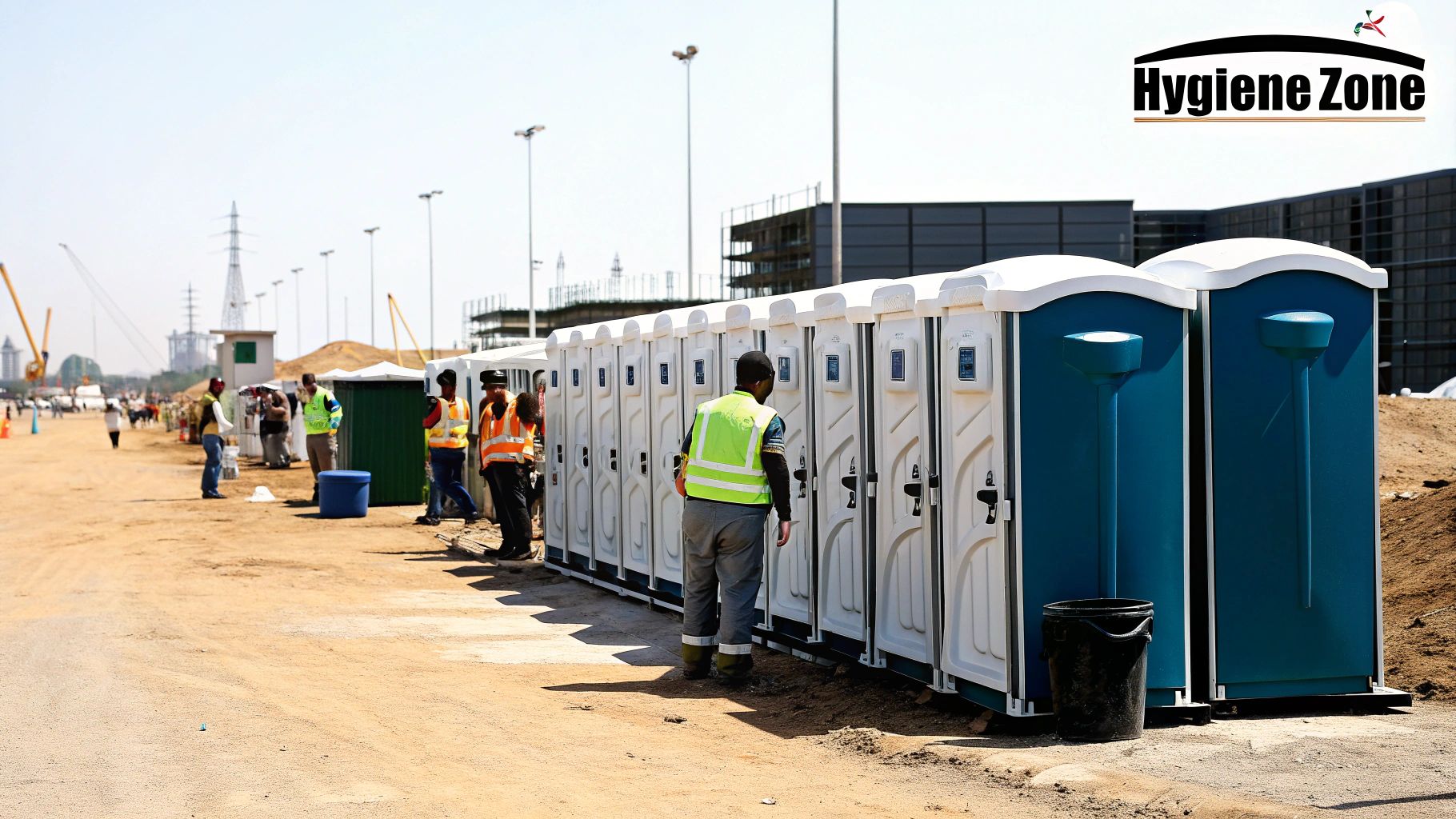
Trying to make sense of Health and Safety Executive (HSE) guidelines can feel like deciphering a complex blueprint. But when it comes to construction site welfare facilities, you have to get it right. This isn’t just about compliance; it’s about protecting your team, upholding your reputation, and keeping your business safe from serious penalties.
The main legislation you need to know is the Construction (Design and Management) Regulations 2015 (CDM 2015). These aren’t just recommendations—they’re the law. The rules are crystal clear: anyone working on your site needs access to proper welfare facilities for the entire duration of the project. That means from day one until the final handover. If they aren’t in place, you could face a prohibition notice from the HSE shutting your site down, alongside hefty fines.
The Five Pillars of On-Site Welfare
So, what does the HSE consider “adequate”? It boils down to five essential areas you are responsible for providing. Think of this as your non-negotiable checklist for any project.
- Sanitary Conveniences (Toilets): You need enough toilets for the number of workers on site. They must be clean, well-lit, and ventilated. You also need to provide separate facilities for men and women or, if that’s not practical, single units with lockable doors.
- Washing Facilities: These must be located near the toilets and changing areas. They should have sinks big enough for workers to wash their hands, face, and forearms. You must provide hot and cold (or warm) running water, soap, and a way to dry hands, like paper towels.
- Drinking Water: A supply of clean drinking water must be available at all times. Make sure it’s clearly marked as “Drinking Water” and provide cups.
- Changing Rooms and Lockers: Your team needs somewhere secure and private to change into their work gear and store their personal belongings. These areas also need to be heated.
- Rest Facilities: Workers must have a dedicated place to take a break and eat their meals. This means providing tables, seats with back support, and the means to make a hot drink and heat up food, like a kettle and a microwave.
A survey of UK construction workers revealed a worrying gap, finding that 22% of sites failed to provide hot water for washing, and 18% of workers felt the lavatories were inadequate. These figures highlight how widespread non-compliance really is. You can read more in IOSH Magazine.
Whether your site is in a busy city centre or a remote location, the legal requirements are the same. The logistics might change, but the principles of providing clean and accessible facilities are universal—much like the standards for any well-managed setup, as detailed in our event toilet hire guide. Ignoring these responsibilities has real consequences. An HSE inspector can stop all work until you resolve any issues, triggering costly delays. Getting your construction site welfare facilities right from the start isn’t an expense—it’s one of the smartest investments you can make.
Choosing the Right Welfare Units for Your Project
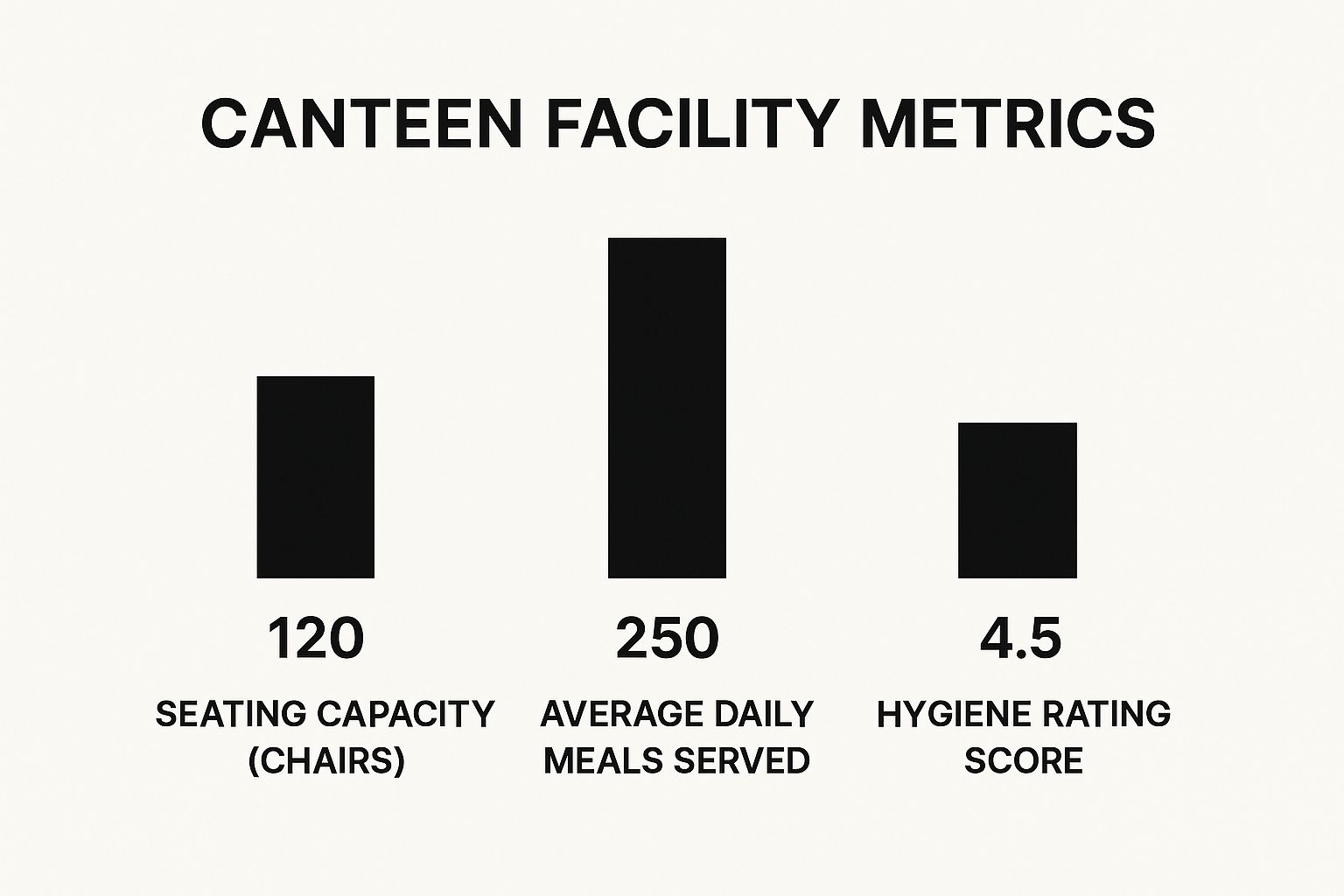
No two construction sites are the same, so your welfare solution shouldn’t be either. Picking the right construction site welfare facilities is one of those early decisions that affects your budget, team morale, and overall efficiency. It’s all about matching the unit to the unique demands of your job.
Get this right from the start, and you’ll save yourself headaches down the line. You need to think about your team size, how long the project will run, and the specific constraints of your site. A smart choice means you get a cost-effective setup that works for your crew.
Static Cabins vs Mobile Units
One of the first calls you’ll make is whether to go for a static welfare cabin or a mobile, towable unit. It’s a bit like choosing between a fixed workshop and a versatile multi-tool. Both are useful, but for very different jobs.
- Static Welfare Cabins: These are your workhorses for long-term projects with a fixed location. If you’re setting up for several months or years, a static cabin provides a more spacious and robust home base for your team, with more room for canteens, drying rooms, and offices.
- Mobile Welfare Units: These towable units are the definition of flexibility. They’re perfect for smaller sites, short-term jobs, or projects that move around, like roadworks. Because they’re self-contained and easily moved, they can follow your team as work progresses.
When choosing, think about the build quality. Understanding the durability of polyethylene tanks used for water and waste is crucial for ensuring long-term reliability on site.
Eco-Friendly Options
Modern construction is about doing things responsibly. Eco-friendly welfare units are becoming a common sight on UK sites, and for good reason. They are designed to minimise their environmental footprint and, just as importantly, reduce your running costs.
They often feature:
- Solar panels to power lighting and generators, cutting down on diesel consumption.
- Low-flush toilets and water-saving taps to conserve water.
- Enhanced insulation, meaning less energy is needed for heating.
Choosing an eco-unit isn’t just a green choice; it’s a smart business decision. Reduced fuel and water usage translates directly into lower weekly running costs for your site.
Matching the Unit to the Site
Let’s ground this in the real world. Here are a couple of common scenarios:
Scenario 1: The Tight Urban Build
You’re managing a small development squeezed onto a busy city street. Space is gold dust, access is a nightmare, and the job will last three months. Here, a mobile welfare unit is the clear winner. It has a small footprint, is easily manoeuvred, and provides all the essentials without needing complex groundworks. Our guidance on portable toilet hire in Hereford offers handy insights for managing logistics in tight spaces.
Scenario 2: The Sprawling Rural Development
Now, picture overseeing a massive housing project running for two years. You’ve got plenty of space and a large, consistent workforce. A static welfare cabin makes perfect sense. It provides a comfortable, semi-permanent base where your team can properly rest and recharge, which is huge for maintaining morale over the long haul. The same principles apply across demanding environments, a topic we cover in our guide to farm toilet hire in the West Midlands.
Why Choose Sarah’s Hire?
We know you have options when it comes to welfare hire. So, what makes us different? We get the pressures of a busy construction site. Our entire service is designed to make your life easier, not add another headache to your list. We deliver reliable, high-quality construction site welfare facilities backed by service you can trust.
- We Get the Job Done Right: From punctual delivery to proactive maintenance, we handle the details so you don’t have to. Our modern, clean fleet means you can be proud of the facilities you provide.
- No-Nonsense, Straight-Talking Service: We keep things simple. You get clear communication and a responsive team that’s ready to solve problems quickly, keeping your site fully operational.
“The team at Sarah’s Hire are always fantastic. The units are immaculate, and the delivery is always on schedule. It’s a weight off my mind knowing I can rely on them to get the welfare side of things sorted without any fuss.”
– Mark R., Construction Site Manager, Essex
Areas We Cover
Our depot is strategically located to support projects across the region. We pride ourselves on being fast and responsive, ensuring you get the facilities you need, when you need them.
We cover a wide area, including:
- Herefordshire
- Gloucestershire
- Worcestershire
- Birmingham
- parts of the West Midlands
Choosing Sarah’s Hire means you’re getting a partner who knows the construction industry. We deliver the high-standard facilities that keep your project compliant, your team productive, and your site running smoothly. For more ideas on enhancing workplace safety and comfort, we believe great welfare is the perfect starting point.
FAQs: Your Site Welfare Questions Answered
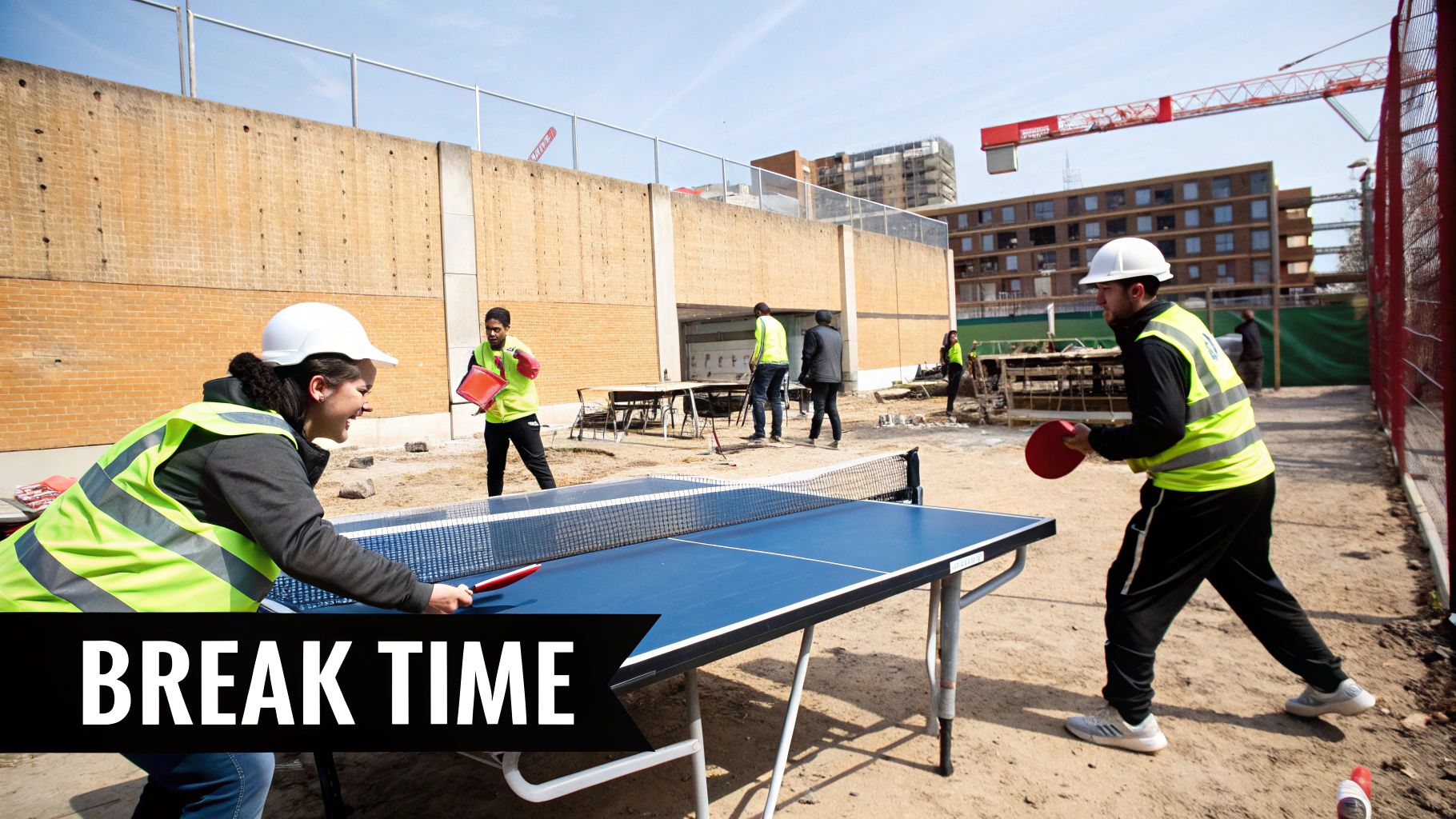
When you’re organising welfare facilities, you just want straight answers. Here are some of the most common questions we’re asked every day.
How often are the units serviced?
Our standard arrangement is a weekly service. This isn’t just a quick empty-and-run job. A weekly service means we’ll empty the waste tank, deep clean the entire unit, and fully restock all your consumables – loo roll, soap, paper towels, the lot. If you have a large crew or a particularly mucky job, we can easily arrange a twice-weekly service or more. Just let us know what you need.
What is included in a standard welfare unit?
Our standard welfare units are an all-in-one break-time hub for your team, designed to tick all the HSE boxes. A typical unit from Sarah’s Hire includes:
- A canteen area with tables, seating, a kettle, and a microwave.
- A separate, private toilet compartment with its own wash basin.
- A dedicated, heated drying room for wet gear – a game-changer for morale in winter.
All our units come with heating and lighting to keep them comfortable and functional.
Do I need to arrange my own power and water?
It depends on the unit. Our mobile welfare units are completely self-sufficient. They have their own super-silenced generator for power and onboard water tanks, so there’s zero hassle for you. You can drop one anywhere on site and it’s good to go. For our larger static welfare cabins, you will need an external power source (mains or site generator) and a water connection. Our team will talk you through all the requirements beforehand.
How quickly can you deliver to my site?
We proudly support construction projects across Herefordshire, Gloucestershire, Worcestershire, Birmingham, and parts of the West Midlands. Whether you’re running a long-term housing development or a tight urban build, we’ll get the right welfare units on site—fast. For long-term projects, we always recommend booking in advance to guarantee you get the exact unit you want, right when your project needs it.
Ready to get your site welfare sorted?
Don’t let poor facilities slow your team down. Give them the proper setup they deserve—reliable, compliant, and delivered without the faff.
Call us today on 0203 935 6851 or email hire@sarahshire.com to discuss your site requirements.