

Running a construction site? Then you know that waste is a given. From broken bricks and plasterboard offcuts to timber and packaging, the stuff just piles up. But let’s get straight to it: proper construction site waste management isn’t just about hiring a skip and chucking everything in. It’s about smart planning, safe handling, and legally disposing of the rubbish every building or demolition project creates.
This isn’t just about keeping the site tidy; it’s a core part of controlling your costs, boosting safety for your team, and staying on the right side of the law. Get this wrong, and you’re looking at project delays, hefty fines, and a direct hit to your bottom line. Get it right with a reliable partner like Sarah’s Hire, and what was a major headache becomes a smooth, efficient part of your daily operations.
Why Smart Waste Management is a Must-Have, Not a Nice-to-Have
Letting waste get out of control isn’t just messy—it’s a fast track to problems you don’t have time for. Overflowing skips and delays while your team clears a path are inefficiencies that cost you money. A disorganised site is an unsafe one, where valuable time is wasted moving rubbish around instead of getting on with the job.
The Real Costs of Getting It Wrong
Ignoring proper waste management isn’t a shortcut; it’s an expensive mistake waiting to happen. The costs go way beyond the bill for the skip lorry.
-
Hitting Your Wallet: Just throwing everything into one general waste skip is the priciest way to do it. Separating materials like wood, metal, and soil means you can take advantage of cheaper recycling rates, which directly cuts your disposal costs. On top of that, failing to meet your legal “Duty of Care” can land you with some eye-watering fines.
-
Project Delays: A cluttered, messy site slows everyone down. When pathways are blocked and hazards are everywhere, productivity grinds to a halt. This has a direct knock-on effect, pushing back your timeline and stretching your budget.
-
Serious Safety Risks: Piles of rubble are obvious trip hazards, and materials stored badly can cause much worse accidents. It’s simple: a clean site is a safer site. It protects your crew and massively reduces the risk of an incident that could shut the whole job down.
“We were managing a multi-unit build near Hereford and were struggling with our previous supplier. Skips were late, causing backlogs. We switched to Sarah’s Hire. They delivered on time, every time, and helped us set up a segregation system that actually worked. It made a real difference to the project’s flow and our final waste bill.” – Mark C., Site Manager, Worcestershire
Proper site management also means providing the right facilities for your team. Just like your skips need managing, so does your on-site sanitation. It’s all part of keeping the project running smoothly and compliantly, which you can read more about in our guide to portable toilet hire for building sites. Partnering with a reliable supplier like Sarah’s Hire means you can get all your site’s welfare needs sorted with one simple call.
Developing Your Site Waste Management Plan

Before a single spade hits the ground, your most powerful tool is a clear plan. A bit of organisation upfront saves a massive headache later. Think of it as the blueprint for your project’s rubbish—it’s that important for keeping your construction site waste management on track and on budget.
It’s all about being proactive. Instead of reacting to overflowing skips and cluttered work areas, you’re controlling the flow of waste from day one. This means having the right skips from Sarah’s Hire ready and waiting in the right place, before you even need them.
Why a Plan Still Matters Legally
Let’s get one thing straight. Although a formal, legally mandated Site Waste Management Plan (SWMP) is no longer a requirement in England, that doesn’t mean you can just wing it. As a waste producer, you are still bound by a legal ‘Duty of Care’.
In fact, under section 34 of the Environmental Protection Act 1990, construction companies are legally obligated to manage waste properly. A formal plan is simply the best way to prove you’re taking this seriously. You can explore more about these legal duties for construction waste to see how a plan helps you stay compliant.
Real-World Example: On a recent housing development in Worcestershire, the site manager implemented a simple waste plan before demolition began. By forecasting the high volume of hardcore and timber, they pre-booked separate skips. This simple act of planning for segregation from the start cut their landfill disposal costs by over 20%.
Forecasting Your Waste Streams
The first real step in your plan is to get a handle on what kind of waste you’ll be creating, and roughly how much. You know the job better than anyone. Just walk through the build phases in your head and list the main materials you’ll be getting rid of.
- Demolition & Groundworks: This is where you’ll see large volumes of heavy stuff. Think concrete, bricks, soil, and rubble (often called ‘inert’ waste).
- Structural & First Fix: As the frame goes up, you’ll generate timber offcuts, metal scraps like rebar, and packaging like pallets and plastic wrap.
- Second Fix & Finishing: This phase produces a real mix: plasterboard, insulation, electrical cabling, flooring offcuts, and empty paint tins.
You don’t need perfect numbers. A reasonable estimate is all it takes to order the right size and number of skips. Get it wrong, and you’re either paying for a half-empty skip or scrambling for an emergency collection when one overflows—both of which cost you time and money.
Setting Clear Responsibilities
A plan is completely useless if nobody follows it. Your next move is to make it crystal clear who is responsible for what. This doesn’t need to be complicated.
Assign a ‘waste champion’ on site—usually the site manager or a foreman—who becomes the go-to person for any waste-related questions. Their job is to make sure everyone, including subcontractors, knows the plan.
- Briefings: Cover the waste plan in your daily or weekly toolbox talks.
- Signage: Use clear, simple signs on each skip. A picture of what goes inside is often far more effective than just words.
- Location: Think about where you place your skips. A hardcore skip right next to a demolition area saves countless hours of labour compared to wheeling barrows across the entire site.
Your site welfare is just as important as your waste skips for keeping things productive. Planning for services like our reliable construction site toilet hire is another key part of your overall site setup. A well-managed site considers every detail, from waste streams to worker welfare.
Right, your plan is solid, but a waste management strategy is only as good as the daily habits on site. This is where the theory meets the reality of a busy, muddy construction project. Getting your on-site segregation right isn’t just a box-ticking exercise for the HSE; it’s the most powerful way to slash your disposal costs and keep the project on track.
It’s about turning a potential headache into a simple, streamlined process. When you get it right, you create easy, repeatable habits for your entire crew.
The image below shows a simple but highly effective on-site sorting station. This is the heart of good construction site waste management.
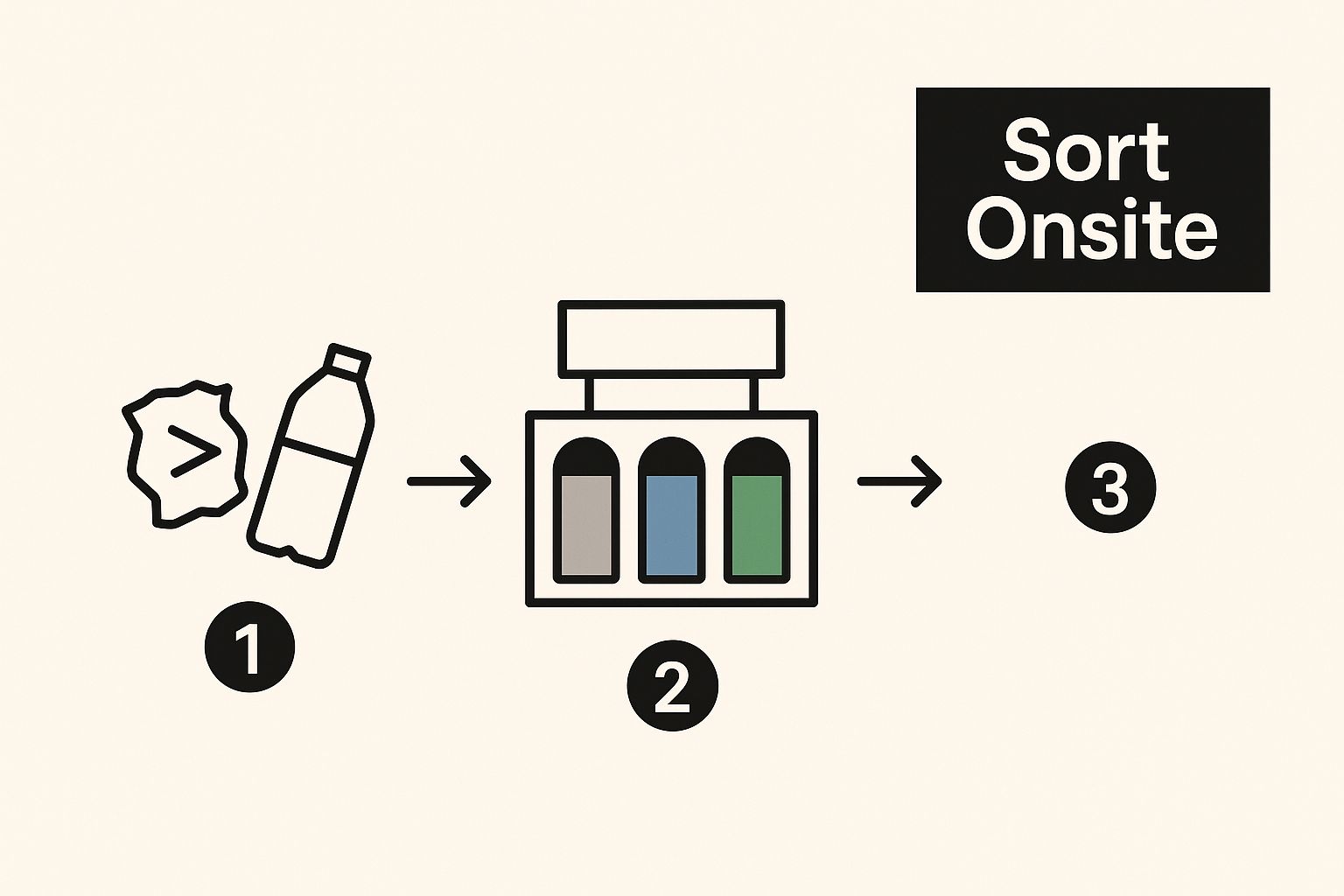
The key takeaway here is clarity. Using colour-coded skips and clear signs takes all the guesswork out of it, making it easy for your team to do the right thing without slowing down the job.
Making Segregation Simple for Your Crew
Let’s be honest, your crew is focused on getting their tasks done, not becoming recycling experts. The secret is to make sorting waste the easiest and most obvious option.
-
Train, Don’t Assume: Never take for granted that everyone knows what goes where. A quick five-minute rundown during a toolbox talk is all it takes. Crucially, explain why it matters. When the team understands that separating timber from rubble saves the company real money (which helps secure future work), they’re far more likely to get on board.
-
Signage is Everything: Use big, clear, weatherproof signs on every single skip and bin. Even better, use pictures. An image of bricks and concrete on the hardcore skip works far better than just text, especially on a multicultural site where English might not be everyone’s first language.
-
Smart Placement: Think about the workflow. If you’re knocking down a wall, the hardcore skip needs to be right there, not halfway across the site. This simple bit of logistics saves a huge amount of time and effort wheeling barrows back and forth, making your team more efficient.
Preventing Costly Cross-Contamination
Cross-contamination is your biggest enemy when it comes to waste costs. One wrong item can turn an entire skip of cheap, recyclable material into expensive “general waste.”
Plasterboard is the classic culprit. If it gets mixed in with inert waste like brick and rubble, the whole load is considered contaminated. Your disposal costs will skyrocket instantly.
Here’s how to stop it from happening:
-
Use Lidded or Covered Skips: For materials like plasterboard or insulation that need to be kept dry and separate, a covered skip is a must. It also stops other rubbish from being chucked in by accident.
-
Create a Central Waste Area: Set up a clearly marked, designated station for all your skips. Keeping them together makes it much easier to manage and monitor what’s going in. It becomes the known “go-to” spot for all rubbish.
-
Do Regular Checks: Make it part of the site manager’s daily walk-around. A quick glance into the skips can spot a problem long before it becomes a major expense to fix.
A clean, segregated load of timber or metal can sometimes even earn you a rebate from the recycling facility. In contrast, a contaminated skip will always cost you more. It’s a powerful financial incentive to keep things separate.
A quick reference guide can make a world of difference for your crew. Here’s a simple table you can print out and stick up in the canteen or by the waste station. It gives clear, no-nonsense instructions to help everyone get it right.
Quick Guide to On-Site Waste Segregation
| Waste Type | What Goes In | What Stays Out | Why It Matters |
|---|---|---|---|
| Inert Waste | Bricks, concrete, rubble, soil, clay | Plasterboard, wood, plastic, metal | Clean inert waste is cheap to dispose of. Contamination makes it expensive general waste. |
| Wood | Pallets, timber offcuts, floorboards | MDF, treated or painted wood, laminates | Segregated wood is widely recycled. Mixing it with treated types contaminates the load. |
| Plasterboard | Gypsum boards, plaster offcuts | Insulation, metal fixings, plastic bags | Must be kept separate and dry by law. Cannot be mixed with other waste types. |
| Metal | Steel beams, copper pipes, rebar, cabling | Cans with food/liquid, non-metal items | Scrap metal has value and can earn you a rebate if the load is clean and segregated. |
This simple guide helps reinforce good habits and makes it easy for everyone on site to contribute to a more efficient—and cheaper—waste management process.
Handling Hazardous Waste Safely
Your standard waste plan covers the day-to-day stuff, but you absolutely must have a separate, bulletproof process for hazardous materials. This is one area where you can’t afford to take any chances.
We’re talking about things like asbestos, solvents, paint tins containing lead, and certain adhesives. All require specialist handling and disposal. Throwing these materials into your general or recycling skips is not only dangerous but also illegal, and the penalties are severe.
- Identify and Isolate: Train your team to spot potentially hazardous materials. As soon as something is identified, it must be safely isolated from every other waste stream on site.
- Use a Specialist Carrier: You are legally required to use a licensed carrier authorised to handle the specific type of hazardous waste you have. They will provide the right containers and all the necessary legal paperwork, known as a Hazardous Waste Consignment Note.
Managing these materials correctly is a non-negotiable part of your Duty of Care. It protects your team, the environment, and your business from serious legal and financial trouble.
Meeting Your Duty of Care and Choosing Partners
Once you’ve filled a skip and it’s driven off your site, it’s easy to think your job is done. But legally, your responsibility for that waste is far from over.
As the person who created the waste, you have a legal ‘Duty of Care’. This means you are responsible for it from the moment it leaves your site until its final, legal disposal. Getting this wrong isn’t an option—the fines are serious, and “I didn’t know” is never a valid defence.
This is why choosing the right waste management partner isn’t just about price. It’s a critical compliance decision.
The Waste Transfer Note Explained
The single most important piece of paper in your compliance toolkit is the Waste Transfer Note (WTN). Think of it as the passport for your waste.
You must have a completed WTN for every single load of waste that leaves your site, whether it’s a skip, a grab lorry, or any other collection. This document is your legal proof that you handed the waste over to a licensed carrier. If your waste is found fly-tipped and traced back to you, a valid WTN is your primary defence.
Key Takeaway: A Waste Transfer Note isn’t just a delivery receipt. It’s a legally binding document that protects you. No WTN, no collection. It’s that simple.
So, what makes a WTN valid? It must contain specific details:
- A clear description of the waste.
- The quantity of waste being moved.
- Your site details (as the producer).
- Your waste carrier’s details, including their registration number.
- The address of the disposal or recycling facility where it’s all going.
Working with a professional partner like Sarah’s Hire takes the stress out of this. We provide a fully compliant WTN for every collection, including for our popular skip hire in Essex, giving you a rock-solid paper trail and complete peace of mind.
How to Vet Your Waste Carrier
Your Duty of Care means you have to check that anyone you give your waste to is legally allowed to take it. Unfortunately, the industry has its share of rogue operators, and using one—even by accident—can land you in hot water.
Before you hire any waste company, run through this quick checklist:
- Ask for their Waste Carrier Licence: Every legitimate carrier has one from the Environment Agency. Ask for their registration number.
- Verify it Online: Don’t just take their word for it. You can check their registration for free on the Environment Agency’s public register.
- Ask Where Your Waste Goes: A reputable company won’t hesitate to tell you which licensed recycling centre or disposal facility they use. If they’re vague or cagey, that’s a massive red flag.
- Confirm They Provide WTNs: As we’ve covered, this is non-negotiable. Make sure they’ll provide a complete and correct WTN for every single load.
Your choice of partner matters more than you might think. In the UK, the construction sector is the biggest waste producer by far, responsible for around 62% of the nation’s total waste. You can dig into the details with these UK construction waste figures.
With so much material being handled, making sure it goes to the right place is a huge part of being a responsible operator. Choosing a fully licensed partner is the most important step you can take.
Cutting Down on Waste and Getting the Most From Your Materials
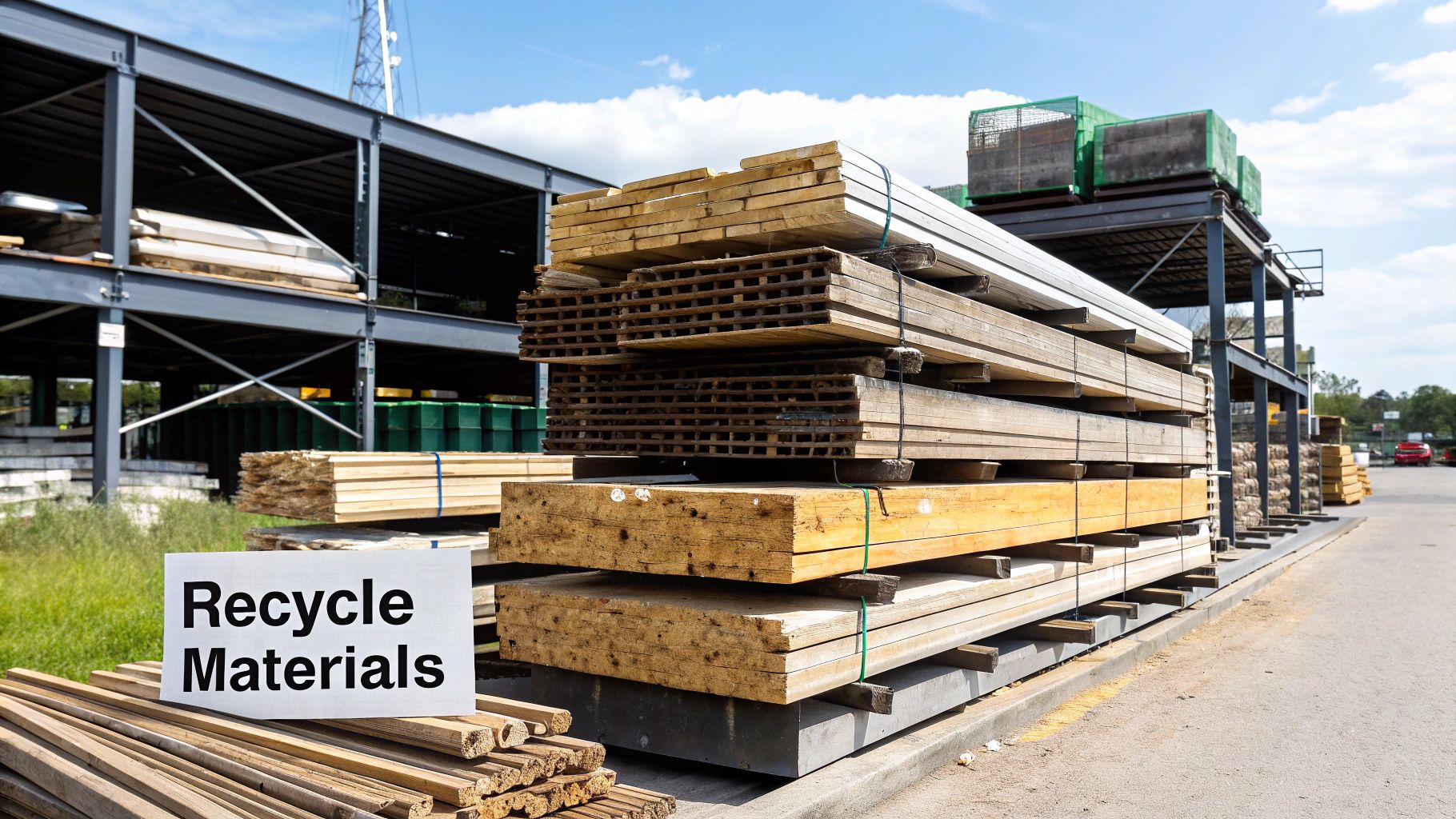
So far, we’ve talked about how to manage the waste you end up with. But what if you could tackle the problem at its source? The cheapest skip you’ll ever hire is the one you don’t actually need.
It’s all about shifting your mindset from simple disposal to thinking about reduction, reuse, and recovery first. This isn’t just about being green; it’s a smart, modern approach that directly cuts costs and improves your project’s bottom line.
Stop Waste Before It Even Starts
The best place to cut down on waste isn’t on-site—it’s at the ordering stage, long before anyone has a chance to throw offcuts into a skip.
Precise material ordering is your first line of defence. It’s worth taking the extra time to double-check your measurements and order only what you genuinely need. A small contingency is always sensible, but consistently over-ordering timber, plasterboard, or aggregates just creates unnecessary waste and chews through your profits.
Think about packaging, too. It’s always worth asking your suppliers if they can deliver materials with less packaging or on returnable pallets. It seems like a small thing, but it can make a big difference to the amount of plastic and cardboard you have to deal with.
Real-World Scenario: Picture this: you’re building a garden wall. Instead of getting a full lorry-load of bricks “just in case,” you calculate the exact number needed, adding a sensible 5% for cuts and breakages. Right there, you’ve stopped a pile of leftover bricks from turning into costly waste.
Spotting On-Site Reuse Opportunities
Before anything gets tossed into a skip, ask a simple question: can this be used somewhere else on the job? You’d be amazed how often the answer is yes. This is where a bit of site savvy really pays off.
Here are a few common examples we see all the time:
- Timber Offcuts: Short lengths of non-treated timber are perfect for noggins, pattresses, or temporary site supports. Using them up means you’re not cutting into brand-new boards.
- Crushed Concrete & Brick: On a demolition job, the rubble you create can be crushed and reused as hardcore for new driveways, paths, or foundations. You save money twice – first on disposal, then on buying new aggregate.
- Soil and Earth: Any topsoil you excavate can often be stockpiled and used for landscaping later in the project. This avoids the cost of hauling it away, only to buy in new topsoil at the end.
This isn’t just wishful thinking; it’s a very real and achievable goal. The UK construction industry is already brilliant at this. In 2022, England generated 63.0 million tonnes of non-hazardous construction and demolition waste, and a massive 59.4 million tonnes of that was recovered. That’s an incredible recovery rate of 94.3%. You can read more about how this impressive waste recovery is tracked to see what’s possible.
Finding the Right Partner for Recovery
For any materials you simply can’t reuse on-site, the next best thing is to make sure they get recycled properly. This is where your choice of waste management partner really matters.
You need to work with someone who sees a skip full of materials, not just a skip full of “rubbish.” At Sarah’s Hire, we only partner with licensed Waste Transfer Stations that have proven high recycling and recovery rates.
When your segregated skips for wood, metal, or hardcore leave your site, you have peace of mind knowing they’re heading to a proper facility. They’re going somewhere dedicated to turning that “waste” back into a valuable resource. It’s a core part of the circular economy and the most responsible way to handle your project’s footprint.
Why Choose Sarah’s Hire for Your Site?
You need a waste partner who gets the pressure you’re under on a construction project. We’re straight-talking, reliable, and focused on making your job easier—not giving you another problem to solve.
- No-Fuss Reliability: We know delays cost you money. That’s why we deliver and collect on schedule. Our job is to keep your site clear and your project on track, without you ever having to chase us. We cover all of Herefordshire, Worcestershire and Gloucestershire.
- Compliance Guaranteed: Sorting out your legal responsibilities shouldn’t be a headache. As a fully licensed waste carrier, we handle all the paperwork for you. You’ll get all the Waste Transfer Notes needed for your records, ensuring your Duty of Care is covered.
- Expert Advice on Call: Not sure what size skip you need? Just give us a call. Our experienced team offers practical, no-nonsense advice to help you manage waste efficiently and avoid spending more than you need to.
When you’re juggling a complex build, the last thing you need is a supplier letting you down. That’s what we’re here to prevent. We ensure your entire site runs smoothly—and that includes having the right welfare facilities, like the ones you can see in our gallery of portable toilets for building sites.
FAQs About Construction Waste Management
You’re not alone. When you’re managing a busy site, waste can throw up all sorts of queries. Here are some no-nonsense answers to the questions we get asked most often by builders and site managers just like you.
What’s the biggest mistake people make with construction waste?
Hands down, it’s not separating waste from day one. It might feel quicker to chuck everything into one big mixed-waste skip, but it’s guaranteed to be the most expensive way to do things. Materials like clean wood, metal, soil, and hardcore cost far less to dispose of than mixed general waste. Taking that extra minute to put the right stuff in the right skip will genuinely slash your final disposal bill.
Do I really need a Waste Transfer Note for every single skip?
Yes, you 100% do. A Waste Transfer Note isn’t just a piece of admin; it’s a legal document required in the UK. It’s your official record proving you passed your waste to a licensed carrier. Let’s be blunt: if your waste ends up illegally fly-tipped and you can’t show that note, the authorities can hold you responsible. We issue a fully compliant note with every collection, so you’re always covered.
How can I keep skip costs down on a longer project?
Your best tool is proper waste segregation. By sorting your waste streams, you tap into the much lower disposal rates for clean recyclables like metal and hardcore. Simple as that. Another great tactic is just keeping in touch with your waste partner. Tell us about your project schedule and we can arrange timely skip exchanges to stop them from overflowing and disrupting work. A bit of planning goes a very long way.
Ready to take the hassle out of your site’s waste management? The team at Sarahs Hire is here to help with reliable skip hire and expert advice. Call us on 0203 935 6851 or email hire@sarahhire.com for a straightforward quote today.