

Running a busy construction site means you’re juggling a dozen critical tasks at once to keep your crew safe, productive, and on schedule. But let’s be honest: sorting out the welfare facilities can feel like another job you just don’t have time for. Get it wrong, and you’re facing unhappy workers, wasted time, and potential headaches from the HSE. This is where dependable construction site toilet hire from Sarah’s Hire comes in. We take the hassle out of site welfare, providing clean, compliant, and reliable toilets so you can focus on getting the job done.
Why Getting Site Welfare Right Matters
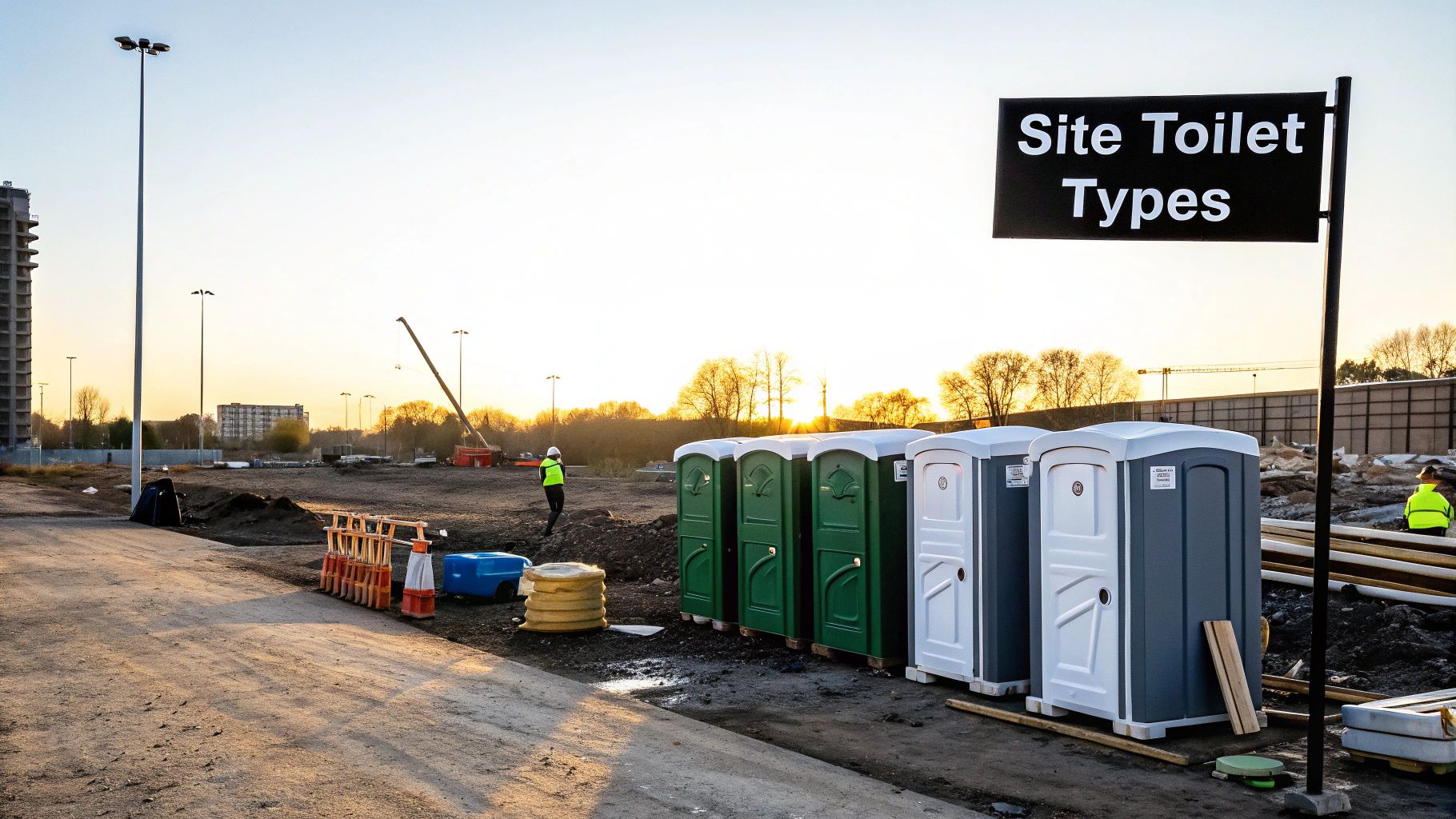
Arranging proper welfare facilities isn't just about ticking a box. It’s fundamental to running a professional, efficient project. It shows your team you respect their wellbeing, which directly boosts morale and keeps the job moving.
Get it wrong, and you’re looking at frustrated workers, unnecessary downtime, and even potential run-ins with the Health and Safety Executive (HSE).
This guide cuts through the jargon. It’s a straightforward plan for you, the builder, to get your site toilets sorted quickly and correctly, covering everything from calculating numbers to making sure you’re fully compliant.
More Than Just a Convenience
The days of just "making do" are long gone. Today, the UK’s construction sector relies on professional sanitation services not just for comfort but for compliance. In fact, industry reports show that rentals for construction projects make up over 70% of the portable toilet hire industry's revenue in the UK.
This is driven by strict HSE regulations that mandate proper facilities for all workers. For site managers like you, this means a reliable hire service isn't a luxury—it's a necessity.
"A well-maintained toilet block is a clear sign of a well-managed site. It tells your team that their health and safety are a priority, which goes a long way in building a positive and productive work environment." – John Davies, Site Manager for over 20 years.
What This Guide Will Cover
We know your time is money. That's why we've made this guide as practical as possible, giving you the information you need without the fluff. We’ll walk you through the essential steps to make your construction site toilet hire seamless.
Here’s what you can expect to learn:
- Calculating Your Needs: How to figure out the right number of toilets for your crew size and site layout.
- Choosing the Right Units: A breakdown of the different types available, from standard chemical loos to mains-connected blocks, helping you select from our range of portable toilets.
- Compliance and Safety: A clear checklist of HSE requirements to keep your site fully compliant and avoid any headaches.
- Logistics and Servicing: Practical tips on where to place toilets, how to ensure access for servicing, and what to expect from a good supplier.
By the end, you’ll have a clear, actionable plan to get your site’s welfare facilities sorted correctly, letting you get on with the job at hand.
Calculating How Many Toilets Your Site Really Needs
Trying to guess the right number of toilets for your site is a classic mistake. Get it wrong, and you’re staring down the barrel of long queues, an unhappy crew, and a potential headache from the Health and Safety Executive (HSE). The good news is, there’s a straightforward way to get this right and keep your project on track.
The official HSE guidance is your starting point. The rule of thumb is one toilet for every seven workers on a standard 40-hour week. This ratio is the bare minimum you need to provide to make sure your team has decent access to facilities without wasting time waiting around. Sticking to this prevents queues and keeps everyone focused on the job at hand.
But just doing a quick headcount isn't the whole story. You've got to think about the practical reality of your site's layout.
Recommended Toilet-to-Worker Ratios (HSE Guidance)
To make it easy, here’s a quick reference table based on the official guidance. This shows the minimum you'll need for a standard 40-hour work week to stay compliant.
| Number of Workers | Minimum Toilets Required | Recommended Servicing Frequency |
|---|---|---|
| 1-7 | 1 | Weekly |
| 8-14 | 2 | Weekly |
| 15-21 | 3 | Weekly |
| 22-28 | 4 | Weekly |
Remember, if your team is working longer hours or the units are seeing heavier use, you might want to increase the servicing frequency to keep things clean and hygienic.
Beyond the Basic Headcount
If your project is spread out over a large area, having a single block of toilets might tick the compliance box, but it’s completely impractical. Think about it: a worker trekking from one end of a sprawling site to the other just to use the loo is killing valuable time.
For bigger sites, it’s far more efficient to place multiple, smaller toilet clusters in key work zones. This simple bit of planning can slash lost productivity. Those minutes saved per worker, per day, really start to add up over the lifetime of a project.
Remember, the goal isn't just to scrape by on the legal minimum. It's about running an efficient site and showing your crew you've actually thought about their needs. Good planning here has a direct impact on your bottom line.
Inclusivity and Accessibility on Site
A modern construction site has to be inclusive. This means providing facilities that work for everyone on your team. It’s a legal requirement to provide separate facilities for female workers if you have a mixed-gender crew, unless each toilet is in its own lockable room for single use.
You also have to think about accessibility. If you have any workers with disabilities, you are required to provide accessible toilet units. These units are bigger and have the right support features, making sure everyone on your site can work safely and with dignity. Factoring this in from the start shows you’re running a professional and respectful operation.
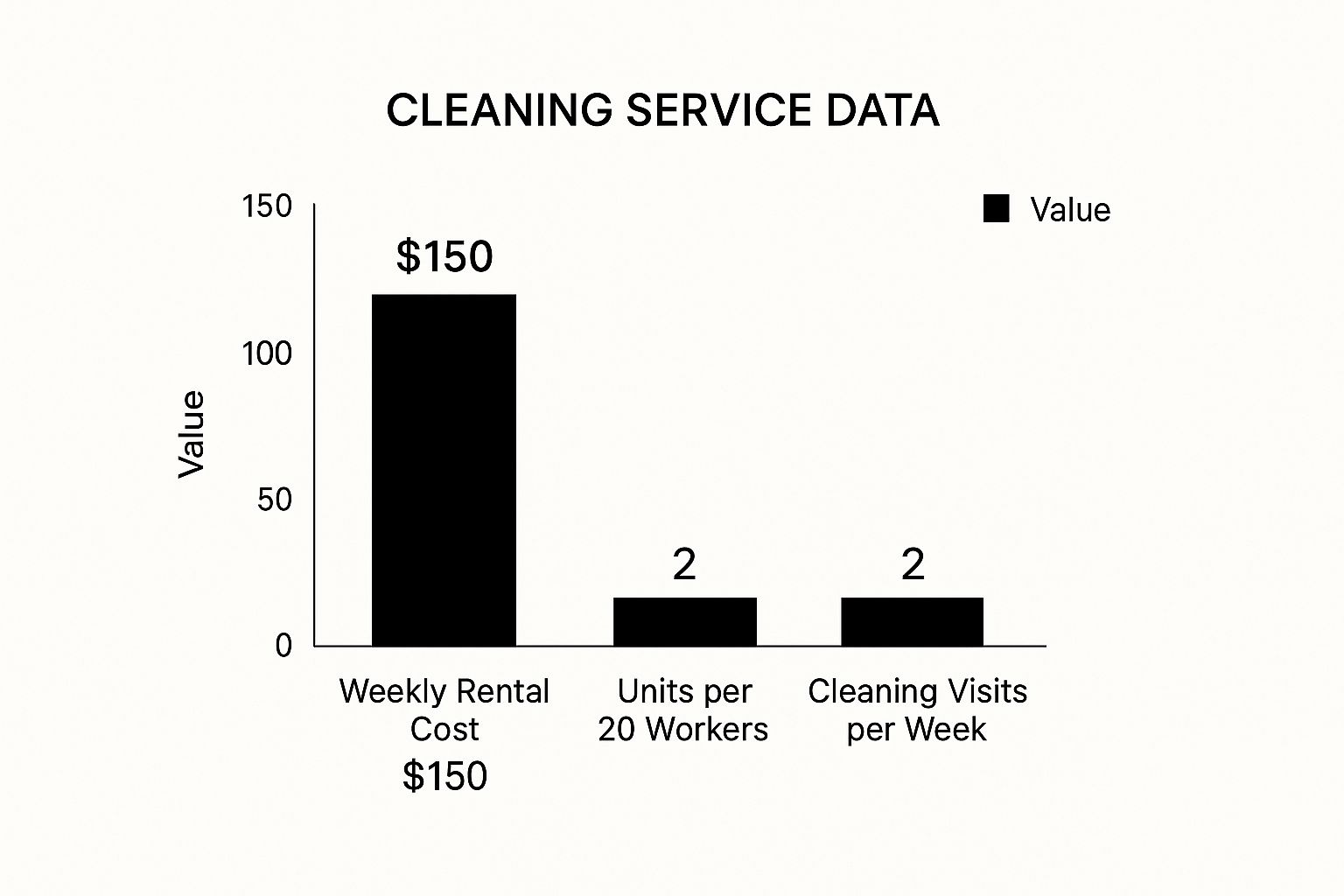
As this shows, even for a smaller crew of around 20 workers, you’ll need at least two units with regular servicing to stay compliant and keep standards high.
By thinking through these key points—headcount, site layout, and inclusivity—you can confidently arrange the correct construction site toilet hire for your project. You'll keep your site compliant, your crew happy, and your project moving forward without any needless delays.
Choosing the Right Type of Site Toilets
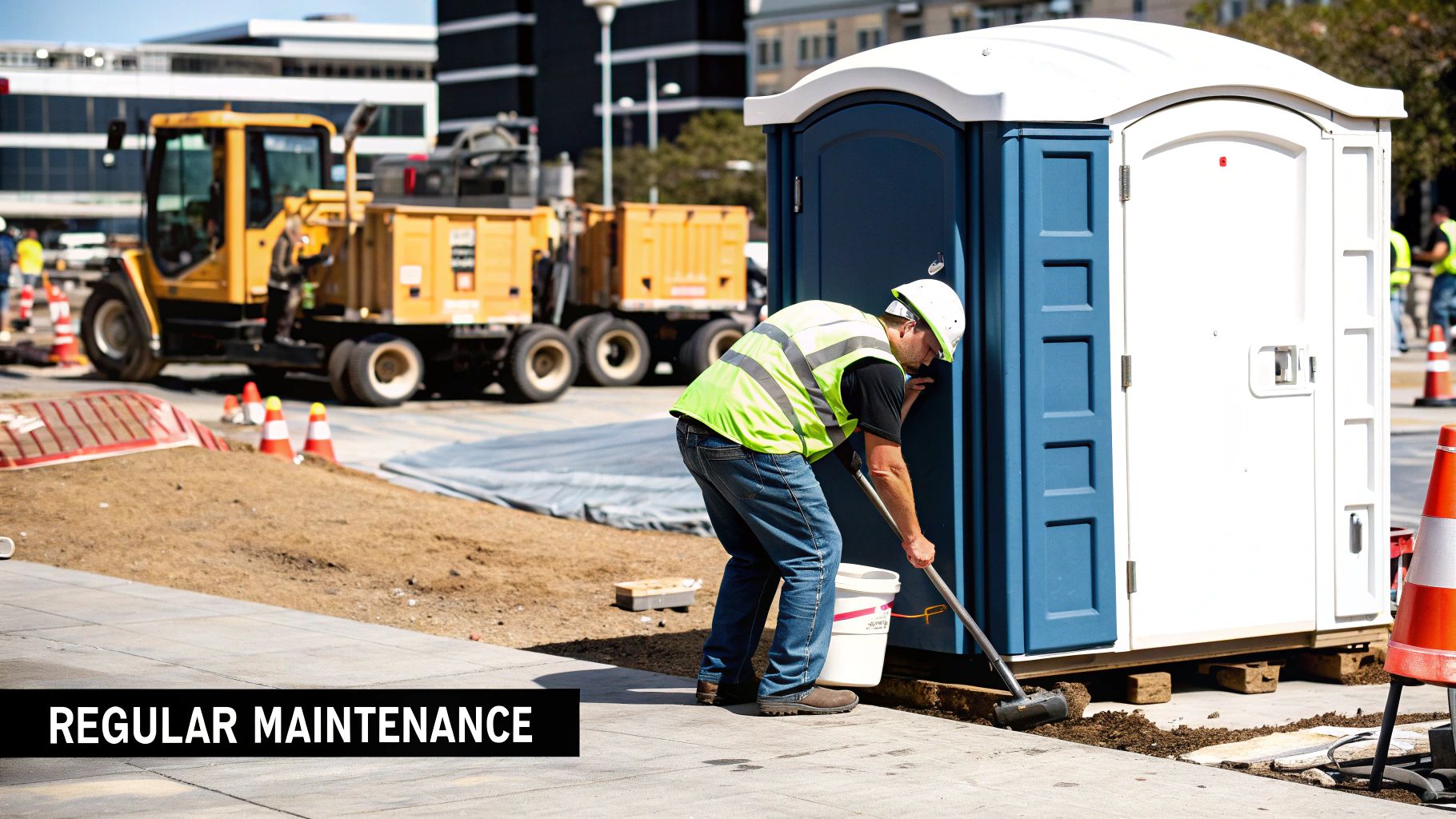
Let's be honest, not all portable toilets are the same. Picking the right one for your construction site isn't just about ticking a box; it's about making sure your team has what they need to stay comfortable and productive. The best choice really depends on the job – its location, how long it'll run, and the size of your crew.
For most projects, the standard chemical toilet is the go-to workhorse. These self-contained units are tough, easy to drop into place, and don't need any mains connections. This makes them absolutely perfect for new sites where utilities haven't been sorted yet. They're the backbone of construction site toilet hire for a reason.
You only have to look at the numbers to see how essential they are. The UK's portable toilet rental market was valued at around USD 991.3 million in 2023, and standard portable loos accounted for a massive 65.47% of that. It just shows how vital these basic, dependable units are for keeping sites running.
When You Need More Than the Basics
So, what happens when your project demands a bit more comfort? For longer-term builds or sites where you've already got utilities hooked up, mains-connected toilets are a fantastic option. These units connect directly to your site’s water and drainage, giving you a proper flushing toilet and running water for handwashing.
To get one of these installed, you’ll need:
- A mains water supply for the flush and basin.
- A connection to a sewer or septic tank for the waste.
- An electrical hook-up if you want lighting or hot water.
They're a brilliant way to improve welfare standards, especially on larger, more established sites.
Upgrading to Full Welfare Blocks
On major projects where keeping team morale high is a top priority, self-contained toilet blocks are the best you can get. These larger units often have multiple cubicles, urinals, and proper washbasins with hot and cold running water.
Investing in a proper welfare unit sends a clear message to your team: their comfort and wellbeing matter. It's an investment that often pays for itself through better morale and productivity.
Think about these real-world scenarios:
- Remote Rural Build: A standard, rugged chemical toilet is your best bet. It’s self-contained, so you don’t need to worry about non-existent utilities. You can see a standard construction site toilet hire unit in place here.
- Compact Urban Site: If you can access utilities, a mains-connected unit is ideal. It offers better facilities without taking up a huge amount of space.
- Large Infrastructure Project: For the big jobs, a full welfare block is the only professional choice. It provides superior facilities for a large crew over a long period.

By matching the toilet type to your project, you can be sure you’re providing practical, compliant facilities that support your team and keep the job moving forward.
Staying on the Right Side of Health and Safety
Keeping your site compliant with the Health and Safety Executive (HSE) isn’t just a box-ticking exercise. It's non-negotiable. When it comes to welfare facilities, getting it wrong can lead to hefty fines, stop-work notices, and a reputation for cutting corners.
The rules are pretty straightforward, but an HSE inspector won’t just do a quick headcount of your toilets. They’ll be checking that they are clean, safe, correctly positioned, and properly maintained. It’s a core part of your legal duty to provide decent welfare facilities for your team.
Your Simple HSE Compliance Checklist
To stay compliant, you need to think beyond the basic toilet-to-worker ratio. Inspectors look for evidence that your facilities are up to scratch throughout the entire project.
Here’s a practical rundown of what you absolutely must have in place:
- Proper Ventilation: The units need to be well-ventilated to keep things fresh and hygienic. No one wants to step into a stuffy, unpleasant loo.
- Adequate Lighting: If your site runs into the evening or through the dark winter months, your toilets must have enough light for people to use them safely.
- Fully Stocked Up: This is a simple one but often missed. Every toilet needs to be kept supplied with the essentials – toilet paper and hand sanitiser or soap.
- Safe and Stable Placement: Loos must be positioned on firm, level ground. The last thing you want is a unit tipping over in high winds or on muddy ground.
A crucial part of your legal duty is proving that all waste is handled by a licensed carrier. A professional construction site toilet hire firm like ours provides all the necessary waste transfer notes. This gives you a clear paper trail for your records and complete peace of mind.
Where You Put Them Matters (A Lot)
The law is clear: site toilets must be kept in a clean and orderly condition. That means having a regular, documented cleaning schedule. With Sarah's Hire, a weekly service is standard. Our team pumps out the waste, gives the unit a deep clean, and restocks everything. It ensures you’re hitting HSE standards without you having to lift a finger.
But where you place the toilets is just as important. They need to be easy for your crew to get to, minimising downtime, but also positioned discreetly to offer a bit of privacy.
Crucially, our service vehicles need clear access to pump out and clean the units. Bad placement is the number one reason for missed services, which can quickly lead to a big drop in hygiene standards.
Nailing these key compliance points doesn’t just help you dodge fines. It helps you run a safer, more professional site that shows you actually care about your team’s wellbeing.
Why Choose Sarah’s Hire for Your Site?
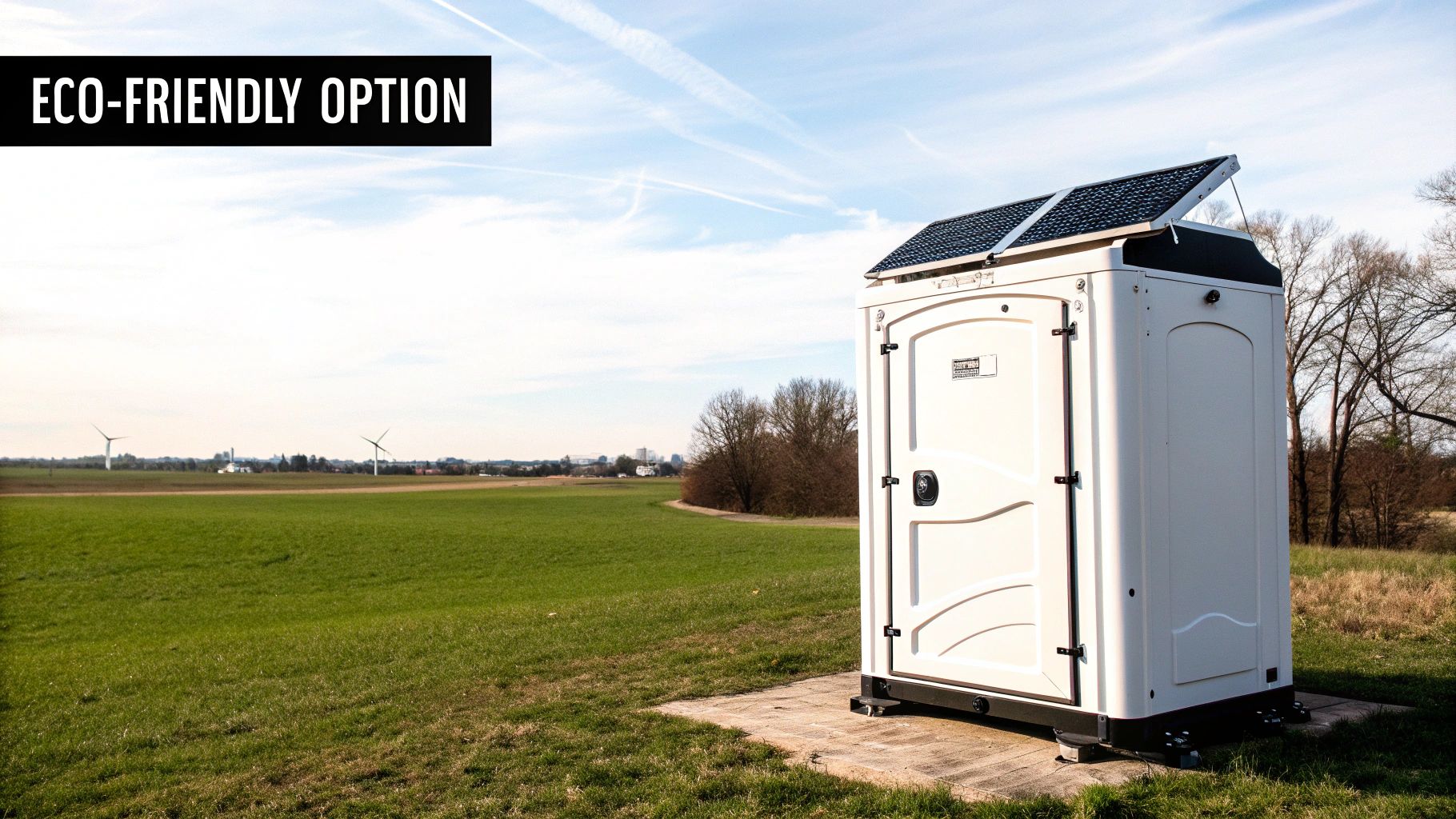
When you need construction site toilet hire, the last thing you want is hassle. You need a partner who gets the job done without any fuss—someone who understands that on a busy site, delays cost money and every detail matters. At Sarah’s Hire, we get it. We provide a straightforward, reliable service across the following areas and beyond:
- Hereford
- Worcester
- Gloucester
- Shrewsbury
- Monmouth
- Leominster
- Kidderminster
We’re your local experts, making sure your welfare facilities are one less thing for you to worry about.
Why Choose Sarah’s Hire?
- Reliability You Can Build On: We promise on-time delivery, scheduled servicing you can count on, and prompt collection. We stick to our word, so you can stick to your schedule. No excuses.
- No-Nonsense Service: Your time is valuable. We keep it simple with clear, honest pricing and no hidden fees. Just clean, compliant toilets delivered exactly when and where you need them.
- Compliance as Standard: Every unit is maintained to the highest hygiene standards, ensuring you meet all HSE regulations. This includes certified, environmentally compliant waste disposal.
Take a look at our portable toilet hire for building sites to see the quality you can expect on your own project.

"Sarah's Hire is our go-to for all our sites. The toilets are always immaculate, the team is professional, and they've never once let us down. It's one less thing for me to worry about."
– Mark P., Long-Term Site Manager Client, Hereford
FAQs: Your Construction Site Toilet Hire Questions Answered
Even the most experienced site managers have questions when it comes to sorting out construction site toilet hire. Getting the right answers upfront just makes life easier and stops any last-minute headaches. Here are a few of the things we get asked most often, with straight-up, practical answers.
How often do construction site toilets need servicing?
This is the big one, and for good reason. Keeping the facilities clean and compliant is non-negotiable. As a rule of thumb, we always recommend a weekly service. That schedule keeps you in line with HSE best practices and is usually perfect for keeping a standard site happy and hygienic. A proper weekly service from us includes:
- A complete pump-out of the waste tank.
- A thorough, hygienic deep clean of the whole unit.
- Restocking everything – toilet paper, hand sanitiser, the lot.
- Recharging the unit with the correct chemical solution.
Of course, no two sites are the same. If you’ve got a big crew or a high-traffic project, you might need us to pop in more often. We can easily set up a custom schedule that fits your site's rhythm.
Where is the best place to position toilets on a site?
Where you stick the toilets matters more than you might think. The number one rule is that the toilets must be on flat, stable ground. A loo on a muddy slope is just an accident waiting to happen. You’ll want them close enough to the main work areas so your crew isn't trekking for miles, but keep them a sensible distance from any break areas.
The most critical thing to remember is access for our service truck. Our tanker needs to get within 10 metres of the unit to connect the pump. If we can’t get the truck close enough, we can’t service the toilet, and that’s a problem for everybody.
What does the hire price typically include?
We keep things simple and clear. When you get a price from us, what you see is what you get. Our standard hire price covers everything you need:
- Delivery and Collection: We’ll drop the units off on the day you need them and pick them up when the job’s done.
- Scheduled Weekly Service: Your essential weekly clean and pump-out is all part of the deal.
- All Consumables: We keep the loo roll and hand sanitiser topped up so you don’t have to.
- Certified Waste Disposal: All waste is taken away and disposed of correctly, following all environmental rules.
This all-in-one approach means you can budget properly without worrying about any extra costs cropping up.
Do standard portable toilets require water or power?
Nope, not at all. Our standard chemical toilets are completely self-contained, which is a massive advantage on new builds or remote sites where you don't have utilities connected yet. They work without any mains water, drainage, or electricity. It’s this flexibility that makes them the go-to solution for pretty much any construction project. It's also worth thinking about whether your site needs any specific disabled toilet facilities, which are also fully self-contained.

Ready to get your site sorted with reliable, no-fuss toilet hire? The team at Sarahs Hire is here to help. We make construction site toilet hire simple, so you can focus on the build.
Call us on 01981 500763 or email info@sarahshire.co.uk for a free, no-obligation quote today.